

TM Owner AstraZeneca
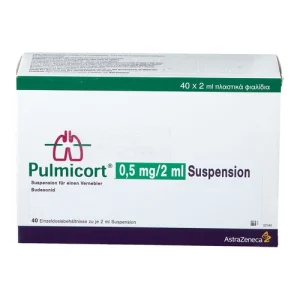
Pulmicort 0.5mg/2mL Nebulizer Suspension
Global Shipping : Reliable Global Distribution Network
Express Delivery : Priority Shipping for Every Order
Secure Payments : Trusted Payment Protection System
 Disclaimer

Secure Handling
24/7 Worldwide Support

Global Access
Worldwide Access to Health

Cold-Chain Expert
Excellence in Cold-Chain

Trusted Supply
Certified Medical Supply
Indications & Clinical Uses
- Pulmicort (budesonide) 0.5 mg/2 mL is an inhaled corticosteroid suspension for use in a jet nebulizer.
- No product is currently marketed under the plain name "Pulmicort" for this presentation, so this information is based on the equivalent, identically formulated product sold as Pulmicort Respules in the United States and Pulmicort Nebuliser Suspension in the United Kingdom and EU, which use the same drug, strength and delivery device.
- In the US it is approved for maintenance treatment and prevention of asthma symptoms in children 12 months to 8 years old who cannot reliably use a dry-powder or metered-dose inhaler; the UK/EU label additionally covers croup in infants from around 6 months who need hospital admission.
- It is not a rescue treatment for sudden breathing difficulty.
- This nebulized suspension is a different delivery device from Pulmicort Flexhaler, a dry-powder inhaler approved from age 6, and the two are not interchangeable dose-for-dose.
Side Effects
- The most commonly reported side effects of nebulized Pulmicort (budesonide) in children include respiratory tract infection, runny nose, cough, ear infection, viral infection, oral thrush, stomach upset, vomiting, diarrhoea, nosebleeds and eye redness; oral thrush can be reduced by rinsing the mouth with water after each treatment and spitting it out.
- More serious but less common effects include lowered resistance to infection, adrenal suppression if switching from oral steroids, reduced growth velocity in children on long-term treatment, and, rarely, sudden worsening of wheeze immediately after a dose (paradoxical bronchospasm), glaucoma or cataracts.
- This label carries no boxed warning.
- Seek urgent medical help if breathing difficulty worsens straight after a dose, or if facial swelling, rash or other signs of a severe allergic reaction appear.
Precautions & Warnings
- Pulmicort nebulizer suspension is for inhalation via a jet nebulizer only; it must not be injected or swallowed, and it should not be used with an ultrasonic nebulizer, which does not aerosolize the suspension properly.
- Children switching from oral corticosteroids to this inhaled form need careful monitoring, because adrenal insufficiency can appear during and after the transition and can become dangerous during illness, surgery or infection.
- Growth should be checked regularly in children on long-term treatment.
- Use with caution in active or past tuberculosis or in untreated fungal, bacterial, viral or parasitic infections, and avoid exposure to chickenpox or measles in unvaccinated children, seeking prompt medical advice if exposure occurs.
- Tell the healthcare provider if the child is pregnant, breastfeeding, or has liver impairment, since dose adjustment may be needed.
Avoid Interactions
- Strong CYP3A4 inhibitors such as ketoconazole, itraconazole, ritonavir and other HIV protease inhibitors, and clarithromycin can markedly raise budesonide blood levels and increase steroid side effects, so these combinations are generally avoided or used only with close monitoring.
- Live or live-attenuated vaccines should not be given to children on high-dose inhaled or systemic corticosteroids because the immune response may be blunted; discuss vaccination timing with the healthcare provider.
- Do not mix Pulmicort suspension in the nebulizer chamber with other medicines unless compatibility has been specifically confirmed, and use an ampoule within 12 hours once it has been removed from its foil strip.
- Tell the healthcare provider about all other medicines, including other corticosteroids, the child is taking.
References
Frequently Asked Questions
Pulmicort (budesonide) nebulizer suspension is an inhaled steroid used for daily asthma prevention in young children, US-approved from 12 months to 8 years. In the UK it is also used in hospital for croup in infants. It does not relieve a sudden asthma attack.
Pulmicort suspension is given by pouring one ampoule into a jet nebulizer and inhaling the mist through a mask or mouthpiece, usually once or twice daily. Do not use it in an ultrasonic nebulizer, which will not aerosolize it properly.
Common side effects include oral thrush, cough, runny nose, sore throat and ear infections. Rinsing the mouth with water after each dose lowers the risk of thrush. Seek urgent help if breathing suddenly worsens right after a dose.
Avoid strong CYP3A4 inhibitors such as ketoconazole, ritonavir and clarithromycin, which can raise budesonide levels and increase steroid side effects. Live vaccines should not be given to a child on high-dose treatment; check timing with the healthcare provider first.
Once an ampoule is removed from its light-protective foil strip, use it within 12 hours, and discard any suspension left in an opened ampoule. Store unopened Pulmicort ampoules upright, in their foil strip, between 20°C and 25°C, protected from light, and never freeze them.
No. Both contain budesonide, but the nebulizer suspension is a liquid breathed in through a jet nebulizer and is used from 12 months of age, while Flexhaler is a dry-powder inhaler approved from age 6. The two devices are not interchangeable dose-for-dose.

Trusted & Reliable – Your Partner in Global Distribution.
We provide comprehensive lines of pharmaceutical products to support all your healthcare distribution needs.


