

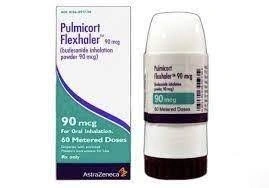
TM Owner AstraZeneca
Pulmicort Flexhaler 180mcg Inhaler
Global Shipping : Reliable Global Distribution Network
Express Delivery : Priority Shipping for Every Order
Secure Payments : Trusted Payment Protection System
 Disclaimer

Secure Handling
24/7 Worldwide Support

Global Access
Worldwide Access to Health

Cold-Chain Expert
Excellence in Cold-Chain

Trusted Supply
Certified Medical Supply
Indications & Clinical Uses
- Pulmicort Flexhaler (budesonide) 180 mcg is an inhaled corticosteroid delivered as a dry powder from a breath-actuated inhaler device, not a nebulizer suspension or a spray.
- It is indicated for the maintenance treatment of asthma as prophylactic (preventive) therapy in adults and children 6 years of age and older; it is not a rescue inhaler and will not relieve a sudden asthma attack.
- Flexhaler is the US device name for this dry-powder inhaler; the same budesonide dry-powder device is marketed as Pulmicort Turbuhaler in the UK, EU and many other countries, using the same drug and similar strengths.
- It is a different delivery device and a different minimum age (6 years) from the nebulized suspension form, Pulmicort Respules, which is used from 12 months of age via a jet nebulizer; the two are not interchangeable dose-for-dose.
Side Effects
- The most commonly reported side effects of Pulmicort Flexhaler are throat and nose irritation, nasal congestion, sore throat, allergic-type runny nose, viral upper respiratory infection, nausea, stomach upset and oral thrush (candidiasis); rinsing the mouth with water after each dose and spitting it out reduces the risk of thrush.
- Less common but more serious effects include immune suppression with increased susceptibility to infections, adrenal insufficiency if switching from oral steroids, reduced growth velocity in children on long-term treatment, glaucoma or cataracts with prolonged use, reduced bone mineral density, and rarely, sudden worsening of wheeze right after a dose or a severe allergic reaction including anaphylaxis, which can occur even after previous doses were tolerated.
- This label carries no boxed warning.
- Seek urgent help for facial swelling, hives or severe breathing difficulty.
Precautions & Warnings
- Pulmicort Flexhaler must be used by oral inhalation only, exactly as directed with the breath-actuated device; it is contraindicated in patients with severe hypersensitivity to milk proteins because the powder base contains lactose, which may carry trace milk proteins.
- It is not for treating an acute asthma attack or status asthmaticus.
- Patients transferring from oral corticosteroids need gradual, monitored withdrawal because adrenal insufficiency and death have occurred during and after transfer, particularly at times of stress, injury, surgery or infection.
- Growth should be monitored regularly in children on long-term therapy, and bone density and eye health checked periodically in long-term adult use.
- Use with caution in active or quiescent tuberculosis or untreated infections, and avoid exposure to chickenpox or measles if unvaccinated.
- Tell the healthcare provider if pregnant, breastfeeding, or if liver impairment is present.
Avoid Interactions
- Strong CYP3A4 inhibitors, including ketoconazole, itraconazole, ritonavir and other HIV protease inhibitors, and clarithromycin, can substantially raise budesonide blood levels and increase the risk of systemic steroid side effects; these combinations should generally be avoided or used only with close monitoring.
- Live or live-attenuated vaccines should not be given to patients on high-dose inhaled or systemic corticosteroids because the immune response may be reduced; discuss vaccine timing with the healthcare provider.
- Other inhaled corticosteroids should not be used at the same time as Flexhaler.
- Tell the healthcare provider or pharmacist about all other medicines, herbal products and supplements being used, including other steroid inhalers, tablets, creams or nasal sprays, so total steroid exposure can be assessed.
References
Frequently Asked Questions
Pulmicort Flexhaler (budesonide) is a dry-powder inhaler used daily to prevent asthma symptoms in adults and children aged 6 and over. It is a maintenance treatment, not a rescue inhaler, and will not stop a sudden asthma attack.
Load a dose by twisting the grip fully in one direction then back, breathe out away from the device, then inhale forcefully and deeply through the mouthpiece. Rinse your mouth with water afterwards. It is usually taken once or twice daily.
Common side effects are throat irritation, nasal congestion, sore throat and oral thrush. Rinsing your mouth after each dose lowers thrush risk. Seek urgent help for facial swelling, hives or sudden breathing difficulty, which can signal a severe allergic reaction.
Avoid strong CYP3A4 inhibitors such as ketoconazole, ritonavir and clarithromycin, which raise budesonide levels and steroid side effects. Live vaccines are not recommended on high-dose treatment. Do not use Flexhaler if you have a severe milk protein allergy.
Flexhaler has a dose counter window; a red mark appears when 20 doses remain, and the device locks after the last labelled dose. Store it dry at 20°C to 25°C with the cover tightly in place and discard 3 months after opening the foil pouch.
No. Both contain budesonide, but Flexhaler is a dry-powder inhaler for ages 6 and up, while Respules is a liquid used in a jet nebulizer from 12 months of age. The devices and approved ages are different and not interchangeable dose-for-dose.

Trusted & Reliable – Your Partner in Global Distribution.
We provide comprehensive lines of pharmaceutical products to support all your healthcare distribution needs.


