

TM Owner Cipla
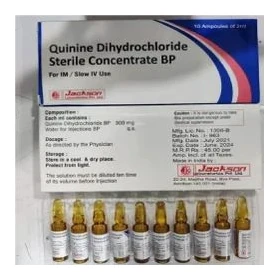
Quinine Inj BP 300/600 mg per mL Injection
Global Shipping : Reliable Global Distribution Network
Express Delivery : Priority Shipping for Every Order
Secure Payments : Trusted Payment Protection System
 Disclaimer

Secure Handling
24/7 Worldwide Support

Global Access
Worldwide Access to Health

Cold-Chain Expert
Excellence in Cold-Chain

Trusted Supply
Certified Medical Supply
Indications & Clinical Uses
- Quinine Inj BP is a quinine dihydrochloride injection manufactured to the British Pharmacopoeia monograph by Cipla (India); "Quinine Inj BP" is a generic/monograph description rather than a distinct registered trademark - Cipla's own branded equivalent is sold in some markets as Qinarsol Injection.
- It is an antimalarial used for severe or complicated Plasmodium falciparum malaria, and for malaria in patients unable to take oral treatment, given intravenously by slow infusion or, only as a last resort, intramuscularly.
- This product is not marketed or FDA-approved in the United States, where severe malaria is instead treated with IV artesunate; it remains an essential injectable antimalarial in many malaria-endemic countries, given only in hospital by trained healthcare providers, never self-administered.
Side Effects
- Cinchonism - tinnitus, headache, nausea, dizziness and blurred or altered colour vision - occurs in most patients and usually resolves after treatment ends.
- Hypoglycaemia (low blood sugar) is common, particularly in children and pregnant women, and blood glucose is checked regularly during infusion.
- Serious reactions include cardiac arrhythmia and QT-interval prolongation, especially if the injection is given too fast, severe hypotension, haemolysis (red blood cell breakdown) with dark urine, and, with intramuscular use, pain, sterile abscess or tissue necrosis at the injection site.
- There is no FDA-format boxed warning because this injectable form has no US label; report palpitations, fainting, unusual bleeding or dark urine to hospital staff immediately.
Precautions & Warnings
- Quinine Inj BP must be given by slow intravenous infusion, diluted in glucose or saline and never as a rapid bolus; intramuscular injection is reserved for emergencies with no venous access, because of the necrosis risk.
- It is contraindicated in patients with a history of blackwater fever, optic neuritis, tinnitus or G6PD deficiency, and used cautiously in cardiac conduction disorders, myasthenia gravis and hepatic impairment.
- ECG, blood pressure and blood glucose are monitored throughout treatment.
- Concurrent use of other QT-prolonging antiarrhythmics is avoided.
- In pregnancy, IV quinine is used only for confirmed severe malaria under specialist supervision, since untreated severe malaria poses a greater risk to mother and fetus than the medicine.
Avoid Interactions
- Avoid combining Quinine Inj BP with other QT-prolonging medicines such as certain antiarrhythmics, macrolide antibiotics, antipsychotics and antihistamines, as this raises the risk of dangerous heart rhythms.
- It increases digoxin and oral anticoagulant levels, so extra monitoring is needed when these are co-prescribed.
- Concurrent mefloquine or halofantrine is avoided because of additive cardiotoxicity.
- CYP3A4 inhibitors can raise quinine blood levels while rifampicin lowers them.
- It should not be mixed in the same infusion line as incompatible drugs; pharmacy staff confirm compatibility before co-administration.
- Tell the treating team about every other medicine, including anticoagulants and cardiac drugs, before this infusion is started.
References
Frequently Asked Questions
Quinine Inj BP (quinine dihydrochloride) treats severe or complicated falciparum malaria, and malaria in patients who cannot take tablets. It is a hospital-only medicine used when the illness is too serious for oral quinine or other antimalarial tablets.
A healthcare provider gives Quinine Inj BP as a slow intravenous infusion over several hours, repeated roughly every 8 hours. Intramuscular injection is used only when a vein cannot be found, because it can cause tissue damage at the injection site.
Most patients get ringing in the ears, headache, dizziness or blurred vision (cinchonism), which settles after treatment. Low blood sugar is common and monitored closely. Report chest palpitations, fainting, dark urine or unusual bruising to staff straight away.
Other QT-prolonging medicines, mefloquine and halofantrine are avoided during treatment because of added heart-rhythm risk. Quinine also raises digoxin and warfarin levels. Tell the medical team about every other medicine you take before the infusion begins.
Because it is given only in hospital, your heart rhythm (ECG), blood pressure and blood glucose are checked regularly throughout each infusion and afterwards, so there is no home dosing schedule to remember - staff manage timing and monitoring for you.
Yes, for confirmed severe malaria - untreated severe malaria in pregnancy is more dangerous than the medicine. It is given under close hospital supervision with extra blood-sugar monitoring, since pregnant women have a higher risk of quinine-related hypoglycaemia.

Trusted & Reliable – Your Partner in Global Distribution.
We provide comprehensive lines of pharmaceutical products to support all your healthcare distribution needs.


