

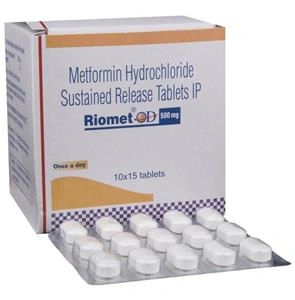
TM Owner Ranbaxy / Sun Pharma
Riomet 500mg/5mL Oral Solution
Global Shipping : Reliable Global Distribution Network
Express Delivery : Priority Shipping for Every Order
Secure Payments : Trusted Payment Protection System
 Disclaimer

Secure Handling
24/7 Worldwide Support

Global Access
Worldwide Access to Health

Cold-Chain Expert
Excellence in Cold-Chain

Trusted Supply
Certified Medical Supply
Indications & Clinical Uses
- Riomet 500 mg/5 mL oral solution contains metformin hydrochloride, a biguanide antidiabetic medicine.
- In the United States it is indicated, as an adjunct to diet and exercise, to improve blood glucose control in adults and children 10 years of age and older with type 2 diabetes mellitus; it is not approved for type 1 diabetes or diabetic ketoacidosis.
- It may be used alone or together with other antidiabetic medicines, including sulfonylureas or insulin, when diet and exercise alone do not give adequate control.
- The liquid formulation is intended for people, including children and adults, who cannot swallow tablets.
- European labelling for metformin solution is broadly similar, and the same active ingredient is marketed under many other brand names, including Glucophage, as tablets.
- Riomet is a self-administered oral medicine taken at home, not given by a healthcare provider.
Side Effects
- The most common side effects, seen in a substantial minority of patients when metformin is started, are gastrointestinal: diarrhoea, nausea and vomiting, flatulence, indigestion, abdominal discomfort and headache; these often lessen with time or when the dose is increased gradually and taken with food.
- Riomet carries a boxed warning for lactic acidosis, a rare but serious metabolic complication that can be fatal; risk increases with kidney or liver impairment, dehydration, excess alcohol use, sepsis, or conditions causing low oxygen supply to tissues.
- Symptoms include unusual tiredness, muscle pain, difficulty breathing, unusual stomach discomfort, feeling cold, dizziness and a slow or irregular heartbeat.
- Long-term use can lower vitamin B12 levels.
- Stop Riomet and seek urgent medical care if lactic acidosis symptoms develop, and hold the dose before procedures using iodinated contrast dye.
Precautions & Warnings
- Kidney function should be checked before starting Riomet and at least yearly afterwards; it is contraindicated when eGFR is below 30 mL/min/1.73m2 and should not usually be started when eGFR is 30 to 45.
- Metformin is held temporarily before and for 48 hours after procedures using iodinated contrast dye, and before major surgery, until kidney function is confirmed normal.
- It is contraindicated in acute or chronic metabolic acidosis, including diabetic ketoacidosis, and used cautiously in significant liver disease, heart failure or conditions that reduce tissue oxygenation.
- Excessive alcohol intake should be avoided because it increases the risk of lactic acidosis and low blood sugar.
- Vitamin B12 levels may be checked periodically with long-term use.
- Metformin is generally considered compatible with breastfeeding; discuss pregnancy planning with your healthcare provider.
Avoid Interactions
- Tell your healthcare provider about all other medicines and supplements before using Riomet.
- Carbonic anhydrase inhibitors such as topiramate can add to the risk of lactic acidosis and acidosis; cationic drugs that compete for renal tubular transport, such as cimetidine, and drugs like dolutegravir or ranolazine can raise metformin blood levels.
- Combining Riomet with insulin or sulfonylureas increases the risk of low blood sugar (hypoglycaemia), so blood glucose monitoring and dose adjustment may be needed.
- Excess alcohol raises the risk of lactic acidosis and should be avoided.
- Iodinated contrast media used for imaging can cause acute kidney injury and must not be given together with metformin without first stopping and later restarting the medicine once kidney function is confirmed safe.
References
Frequently Asked Questions
Riomet is a liquid form of metformin hydrochloride used with diet and exercise to control blood sugar in type 2 diabetes, in adults and children 10 and older. It suits people who cannot swallow tablets. It is not for type 1 diabetes or diabetic ketoacidosis.
Riomet is measured with an accurate oral dosing device and taken by mouth, usually with meals, once or twice daily as directed. Starting with food and a low dose reduces stomach upset. Shake well before measuring and never estimate the dose with a kitchen spoon.
Common Riomet side effects are diarrhoea, nausea, vomiting, gas and stomach discomfort, which often ease over time. Riomet carries a boxed warning for lactic acidosis, a rare but serious and sometimes fatal reaction; get urgent care for unusual tiredness, muscle pain, breathing difficulty or a slow, irregular heartbeat.
Avoid excess alcohol, which raises the risk of low blood sugar and lactic acidosis with Riomet. Tell your team about iodinated contrast dye procedures, since Riomet is usually paused around these. Combining Riomet with insulin or sulfonylureas can cause hypoglycaemia, so monitor blood sugar closely.
Take the missed Riomet dose with your next meal if you remember the same day; skip it if it is almost time for the next dose. Never double up. Store the bottle at 15-30°C, tightly closed, and shake well before each measured dose.
Yes, Riomet is typically taken long-term for type 2 diabetes, with periodic checks of kidney function and, occasionally, vitamin B12 levels, since long-term use can lower B12. Your healthcare provider will review your dose regularly and adjust it if kidney function changes.

Trusted & Reliable – Your Partner in Global Distribution.
We provide comprehensive lines of pharmaceutical products to support all your healthcare distribution needs.


