

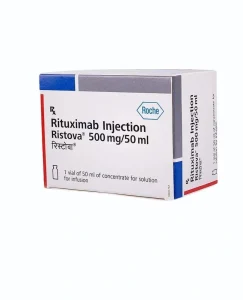
TM Owner Roche
Rituxan 500mg/50ml Vial
Global Shipping : Reliable Global Distribution Network
Express Delivery : Priority Shipping for Every Order
Secure Payments : Trusted Payment Protection System
 Disclaimer

Secure Handling
24/7 Worldwide Support

Global Access
Worldwide Access to Health

Cold-Chain Expert
Excellence in Cold-Chain

Trusted Supply
Certified Medical Supply
Indications & Clinical Uses
- Rituxan 500 mg/50 mL (rituximab) is a CD20-directed monoclonal antibody made by Genentech, a member of the Roche Group; the same medicine is marketed as MabThera in the European Union and UK.
- In the United States it is approved for adults with CD20-positive non-Hodgkin's lymphoma (as monotherapy or with chemotherapy, including in previously untreated and relapsed disease), for chronic lymphocytic leukaemia in combination with fludarabine and cyclophosphamide, for moderately to severely active rheumatoid arthritis with inadequate TNF-antagonist response in combination with methotrexate, for granulomatosis with polyangiitis and microscopic polyangiitis in adults and children 2 years and older, and for moderate-to-severe pemphigus vulgaris.
- Rituxan is the reference (originator) biologic; biosimilars such as Ritemvia (Sr 2980, withdrawn in the EU), Truxima and Ruxience are separately approved products.
- Rituxan is given only as a hospital or clinic intravenous infusion by a healthcare professional.
Side Effects
- The most common reactions, affecting more than 1 in 10 people, are infusion-related reactions - fever, chills and rigors - most frequent with the first infusion, together with infections, low white blood cell counts, nausea and fatigue.
- Rituxan carries a boxed warning covering four risks: fatal infusion reactions, with about 80% of fatal reactions occurring with the first infusion; severe, sometimes fatal mucocutaneous reactions affecting the skin and mouth; hepatitis B reactivation, which can cause fulminant hepatitis, liver failure and death; and progressive multifocal leukoencephalopathy (PML), a rare and often fatal brain infection.
- Seek emergency help for breathlessness, swelling of the face or throat, chest pain, severe rash or blistering, or new confusion or weakness during or after treatment.
- Infusions are monitored closely with resuscitation equipment available.
Precautions & Warnings
- All patients require hepatitis B screening before starting Rituxan; carriers of the virus are monitored closely during treatment and for months afterwards because of the reactivation risk.
- Premedication with an antihistamine and antipyretic, and often a glucocorticoid, is given before each infusion to reduce reaction risk, and blood pressure medicines may be withheld beforehand.
- Rituxan is contraindicated in people with severe, active infections or severely immunocompromised status.
- Cardiac monitoring is advised in patients with pre-existing heart disease because of the risk of arrhythmia during infusion.
- Live vaccines should not be given during treatment.
- Rituximab is not recommended during pregnancy, and effective contraception is advised during treatment and for 12 months after the last dose, since the antibody crosses the placenta and can deplete B-cells in the newborn.
Avoid Interactions
- Because Rituxan is given only under direct medical supervision, most interaction management is handled by the treating team.
- Live or live-attenuated vaccines should not be given during rituximab therapy or until B-cell counts recover, and non-live vaccines are recommended at least four weeks beforehand.
- Combining Rituxan with other immunosuppressive or myelosuppressive medicines, including biologic DMARDs used for rheumatoid arthritis, increases infection risk and is generally avoided.
- Cardiotoxic chemotherapy agents used alongside Rituxan can add to cardiac risk and require monitoring.
- Patients should tell their care team about all other medicines, supplements and recent vaccinations before each infusion, and Rituxan must not be mixed or diluted with other medicinal products in the same infusion line.
References
Frequently Asked Questions
Rituxan (rituximab) is a monoclonal antibody infusion used for CD20-positive non-Hodgkin's lymphoma, chronic lymphocytic leukaemia, rheumatoid arthritis unresponsive to TNF blockers, GPA and MPA vasculitis, and moderate-to-severe pemphigus vulgaris. It is prescribed by a specialist based on your specific diagnosis.
Rituxan is given only as an intravenous infusion in a hospital or clinic, never as a self-injection at home. Infusion schedules vary by condition, from a single course of doses spaced weeks apart to periodic maintenance infusions, decided by your treatment team.
Common Rituxan side effects include fever, chills and infections, especially with the first infusion. Rituxan carries a boxed warning for fatal infusion reactions, severe skin reactions, hepatitis B reactivation and PML, a rare brain infection, so infusions are closely monitored medically.
No. Rituxan is the original reference rituximab product; Ritemvia was a biosimilar version, highly similar but not identical, whose EU marketing authorisation was withdrawn in 2021 for commercial reasons. Only your prescriber decides whether switching between reference and biosimilar products is appropriate.
Before each Rituxan infusion you receive premedication, such as an antihistamine, antipyretic and sometimes a steroid, to lower reaction risk. The infusion itself runs slowly over several hours with continuous monitoring, since most serious reactions occur during or shortly after the first dose.
Rituxan is not recommended during pregnancy, as rituximab crosses the placenta and can reduce B-cells in the baby. Women of childbearing potential should use effective contraception during treatment and for 12 months after the last infusion; discuss family planning with your specialist first.

Trusted & Reliable – Your Partner in Global Distribution.
We provide comprehensive lines of pharmaceutical products to support all your healthcare distribution needs.


