

TM Owner Roche
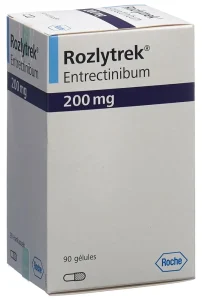
Rozlytrek 200mg Capsule
Global Shipping : Reliable Global Distribution Network
Express Delivery : Priority Shipping for Every Order
Secure Payments : Trusted Payment Protection System
 Disclaimer

Secure Handling
24/7 Worldwide Support

Global Access
Worldwide Access to Health

Cold-Chain Expert
Excellence in Cold-Chain

Trusted Supply
Certified Medical Supply
Indications & Clinical Uses
- Rozlytrek 200 mg (entrectinib) is a tyrosine kinase inhibitor that blocks ROS1 and TRK proteins, approved for two distinct uses: in adults with ROS1-positive metastatic non-small cell lung cancer, and, on a tumour-agnostic basis, in adults and children over 1 month of age with solid tumours that carry an NTRK gene fusion, are metastatic or unresectable, and have progressed on prior therapy or have no satisfactory alternative treatment.
- This is a specialist oncology medicine, prescribed and monitored by a cancer specialist, though the capsules are taken at home.
- Entrectinib capsules also come in a 100 mg strength and, for infants and young children who cannot swallow capsules, as oral pellets; the 200 mg capsule is an adult-dosing strength.
- Rozlytrek is distinct from other kinase inhibitors used in similar cancers, such as crizotinib (a different ROS1 inhibitor) and larotrectinib (an NTRK inhibitor without ROS1 activity).
Side Effects
- Common side effects may include fatigue, constipation, an altered sense of taste (dysgeusia), swelling (oedema), dizziness, diarrhoea, nausea and weight gain, each affecting a substantial proportion of patients.
- Rozlytrek has NO boxed warning, but it carries several important warnings.
- Liver enzyme rises occur in a large proportion of patients, so blood tests are done every 2 weeks for the first month and then monthly.
- Heart rhythm changes (QT prolongation) occur in about 3 in 100 patients monitored by ECG.
- Cognitive and mood changes, including confusion, memory problems and low mood, affect roughly a quarter of patients, and bone fractures occur in about 1 in 20 adults and 1 in 4 children, usually in the legs.
- Report any new confusion, palpitations, fainting, or unexplained bone pain to your cancer team promptly, and avoid driving if you feel dizzy or confused.
Precautions & Warnings
- Rozlytrek requires regular liver function tests, an ECG and electrolyte checks before starting and periodically during treatment because of the risk of raised liver enzymes and QT prolongation; the dose is reduced or treatment paused for significant abnormalities.
- Congestive heart failure has also been reported and should be monitored for in patients with cardiac risk factors.
- Because of the risk of cognitive impairment, mood changes and dizziness, patients should avoid driving or operating machinery until they know how the medicine affects them.
- Vision changes, including visual field defects, have occurred and should be reported.
- Rozlytrek can cause fetal harm, so effective contraception is required during treatment and for a defined period afterward, and it should not be used in pregnancy or while breastfeeding.
- Rozlytrek is taken orally, once daily, with or without food, and must not be combined with strong CYP3A inhibitors or inducers, which significantly change drug levels.
Avoid Interactions
- Strong CYP3A4 inhibitors, including ketoconazole, itraconazole, clarithromycin and ritonavir, increase entrectinib exposure roughly sixfold and should be avoided; if unavoidable, the Rozlytrek dose is substantially reduced under specialist guidance.
- Strong CYP3A4 inducers, such as rifampicin, carbamazepine, phenytoin and St John's wort, can cut entrectinib levels by more than three-quarters and reduce its anticancer effect, so they must also be avoided.
- Grapefruit and grapefruit juice contain natural CYP3A4 inhibitors and should be avoided throughout treatment.
- Other medicines that prolong the QT interval, such as certain antiarrhythmics and some antipsychotics, should be used cautiously and only under specialist supervision because of the added risk of heart rhythm changes.
- Tell the cancer team and pharmacist about every prescription, over-the-counter medicine, herbal product and supplement being taken before starting Rozlytrek.
References
Frequently Asked Questions
Rozlytrek (entrectinib) treats adults with ROS1-positive metastatic non-small cell lung cancer, and adults and children over 1 month old with solid tumours that carry an NTRK gene fusion. It's a targeted cancer therapy prescribed by a specialist, based on genetic testing of the tumour.
Rozlytrek 200 mg is taken as capsules by mouth once daily, with or without food, at home between clinic visits. Swallow the capsules whole. Avoid grapefruit and grapefruit juice throughout treatment, since they can raise entrectinib levels in the blood.
Common side effects of Rozlytrek include fatigue, constipation, altered taste, swelling, dizziness and nausea. It can also raise liver enzymes, change heart rhythm (QT prolongation), and cause confusion, mood changes or bone fractures. Report new confusion, palpitations, fainting or unusual bone pain to your cancer team right away.
Avoid grapefruit, and tell your cancer team about all medicines, since strong CYP3A4 inhibitors (like some antifungals) and inducers (like rifampicin or St John's wort) change entrectinib levels significantly. Avoid driving if you feel dizzy or confused, and use effective contraception during treatment.
Rozlytrek requires liver blood tests every 2 weeks for the first month, then monthly, plus an ECG and electrolyte checks before starting and periodically after, because of risks to the liver and heart rhythm. Your cancer team will also monitor for mood, memory or bone symptoms.
Yes. Rozlytrek is approved for children over 1 month old with NTRK fusion-positive solid tumours, using a 100 mg or 200 mg capsule or an oral pellet form for those who cannot swallow capsules. Bone fractures are more common in children (about 1 in 4) than adults, so this is monitored closely.

Trusted & Reliable – Your Partner in Global Distribution.
We provide comprehensive lines of pharmaceutical products to support all your healthcare distribution needs.


