

TM Owner Bristol Myers Squibb
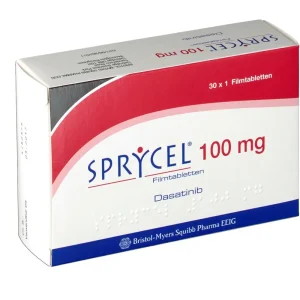
Sprycel 100mg Tablet
Global Shipping : Reliable Global Distribution Network
Express Delivery : Priority Shipping for Every Order
Secure Payments : Trusted Payment Protection System
 Disclaimer

Secure Handling
24/7 Worldwide Support

Global Access
Worldwide Access to Health

Cold-Chain Expert
Excellence in Cold-Chain

Trusted Supply
Certified Medical Supply
Indications & Clinical Uses
- Sprycel 100 mg tablets contain dasatinib, an oral BCR-ABL tyrosine kinase inhibitor.
- In the United States it is approved for adults with newly diagnosed Philadelphia chromosome-positive (Ph+) chronic myeloid leukaemia (CML) in chronic phase, for adults with Ph+ CML in chronic, accelerated, or myeloid or lymphoid blast phase who are resistant to or intolerant of prior therapy including imatinib, and for adults with Ph+ acute lymphoblastic leukaemia (ALL) who are resistant to or intolerant of prior therapy.
- It is also approved for children aged 1 year and older with Ph+ CML in chronic phase, and, combined with chemotherapy, for newly diagnosed paediatric Ph+ ALL.
- The 100 mg strength is the standard adult starting dose for chronic-phase CML; the other available strengths (20, 50, 70, 80 and 140 mg) are used for different indications, doses or paediatric weight-based dosing, and switching strengths should only be done under medical guidance.
- Sprycel is a self-administered oral tablet, taken once daily with or without food.
Side Effects
- Very common side effects of Sprycel, each affecting more than 1 in 10 people, include fluid retention (such as swelling and pleural effusion, fluid around the lungs), diarrhoea, headache, skin rash, and low blood counts (anaemia, low platelets and low white cells), which raise the risk of bruising, bleeding and infection.
- Sprycel carries NO boxed warning on its current US label, but its Warnings and Precautions section highlights pulmonary arterial hypertension (PAH) - a rare, serious and sometimes irreversible high blood pressure in the lungs, affecting up to about 5% of patients - along with severe fluid retention, bleeding and QT-interval prolongation.
- Seek urgent medical attention for new or worsening shortness of breath, chest pain, leg swelling, unusual bleeding or bruising, or a fast or irregular heartbeat.
- Routine blood counts and periodic heart/lung checks are required during treatment.
Precautions & Warnings
- Before starting Sprycel, your healthcare provider checks for cardiopulmonary disease and may arrange an echocardiogram if pulmonary arterial hypertension is suspected during treatment; Sprycel is generally stopped if PAH is confirmed.
- Complete blood counts are checked regularly, especially in the first two months, because of the risk of severe myelosuppression.
- An ECG may be used to monitor for QT-interval prolongation, particularly in people with electrolyte imbalances, congenital long QT syndrome, or those taking other QT-prolonging medicines.
- Sprycel can cause fetal harm, so effective contraception is required during treatment and for at least 30 days after the last dose, and breastfeeding is not recommended during treatment.
- Growth and bone development should be monitored in children.
- Sprycel is for oral use only; tablets should be swallowed whole and never crushed or split.
Avoid Interactions
- Sprycel levels rise significantly with strong CYP3A4 inhibitors such as ketoconazole, itraconazole, clarithromycin and ritonavir, so these combinations should be avoided or the Sprycel dose reduced under medical supervision; strong CYP3A4 inducers such as rifampicin, phenytoin, carbamazepine and St John's Wort can lower dasatinib levels and reduce effectiveness.
- Antacids, H2-receptor blockers such as famotidine, and proton pump inhibitors reduce Sprycel absorption and should generally be avoided; if an antacid is needed, take it several hours apart from Sprycel.
- Combining Sprycel with other QT-prolonging drugs, or with warfarin or aspirin, needs extra caution and monitoring.
- Tell your healthcare provider and pharmacist about all other medicines and supplements before starting Sprycel.
References
Frequently Asked Questions
Sprycel (dasatinib) is a targeted tablet used to treat Philadelphia chromosome-positive chronic myeloid leukaemia (CML) and acute lymphoblastic leukaemia (ALL) in adults and children aged 1 and over. It blocks the abnormal BCR-ABL enzyme driving these cancers.
Take Sprycel by mouth once daily, with or without food, at about the same time each day. Swallow the 100 mg tablet whole - do not crush or split it, since this affects how the coating protects you from contact with the drug.
Sprycel commonly causes fluid retention, diarrhoea, headache, rash and low blood counts. It has no boxed warning, but rarely causes pulmonary arterial hypertension - a serious lung condition. Report new breathlessness, chest pain, leg swelling or unusual bleeding to your healthcare provider urgently.
Avoid antacids, H2 blockers and proton pump inhibitors near dosing time, since they reduce Sprycel absorption. Avoid strong CYP3A4 inhibitors like ketoconazole and inducers like rifampicin, which change dasatinib levels. Tell your healthcare provider about every other medicine you take.
While taking Sprycel, you'll have regular blood counts, especially in the first two months, plus periodic checks for fluid retention, lung and heart problems, including an echocardiogram if breathlessness develops. An ECG may be used if you're at risk of QT-interval changes.
Sprycel is approved for children aged 1 and older with Ph+ CML, and for paediatric Ph+ ALL with chemotherapy. It can harm an unborn baby, so effective contraception is required during treatment and for 30 days afterward; breastfeeding is not recommended.

Trusted & Reliable – Your Partner in Global Distribution.
We provide comprehensive lines of pharmaceutical products to support all your healthcare distribution needs.


