

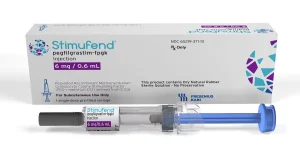
TM Owner Fresenius Kabi
Stimufend 6mg/0.6mL Injection
Global Shipping : Reliable Global Distribution Network
Express Delivery : Priority Shipping for Every Order
Secure Payments : Trusted Payment Protection System
 Disclaimer

Secure Handling
24/7 Worldwide Support

Global Access
Worldwide Access to Health

Cold-Chain Expert
Excellence in Cold-Chain

Trusted Supply
Certified Medical Supply
Indications & Clinical Uses
- Stimufend 6 mg/0.6 mL is a prefilled syringe containing pegfilgrastim-fpgk, a biosimilar to the originator pegfilgrastim (Neulasta) made by Fresenius Kabi and FDA-approved in 2022.
- It is a long-acting granulocyte colony-stimulating factor that stimulates the bone marrow to make more infection-fighting white blood cells.
- Stimufend is indicated to lower the risk of infection, including febrile neutropenia, in adults with non-myeloid cancers who receive bone-marrow-suppressing chemotherapy associated with a clinically significant rate of severe neutropenia with fever, and separately to improve survival in adults and children acutely exposed to harmful doses of radiation.
- It is not approved to mobilise blood stem cells for transplant.
- Stimufend is given once per chemotherapy cycle, not daily.
Side Effects
- The most common side effect of Stimufend, reported in about 3 in 10 patients, is bone pain, which is usually manageable with standard painkillers; pain in the arms or legs is also common.
- The current label carries no boxed warning, but serious reactions can occur: rupture of the spleen (reported as sudden left-sided abdominal or shoulder-tip pain), acute respiratory distress syndrome with breathing difficulty, sickle cell crisis in patients with sickle cell disease, and capillary leak syndrome causing swelling and low blood pressure.
- Serious allergic reactions, including anaphylaxis, have also been reported.
- Seek urgent medical attention for severe abdominal or shoulder pain, breathing problems, or swelling with dizziness after a Stimufend injection.
Precautions & Warnings
- Stimufend must not be given to anyone who has had a serious allergic reaction to pegfilgrastim or filgrastim products.
- Tell your healthcare provider immediately about sudden left upper abdominal or shoulder-tip pain, which may signal splenic enlargement or rupture, or about new shortness of breath, fever and cough, which may signal acute respiratory distress syndrome.
- People with sickle cell disorders should be monitored closely, and Stimufend should be stopped at once if a sickle cell crisis occurs.
- Rare capillary leak syndrome can cause rapid swelling and low blood pressure requiring urgent care.
- Stimufend is given the day after chemotherapy, not on the same day, and should not be given in the 14 days before or 24 hours after cytotoxic chemotherapy, because rapidly dividing marrow cells are more sensitive to chemotherapy during that window.
Avoid Interactions
- Stimufend should not be given within 14 days before or 24 hours after myelosuppressive chemotherapy, because the newly stimulated bone marrow cells are especially sensitive to chemotherapy and radiation during that window; your oncology team will time each injection carefully around your chemotherapy cycle.
- No other clinically significant drug interactions are established on the current label.
- Lithium may increase the release of neutrophils from the bone marrow, so tell your provider if you take it, as closer monitoring of blood counts may be needed.
- As with any injectable biologic, tell your healthcare provider about all other medicines, herbal products and supplements you use.
References
Frequently Asked Questions
Stimufend (pegfilgrastim-fpgk) is a biosimilar to Neulasta that helps prevent infections, including febrile neutropenia, in adults having chemotherapy for cancer that lowers white blood cell counts. It is also used to improve survival in adults and children after harmful radiation exposure, but not for collecting stem cells before a transplant.
Stimufend is injected under the skin once per chemotherapy cycle, usually the day after chemotherapy is completed, not on the same day. It comes in a single-dose prefilled syringe and may be given by a healthcare provider or self-injected at home after training.
The most common side effect of Stimufend is bone pain, affecting around 3 in 10 people. Rarer but serious effects include spleen rupture, breathing problems from acute lung injury, sickle cell crisis, and capillary leak syndrome. Report sudden abdominal, shoulder or breathing symptoms urgently.
Avoid having Stimufend within 14 days before or 24 hours after chemotherapy, since your bone marrow is more sensitive to chemotherapy during that window. Tell your provider about any history of sickle cell disease or a serious allergic reaction to pegfilgrastim or filgrastim before treatment.
Contact your oncology team as soon as possible if you miss a scheduled Stimufend injection; do not double a dose. Timing matters because it must be given at least 24 hours after chemotherapy and at least 14 days before the next cycle starts, so your team will advise on rescheduling.
Stimufend is a biosimilar to Neulasta: both contain pegfilgrastim and work the same way, with no clinically meaningful difference in safety or effectiveness. It is not approved for mobilising stem cells for transplant, only for reducing infection risk during chemotherapy or after radiation exposure.

Trusted & Reliable – Your Partner in Global Distribution.
We provide comprehensive lines of pharmaceutical products to support all your healthcare distribution needs.


