

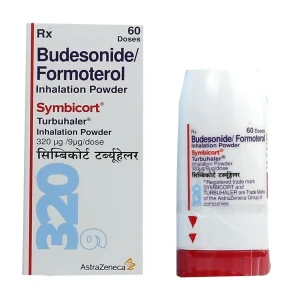
TM Owner AstraZeneca
Symbicort 160mcg/4.5mcg Inhaler
Global Shipping : Reliable Global Distribution Network
Express Delivery : Priority Shipping for Every Order
Secure Payments : Trusted Payment Protection System
 Disclaimer

Secure Handling
24/7 Worldwide Support

Global Access
Worldwide Access to Health

Cold-Chain Expert
Excellence in Cold-Chain

Trusted Supply
Certified Medical Supply
Indications & Clinical Uses
- Symbicort 160/4.5 (budesonide 160 mcg and formoterol fumarate dihydrate 4.5 mcg per actuation) is a combination oral inhaler containing an inhaled corticosteroid and a long-acting beta2-agonist (LABA), used for the long-term, twice-daily maintenance treatment of asthma in patients aged 6 and older, and to maintain airflow and reduce exacerbations in adults with chronic obstructive pulmonary disease (COPD).
- Symbicort is NOT a rescue inhaler and is not approved in the US for relief of sudden breathlessness or acute bronchospasm — a fast-acting reliever inhaler is still needed for that.
- In some countries outside the US, budesonide/formoterol delivered via a Turbuhaler device is used differently, as both the daily maintenance and the as-needed reliever inhaler (a MART/SMART regimen); this as-needed use does not apply to the pressurised aerosol product described here.
Side Effects
- Common reactions, affecting roughly 5 to 10 percent of users, include nasopharyngitis (a runny or blocked nose), headache, upper respiratory infections, throat irritation, and sinusitis; oral thrush (candidiasis) can also occur, especially in COPD patients, and rinsing your mouth with water after each dose without swallowing helps prevent this.
- Symbicort's current US label does not carry a boxed warning — earlier labels for this class of combination inhaler carried a black-box warning about asthma-related death with long-acting beta-agonists, but the FDA removed this from budesonide/formoterol and similar combination products after large safety trials found no significant increase in serious asthma outcomes when the LABA is combined with an inhaled steroid.
- Even so, seek urgent care for worsening wheeze, chest tightness, or breathing difficulty that does not improve, or for facial or throat swelling.
Precautions & Warnings
- Symbicort is not a substitute for a rescue inhaler and must not be used alone to treat sudden asthma or COPD attacks; keep a fast-acting bronchodilator on hand at all times.
- It is not recommended alongside other medicines containing a long-acting beta-agonist.
- Because it contains an inhaled corticosteroid, Symbicort can increase susceptibility to respiratory infections including pneumonia in COPD patients, and can suppress the immune response, so avoid contact with chickenpox or measles if you are not immune.
- If you are switching from oral steroid tablets, this must be done gradually because of the risk of adrenal insufficiency.
- In children, growth should be monitored regularly.
- Symbicort is for oral inhalation only — never swallow the canister contents or use it in a nebuliser — and caution is advised in people with heart disease, high blood pressure, seizure disorders, thyroid problems, or diabetes.
Avoid Interactions
- Strong CYP3A4 inhibitors such as ketoconazole, itraconazole, and ritonavir can raise budesonide levels in the blood and increase the risk of corticosteroid side effects, so this combination should be used cautiously and only if necessary.
- Beta-blockers, including eye drops, can reduce the bronchodilating effect of formoterol and should generally be avoided unless there is a compelling reason to use them.
- Monoamine oxidase inhibitors, tricyclic antidepressants, and other drugs that prolong the QT interval can increase the cardiovascular effects of formoterol, and diuretics that lower potassium can worsen low potassium levels caused by beta-agonists — an ECG or potassium check may be advised if these are combined.
- Tell your healthcare provider about all other inhalers, heart medicines, antidepressants, and diuretics you take before starting Symbicort.
References
Frequently Asked Questions
Symbicort (budesonide/formoterol) is a combination inhaler used for daily maintenance treatment of asthma in people aged 6 and over, and to keep airways open in adults with COPD. It is not a rescue inhaler — you still need a fast-acting reliever inhaler for sudden breathlessness or an asthma attack.
Symbicort is inhaled through the mouth, usually as two puffs twice daily, morning and evening, about 12 hours apart. Rinse your mouth with water after each dose and spit it out, without swallowing, to help prevent oral thrush. Do not use extra doses for sudden symptoms.
Common effects include a runny or blocked nose, headache, throat irritation, sinusitis, and oral thrush. Symbicort carries no boxed warning on its current label. Still, get urgent help for worsening wheeze, chest tightness, breathing difficulty that does not improve, or swelling of the face, lips, or throat.
Avoid other long-acting beta-agonist inhalers while using Symbicort, and use beta-blockers, including eye drops, with caution since they can blunt its effect. Tell your doctor about antidepressants, diuretics, and antifungal drugs like ketoconazole, which can raise side-effect risk. Avoid contact with chickenpox or measles if not immune.
Take the missed dose as soon as you remember, then continue your normal twice-daily schedule — do not double up to make up for it. Store the inhaler at 20°C to 25°C (68°F to 77°F), and prime a new inhaler before first use as directed in the instructions.
Symbicort 160/4.5 is approved for asthma maintenance treatment in children aged 6 and older, at the strength and dose your child's doctor prescribes. Growth should be checked regularly during long-term use, since inhaled steroids can slightly slow a child's growth rate.

Trusted & Reliable – Your Partner in Global Distribution.
We provide comprehensive lines of pharmaceutical products to support all your healthcare distribution needs.


