

TM Owner Generic
Tafenoquine 50 mg (paed) / 150 mg / 300 mg Tablet
Global Shipping : Reliable Global Distribution Network
Express Delivery : Priority Shipping for Every Order
Secure Payments : Trusted Payment Protection System
 Disclaimer

Secure Handling
24/7 Worldwide Support

Global Access
Worldwide Access to Health

Cold-Chain Expert
Excellence in Cold-Chain

Trusted Supply
Certified Medical Supply
Indications & Clinical Uses
- 'Tafenoquine' by itself is not a registered trade name; it is marketed under three distinct, non-interchangeable brand names for three different uses.
- Krintafel (GlaxoSmithKline, approved in the US) is a single 300 mg dose (two 150 mg tablets) given with a 3-day chloroquine course, for radical cure (prevention of relapse) of Plasmodium vivax malaria in patients aged 16 and older.
- Arakoda (60 Degrees Pharmaceuticals, approved in the US) is a separate 100 mg tablet used for malaria prophylaxis in adults aged 18 and older, with a 3-day loading dose before travel, a weekly dose during travel, and one final dose after leaving.
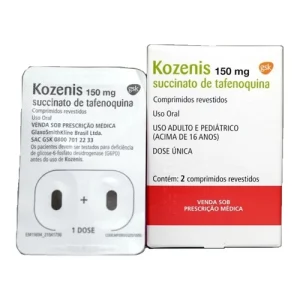
- Kozenis (GlaxoSmithKline, approved by Australia's TGA) is a paediatric radical-cure formulation using 50 mg dispersible tablets, or 150 mg tablets in heavier children, for children aged 2 and older by weight band.
Side Effects
- The main risk shared by all tafenoquine products is haemolytic anaemia (destruction of red blood cells) in people with glucose-6-phosphate dehydrogenase (G6PD) deficiency, which is why G6PD testing is mandatory before any dose.
- None of the three brands (Krintafel, Arakoda, Kozenis) carries a boxed warning, but this hemolysis risk is the single most important safety point on every one of their labels.
- Other effects include headache, dizziness, nausea, vomiting and reduced appetite, and mild, usually harmless elevations in methemoglobin.
- Delayed psychiatric reactions - unusual dreams, anxiety, low mood or, rarely, psychosis - can appear because tafenoquine stays in the body for around 2 to 3 weeks.
- Seek urgent medical attention for dark urine, yellowing of the skin or eyes, unusual tiredness, or any new mood or behaviour change.
Precautions & Warnings
- G6PD enzyme testing is required before every tafenoquine dose, for all three brands; tafenoquine must not be given to anyone with G6PD deficiency or unknown G6PD status because of the hemolytic anaemia risk.
- Breastfeeding is avoided unless the infant's G6PD status is known to be normal.
- Tafenoquine is contraindicated in pregnancy and in anyone with a current or past psychotic disorder; women of reproductive potential are usually advised to have a pregnancy test first and to use effective contraception during treatment and for three months afterwards.
- Krintafel is taken alongside a chloroquine course under medical supervision for radical cure; Arakoda is a self-administered take-home course for prophylaxis, so if a dose is missed while travelling, resume the regular schedule and contact your prescriber for guidance rather than doubling up.
Avoid Interactions
- Tafenoquine should not be relied on together with artemisinin-based antimalarials for radical cure, as efficacy data support pairing it only with chloroquine (Krintafel/Kozenis) for that use.
- Other medicines that can cause haemolysis or affect red blood cells should be used cautiously and discussed with your prescriber.
- Tell your healthcare provider about every medicine and supplement you take, and about any personal or family history of G6PD deficiency, mental health conditions, or kidney problems, before starting any tafenoquine-containing product.
- Do not take more than one tafenoquine-containing brand at the same time.
References
Frequently Asked Questions
Tafenoquine is sold under three brand names for different uses: Krintafel prevents malaria relapse (radical cure of P. vivax) alongside chloroquine, Arakoda prevents malaria in travellers, and Kozenis is a children's radical-cure version. There is no single product simply called 'Tafenoquine' - check which brand you've been prescribed.
Dosing depends on the brand. Krintafel is a single 300 mg dose (two 150 mg tablets) taken with food during a chloroquine course. Arakoda is taken daily for 3 days before travel, then weekly during travel, then once more after leaving. Kozenis uses weight-based dosing in children.
All tafenoquine brands can cause haemolytic anaemia in people with G6PD enzyme deficiency, which is why G6PD testing is required before every dose. Other effects include headache, dizziness, nausea and vomiting. Delayed anxiety, low mood or vivid dreams can occur for weeks afterwards, since tafenoquine stays in the body a long time.
Do not take Tafenoquine (Krintafel, Arakoda or Kozenis) if you have G6PD deficiency, unknown G6PD status, or a history of psychosis. Avoid pregnancy during treatment and for three months afterwards. Tell your prescriber about all other medicines, and never combine two different tafenoquine brands together.
If you miss a weekly Arakoda dose while travelling, take it as soon as you remember and resume your normal weekly schedule; do not double up. Krintafel and Kozenis are single, supervised doses given with chloroquine, so a 'missed dose' does not apply to them the same way.
Krintafel and Arakoda are approved only from age 16 and 18. For children, GSK's Kozenis brand of tafenoquine is approved from age 2 upward, using weight-based 50 mg dispersible or 150 mg tablets, for radical cure of P. vivax malaria alongside chloroquine - not for malaria prevention.

Trusted & Reliable – Your Partner in Global Distribution.
We provide comprehensive lines of pharmaceutical products to support all your healthcare distribution needs.


