

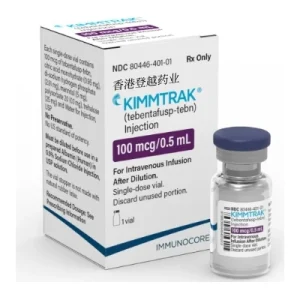
TM Owner Immunocore
Tebentafusp Infusion 100mcg/0.5mL Injection
Global Shipping : Reliable Global Distribution Network
Express Delivery : Priority Shipping for Every Order
Secure Payments : Trusted Payment Protection System
 Disclaimer

Secure Handling
24/7 Worldwide Support

Global Access
Worldwide Access to Health

Cold-Chain Expert
Excellence in Cold-Chain

Trusted Supply
Certified Medical Supply
Indications & Clinical Uses
- This product is listed by its generic name, tebentafusp-tebn; the approved brand is Kimmtrak, made by Immunocore.
- Kimmtrak 100 mcg/0.5 mL is a bispecific gp100 peptide-HLA-directed CD3 T-cell engager given by intravenous infusion only in a certified healthcare setting, never self-administered.
- It is approved in the United States and other markets for HLA-A*02:01-positive adult patients with unresectable or metastatic uveal melanoma, a rare eye cancer; an HLA blood test confirming this genetic marker is required before treatment starts.
- Dosing follows a fixed weekly schedule: 20 mcg on day 1, 30 mcg on day 8, then 68 mcg from day 15 onward, given as a 15 to 20 minute infusion, continued until disease progresses or side effects become unacceptable.
- Kimmtrak has no interchangeable biosimilar or reference-brand alternative.
Side Effects
- Kimmtrak carries a boxed warning for cytokine release syndrome (CRS), which occurred in about 89% of patients and was serious (grade 2 or higher) in roughly 77%; because of this, patients are monitored in a healthcare facility for at least 16 hours after each of the first three infusions.
- Skin reactions, including rash, itching, and dry skin, occurred in over 90% of patients, and liver enzyme elevations occurred in about two-thirds.
- Other very common effects include fever, fatigue, nausea, chills, abdominal pain, swelling, low blood pressure, headache, and vomiting.
- Seek immediate medical attention for fever, chills, difficulty breathing, dizziness, or a fast heartbeat during or after an infusion, since these can signal CRS.
Precautions & Warnings
- Because of the CRS risk, Kimmtrak must be given only where resuscitation equipment and staff trained to manage severe reactions are immediately available, with blood pressure, oxygen levels, and temperature checked before and after each of the first three doses.
- Liver enzymes and bilirubin are monitored regularly, since significant elevations can occur.
- Kimmtrak can cause fetal harm, so effective contraception is required during treatment and for one week after the final dose; it should not be used during pregnancy or breastfeeding without discussing risks with a specialist.
- Skin reactions are managed with antihistamines and topical or oral steroids depending on severity.
- This vial must be refrigerated at 2C to 8C and never frozen - freezing destroys the product and any vial that has been frozen must be discarded.
Avoid Interactions
- The release of inflammatory cytokines during Kimmtrak treatment can temporarily suppress liver enzymes that break down other medicines (CYP450 enzymes), which may raise or lower the levels of other drugs cleared through this pathway, particularly narrow-therapeutic-index medicines; dose adjustment or extra monitoring of those medicines may be needed, especially in the days after the first three infusions when CRS risk is highest.
- Live vaccines should be avoided during treatment because of the effect on the immune system.
- There are no specific food interactions.
- Always tell your healthcare provider and pharmacist about every prescription medicine, over-the-counter product, and supplement you take before starting and during Kimmtrak treatment.
References
Frequently Asked Questions
This product's approved brand name is Kimmtrak (tebentafusp-tebn). It treats HLA-A*02:01-positive adults with unresectable or metastatic uveal melanoma, a rare eye cancer. An HLA blood test confirming this genetic marker is required before starting, since Kimmtrak only works in patients who carry it.
Kimmtrak is given by intravenous infusion in a certified healthcare facility, never at home. Dosing is weekly: 20 mcg on day 1, 30 mcg on day 8, then 68 mcg from day 15 onward, each infused over 15 to 20 minutes, continued until progression or unacceptable side effects.
Kimmtrak carries a boxed warning for cytokine release syndrome, which affected about 89% of patients and can be serious. Other very common effects include skin rash, itching, fever, fatigue, nausea, chills, and low blood pressure. Seek immediate help for fever, dizziness, or breathing trouble during or after infusion.
Because of cytokine release syndrome, you're monitored in a healthcare facility for at least 16 hours after each of your first three Kimmtrak infusions, with blood pressure and oxygen checks. Liver enzymes and bilirubin are also monitored regularly throughout treatment.
Kimmtrak vials must be refrigerated at 2C to 8C at all times and protected from light - they must never be frozen. A vial that has been frozen must be discarded. Storage and handling are managed entirely by the pharmacy and clinic, not by patients.
Kimmtrak can cause fetal harm, so it should not be used during pregnancy without discussing risks with your specialist. Effective contraception is required during treatment and for one week after your final dose; breastfeeding should also be discussed with your healthcare provider beforehand.

Trusted & Reliable – Your Partner in Global Distribution.
We provide comprehensive lines of pharmaceutical products to support all your healthcare distribution needs.


