

TM Owner Roche
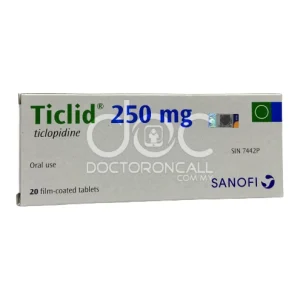
Ticlid 250mg Tablet
Global Shipping : Reliable Global Distribution Network
Express Delivery : Priority Shipping for Every Order
Secure Payments : Trusted Payment Protection System
 Disclaimer

Secure Handling
24/7 Worldwide Support

Global Access
Worldwide Access to Health

Cold-Chain Expert
Excellence in Cold-Chain

Trusted Supply
Certified Medical Supply
Indications & Clinical Uses
- Ticlid (ticlopidine hydrochloride) 250 mg tablets is an antiplatelet medicine that reduces the risk of thrombotic (clot-related) stroke in patients who have had warning signs of stroke or a completed thrombotic stroke, and is also used with aspirin, for a limited period, to prevent blood clots after a coronary artery stent is placed.
- The Ticlid brand itself is discontinued in the United States - current listings mark it 'DSC' (discontinued) - though the molecule, ticlopidine, remains available as a generic tablet from manufacturers such as Teva and Apotex, and this content is based on the current generic ticlopidine label.
- Ticlopidine was the forerunner of newer antiplatelet drugs such as clopidogrel (Plavix) and prasugrel, which have largely replaced it because of a better safety profile; ticlopidine and clopidogrel are not interchangeable without medical guidance.
- It is taken by mouth, usually twice daily with food.
Side Effects
- Boxed warning: ticlopidine can cause life-threatening blood disorders, including neutropenia/agranulocytosis (severely low infection-fighting white cells), thrombotic thrombocytopenic purpura (TTP), and aplastic anaemia; these can develop suddenly, mostly within the first three months, and require immediate blood testing if suspected.
- The most common side effects are gastrointestinal: diarrhoea (about 1 in 8 patients), nausea and dyspepsia (each about 1 in 14), and skin rash (about 1 in 20).
- Bleeding and bruising can occur because ticlopidine affects platelet function.
- Seek urgent medical attention for fever, sore throat, unusual bruising or bleeding, yellowing of the skin or eyes, severe weakness, confusion, or purple skin spots, and have blood counts checked every two weeks for the first three months of treatment.
Precautions & Warnings
- Because of the risk of TTP, neutropenia/agranulocytosis and aplastic anaemia, complete blood counts with white cell differential are required every two weeks during the first three months of treatment and promptly if any sign of infection or bleeding appears; ticlopidine should be stopped immediately if any of these blood disorders is confirmed or strongly suspected.
- Do not use Ticlid if you have a bleeding disorder, active peptic ulcer, severe liver disease, or a history of TTP, neutropenia or agranulocytosis.
- Stop ticlopidine about 10 to 14 days before elective surgery because of bleeding risk, unless your surgeon advises otherwise.
- Use caution in patients with kidney or liver impairment.
- Discuss use in pregnancy and breastfeeding with your healthcare provider, as data are limited.
Avoid Interactions
- Ticlopidine increases bleeding risk when combined with aspirin, NSAIDs, other antiplatelet drugs, or anticoagulants such as warfarin, so these combinations need close monitoring and are sometimes used deliberately for a limited time after stenting under close supervision.
- Cimetidine reduces ticlopidine clearance by about half; theophylline blood levels and phenytoin levels can rise significantly when taken with ticlopidine.
- Antacids reduce ticlopidine absorption by about 18 percent, so timing may need adjustment.
- Ticlopidine can also affect the clearance of other drugs metabolised by the same liver pathways.
- Tell your healthcare provider and pharmacist about every prescription and over-the-counter medicine, herbal product, and supplement you take, since dose adjustments are often needed.
References
Frequently Asked Questions
Ticlid (ticlopidine) is an antiplatelet tablet that lowers the risk of clot-related stroke after warning signs or a prior stroke, and is used short-term with aspirin after a coronary stent. The Ticlid brand is discontinued in the US; generic ticlopidine is still available.
Ticlopidine tablets are taken by mouth, usually 250 mg twice daily, with food to reduce stomach upset. Take it at the same times each day. Do not stop it suddenly without medical advice, and tell any surgeon you take it before planned operations.
Ticlopidine carries a boxed warning for rare but life-threatening blood disorders: severely low white cells (agranulocytosis), thrombotic thrombocytopenic purpura, and aplastic anaemia, mostly in the first three months. Blood counts are checked every two weeks during this period to catch problems early.
The most common effects are diarrhoea, nausea, indigestion and skin rash. Because it affects platelets, Ticlid also increases bruising and bleeding risk. Get urgent help for fever, sore throat, unusual bleeding, yellowing skin or eyes, or severe weakness or confusion.
Avoid unnecessary use of aspirin, NSAIDs, or other blood thinners unless your doctor has specifically prescribed them together, since bleeding risk rises. Cimetidine, theophylline and phenytoin levels can be affected. Tell your provider about every medicine, including antacids, which reduce ticlopidine's absorption.
No. Ticlopidine (Ticlid) was the earlier antiplatelet drug in this class; clopidogrel (Plavix) and newer agents largely replaced it because of a lower risk of serious blood disorders. They are not interchangeable doses, and switching between them should only be done under medical supervision.

Trusted & Reliable – Your Partner in Global Distribution.
We provide comprehensive lines of pharmaceutical products to support all your healthcare distribution needs.


