

TM Owner Baxter
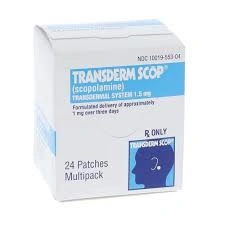
Transderm Scop 1.5mg Transdermal Patch
Global Shipping : Reliable Global Distribution Network
Express Delivery : Priority Shipping for Every Order
Secure Payments : Trusted Payment Protection System
 Disclaimer

Secure Handling
24/7 Worldwide Support

Global Access
Worldwide Access to Health

Cold-Chain Expert
Excellence in Cold-Chain

Trusted Supply
Certified Medical Supply
Indications & Clinical Uses
- Transderm Scop 1.5 mg (scopolamine, an anticholinergic/antimuscarinic) is a transdermal patch approved in the US to prevent nausea and vomiting from motion sickness in adults, and separately to prevent post-operative nausea and vomiting (PONV) linked to recovery from anaesthesia and/or opioid pain relief after surgery.
- Each patch contains 1.5 mg scopolamine and is designed to release about 1 mg over 3 days of continuous wear behind the ear.
- For motion sickness, the patient applies the patch themselves before travelling; for PONV, it is usually applied by a nurse or clinician the evening before surgery or several hours beforehand.
- Safety and effectiveness have not been established in children.
- The medicine is also marketed generically as a scopolamine transdermal system.
- This patch should not be confused with injectable or oral scopolamine formulations used for different purposes and at different doses.
Side Effects
- The most common Transderm Scop (scopolamine) side effects are dry mouth, drowsiness and blurred vision from motion-sickness use; when used for post-operative nausea, dry mouth affects about 29% of patients, dizziness about 12%, drowsiness about 8% and visual disturbance about 5%.
- Pupil dilation and light sensitivity can occur, especially if the patch or hands that touched it contact the eye.
- There is no boxed warning on the current label.
- Rare but serious reactions include confusion, agitation, hallucinations, disorientation or memory problems, especially in older adults, and acute worsening of angle-closure glaucoma with eye pain, blurred vision, halos around lights and nausea, which needs urgent medical attention.
- Wash your hands immediately after applying or removing the patch, and remove it if severe drowsiness, confusion, difficulty urinating or eye pain develops, seeking prompt medical advice.
Precautions & Warnings
- Transderm Scop must not be used by anyone with angle-closure glaucoma or known hypersensitivity to scopolamine or other belladonna alkaloids.
- It can cause confusion, memory problems, hallucinations, seizures or hyperthermia, particularly in elderly patients or those with impaired kidney or liver function, and can worsen urinary retention, bowel obstruction or gastrointestinal narrowing.
- Remove the patch before an MRI scan, as the aluminium backing can cause skin burns.
- Because it can impair reaction time and coordination, avoid driving or operating machinery until you know how the patch affects you.
- Data on use in pregnancy and breastfeeding are limited; discuss the risks and benefits with your healthcare provider first.
- Apply only to clean, dry, hairless skin behind one ear, use one patch at a time, and do not cut the patch, as this alters drug release.
- Wash hands thoroughly after handling to avoid transferring the drug to the eyes.
Avoid Interactions
- Tell your healthcare provider about every medicine and supplement you use before starting Transderm Scop (scopolamine).
- Alcohol and other central nervous system depressants, including opioids, sedatives, sleeping tablets and some antihistamines, can add to scopolamine's drowsiness and confusion.
- Other anticholinergic drugs, such as certain antidepressants, antipsychotics and antispasmodics, can add to dry mouth, blurred vision, constipation and urinary retention, and increase confusion risk in older adults.
- Scopolamine can slow stomach emptying, which may delay or reduce absorption of other oral medicines taken while the patch is worn.
- Avoid combining it with other belladonna-alkaloid products, and be cautious combining it with any other sedating medicine or with alcohol.
- Always mention that you are wearing a Transderm Scop patch if you are prescribed a new medicine or are due to have an MRI scan.
References
Frequently Asked Questions
Transderm Scop (scopolamine) is a skin patch that prevents nausea and vomiting from motion sickness in adults. It's also used to prevent nausea after surgery linked to anaesthesia or opioid painkillers. One patch, worn behind the ear, releases about 1 mg of scopolamine over 3 days.
Apply the Transderm Scop patch to dry, hairless skin behind one ear, at least 4 hours before travel for motion sickness, or the evening before surgery for post-operative nausea. Wear only one patch at a time for up to 3 days, then remove it and wash your hands.
Dry mouth, drowsiness and blurred vision are the most common Transderm Scop (scopolamine) side effects. Pupils may dilate, causing light sensitivity. Get urgent help for eye pain, confusion, hallucinations or severe drowsiness, and never let the patch or your hands touch your eyes.
Avoid alcohol and other sedating medicines, such as opioids and sleeping tablets, which add to Transderm Scop's (scopolamine) drowsiness. Avoid other anticholinergic drugs, which increase dry mouth and confusion risk. Never use it if you have angle-closure glaucoma, and remove the patch before an MRI.
No. Each Transderm Scop patch is for a single, continuous 3-day wear; do not cut it or reapply a used one. If it falls off early, wash the area and apply a fresh patch only if still needed, and tell your healthcare provider.
No. Transderm Scop (scopolamine) is not recommended for children, and people with angle-closure glaucoma must not use it. Older adults are more prone to confusion and memory problems. Data in pregnancy and breastfeeding are limited, so discuss the risks with your healthcare provider first.

Trusted & Reliable – Your Partner in Global Distribution.
We provide comprehensive lines of pharmaceutical products to support all your healthcare distribution needs.


