

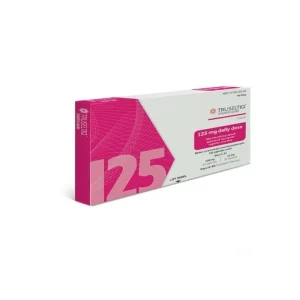
TM Owner QED Therapeutics
Truseltiq 125mg Capsule
Global Shipping : Reliable Global Distribution Network
Express Delivery : Priority Shipping for Every Order
Secure Payments : Trusted Payment Protection System
 Disclaimer

Secure Handling
24/7 Worldwide Support

Global Access
Worldwide Access to Health

Cold-Chain Expert
Excellence in Cold-Chain

Trusted Supply
Certified Medical Supply
Indications & Clinical Uses
- WITHDRAWN FROM THE US MARKET: the FDA formally withdrew Truseltiq's accelerated approval effective 16 May 2024, at the sponsor's voluntary request, after difficulties enrolling the confirmatory trial meant continued distribution was no longer commercially viable; Truseltiq is no longer available in the US.
- While marketed, Truseltiq (infigratinib) was an FGFR1-3 kinase inhibitor tablet-form capsule taken once daily by mouth for adults with previously treated, unresectable, locally advanced or metastatic cholangiocarcinoma (bile duct cancer) whose tumour carried an FGFR2 gene fusion or rearrangement confirmed by an FDA-approved test.
- The approved once-daily 125 mg dose was taken as a specific combination of 25 mg and 100 mg capsules together, not a single 125 mg capsule, for 21 consecutive days followed by 7 days off, in repeating 28-day cycles.
- It was manufactured by QED Therapeutics (a BridgeBio company).
Side Effects
- Truseltiq's US label carried no boxed warning.
- The most common effects, each reported in over 20% of patients, were nail changes/nail loss, mouth sores (stomatitis), dry eyes, tiredness, hair loss, hand-foot syndrome, joint pain, altered taste, constipation, stomach discomfort, dry mouth, eyelash changes, diarrhoea, dry skin, reduced appetite, blurred vision and vomiting.
- Because eye problems including retinal pigment epithelial detachment could occur, regular eye examinations were required before and during treatment; patients were told to report any change in vision urgently.
- High phosphate levels (hyperphosphataemia) and soft-tissue mineralisation were also monitored, along with signs of bone fracture, as FGFR inhibitors can affect bone and mineral metabolism.
Precautions & Warnings
- Truseltiq is no longer available for new prescriptions in the US following the May 2024 withdrawal of its accelerated approval; patients previously on treatment should have discussed alternative options with their oncologist.
- While it was marketed, ophthalmologic examinations were required at baseline and periodically during treatment because of the risk of retinal disorders, and phosphate levels were monitored regularly with dietary or medical management of hyperphosphataemia.
- Infigratinib could cause fetal harm, so effective contraception was required during treatment and for a period after the last dose in patients and partners; it was not used in pregnancy or breastfeeding.
- Dose reductions were required for hepatic or renal impairment.
- Storage, while marketed: 20°C to 25°C (68°F to 77°F), excursions to 15°C to 30°C permitted.
Avoid Interactions
- Patients previously on Truseltiq were told to report all medicines, herbal products and supplements to their oncologist.
- Strong CYP3A4 inhibitors (such as ketoconazole and clarithromycin) and grapefruit or grapefruit juice were avoided, as they raised infigratinib levels and toxicity; strong CYP3A4 inducers (such as rifampin, carbamazepine and St John's Wort) were avoided because they reduced its effectiveness.
- Medicines that raise phosphate levels, and other drugs affecting bone mineral metabolism, needed closer monitoring when combined with infigratinib.
- Live vaccines were avoided during treatment when possible.
- This information is provided for reference to the discontinued product; Truseltiq should not be sourced or used now that its approval has been withdrawn.
References
Frequently Asked Questions
No. The FDA formally withdrew Truseltiq's (infigratinib) accelerated approval on 16 May 2024 at the sponsor's request, and it is no longer marketed in the US. Patients who were taking it should discuss alternative treatment options with their oncologist.
While available, Truseltiq (infigratinib) treated adults with previously treated, unresectable or metastatic cholangiocarcinoma (bile duct cancer) whose tumour had an FGFR2 gene fusion or rearrangement, confirmed by an FDA-approved test, under accelerated approval.
Truseltiq was taken by mouth once daily as a combination of 25 mg and 100 mg capsules totalling 125 mg, for 21 days followed by 7 days off, in repeating 28-day cycles. The 125 mg daily dose was never a single capsule strength.
Common Truseltiq side effects included nail changes, mouth sores, dry eyes, fatigue, hair loss and hand-foot syndrome. There was no boxed warning, but regular eye exams were required because of a risk of retinal problems, and blood phosphate levels needed monitoring.
The FDA withdrew Truseltiq's accelerated approval in May 2024 because the sponsor could not enrol enough patients in the required confirmatory trial, making continued distribution commercially unworkable, not because of a new safety signal identified after approval.
No. Infigratinib could cause harm to an unborn baby, so effective contraception was required during treatment and for a time after the last dose, in both patients and partners, and it was not used in pregnancy or while breastfeeding.

Trusted & Reliable – Your Partner in Global Distribution.
We provide comprehensive lines of pharmaceutical products to support all your healthcare distribution needs.


