

TM Owner GSK
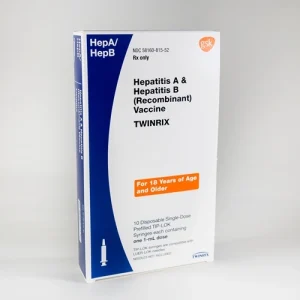
Twinrix 720 EL.U./20mcg Injection
Global Shipping : Reliable Global Distribution Network
Express Delivery : Priority Shipping for Every Order
Secure Payments : Trusted Payment Protection System
 Disclaimer

Secure Handling
24/7 Worldwide Support

Global Access
Worldwide Access to Health

Cold-Chain Expert
Excellence in Cold-Chain

Trusted Supply
Certified Medical Supply
Indications & Clinical Uses
- Twinrix, a combination of hepatitis A vaccine inactivated and hepatitis B vaccine recombinant (720 ELU/20 mcg per dose), is indicated for immunization against hepatitis A and hepatitis B viruses in adults.
- It is used for primary vaccination of individuals at risk of exposure to hepatitis A or hepatitis B, or both.
- The vaccine provides active immunization to produce antibodies against hepatitis A and hepatitis B surface antigen (HBsAg).
- It is administered as a series of injections according to immunization schedules, typically at 0, 1, and 6 months.
Side Effects
- Common side effects of Twinrix include local reactions at the injection site such as soreness, redness, and swelling, which may affect more than 1 in 10 people.
- Systemic reactions including headache, fever, nausea, and general malaise are common.
- Very common reactions include fatigue and muscle aches.
- Serious reactions are rare but may include anaphylaxis, Guillain-Barré syndrome, or other neurological complications.
- Most side effects are mild and resolve within a few days.
- Applicants should report persistent fever, severe headache, or signs of allergic reaction immediately.
Precautions & Warnings
- Twinrix should not be given to individuals with a known allergy to any component of the vaccine.
- It is contraindicated in people with severe adverse reactions to a previous dose.
- Immunocompromised patients may have a reduced response to the vaccine.
- The vaccine contains yeast; individuals with yeast allergy should not receive it.
- Pregnancy is a relative contraindication; vaccinate only if benefits outweigh risks.
- Blood products or immunoglobulin may reduce vaccine efficacy if given within certain timeframes.
- Do not mix with other vaccines in the same syringe.
- Store at 2°C to 8°C; do not freeze.
Avoid Interactions
- Twinrix should not be mixed with other vaccines in the same syringe or at the same injection site.
- Concurrent administration of other inactivated vaccines is generally acceptable at different sites.
- Live vaccines should be given either simultaneously or at least 4 weeks before or after Twinrix.
- Immunosuppressive medications, including corticosteroids and cytotoxic drugs, may reduce the immune response to the vaccine.
- Anticoagulants may increase bleeding at the injection site.
- Patients on these medications should inform their healthcare provider.
References
Frequently Asked Questions
Twinrix combines inactivated hepatitis A and recombinant hepatitis B vaccines (720 ELU/20 mcg per dose). It protects adults against infection from both hepatitis A and B viruses. The vaccine provides active immunization through a series of intramuscular injections, typically given at 0, 1, and 6 months.
Twinrix is administered as an intramuscular injection, usually into the deltoid (shoulder) muscle or anterolateral thigh. Each dose contains 0.5 mL. A complete primary series consists of 3 injections. An accelerated schedule (0, 7, and 21 days with a booster at 12 months) is available for rapid protection in urgent situations.
Common side effects include soreness, redness, or swelling at the injection site in more than 1 in 10 people. Headache and general malaise are common. Fever, nausea, and muscle aches may occur in 1–10 people. Most reactions are mild and resolve within 2–3 days. Apply ice to the injection site; acetaminophen may help with fever.
Do not receive live vaccines such as yellow fever or live attenuated influenza vaccine for at least 4 weeks before or after Twinrix. Inform your healthcare provider of all medications, especially immunosuppressive drugs, as they may reduce vaccine effectiveness. If you are allergic to yeast, inform your provider before vaccination.
After completing the 3-dose series, Twinrix provides long-term protection against both hepatitis A and B. Studies show protection lasts at least 30 years; most recipients do not require a booster. However, some immunocompromised individuals may have reduced or shorter-lasting immune response and require periodic antibody testing.
Vaccination during pregnancy should occur only if potential benefits outweigh risks, typically for women at high risk of hepatitis A exposure. Breastfeeding is not a contraindication to vaccination. Consult your healthcare provider to discuss your specific circumstances and vaccination timing.

Trusted & Reliable – Your Partner in Global Distribution.
We provide comprehensive lines of pharmaceutical products to support all your healthcare distribution needs.


