

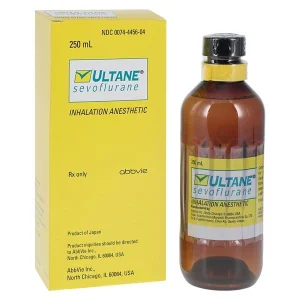
TM Owner AbbVie
Ultane 100% Inhalation Liquid
Global Shipping : Reliable Global Distribution Network
Express Delivery : Priority Shipping for Every Order
Secure Payments : Trusted Payment Protection System
 Disclaimer

Secure Handling
24/7 Worldwide Support

Global Access
Worldwide Access to Health

Cold-Chain Expert
Excellence in Cold-Chain

Trusted Supply
Certified Medical Supply
Indications & Clinical Uses
- Ultane (sevoflurane) is a volatile inhalational anesthetic used for induction and maintenance of general anesthesia in adult and pediatric patients.
- It is administered by inhalation using a calibrated vaporizer as part of a balanced anesthesia technique.
- Sevoflurane has rapid onset and offset characteristics, allowing quick patient control and emergence from anesthesia.
- It is used in both hospital operating rooms and outpatient surgical facilities.
- Ultane is suitable for patients of all ages, including pediatric and elderly populations, and is frequently used in combination with intravenous induction agents.
Side Effects
- Emergence delirium and agitation, particularly in pediatric patients, can occur during recovery.
- Postoperative nausea and vomiting (PONV) is common in adult patients.
- Transient increases in serum fluoride levels may occur but do not typically affect renal function at therapeutic doses.
- Hepatic effects are minimal with sevoflurane.
- Serious adverse reactions include malignant hyperthermia (rare but life-threatening genetic reaction), cardiac arrhythmias, and respiratory depression.
- Rare reports of hepatotoxicity and sensitization to epinephrine.
- Patients with susceptibility to malignant hyperthermia must not receive sevoflurane.
Precautions & Warnings
- Sevoflurane is administered only by trained anesthesiologists or certified anesthesia providers in controlled operating room environments with appropriate monitoring and emergency equipment.
- Screen all patients for malignant hyperthermia susceptibility; avoid sevoflurane in susceptible patients.
- Monitor for emergence delirium in pediatric patients; use appropriate sedation protocols.
- Patients with renal impairment may have increased fluoride ion levels; monitor renal function postoperatively if high fluoride levels anticipated.
- Use with caution in patients with coronary artery disease.
- Pregnancy category C—avoid elective surgery during pregnancy.
Avoid Interactions
- Sevoflurane is compatible with other intravenous induction agents (propofol, thiopental, etomidate, ketamine).
- Neuromuscular blocking agents (succinylcholine, rocuronium) may be used concurrently with appropriate monitoring.
- Opioid analgesics enhance anesthetic effect; dose adjustment necessary.
- NSAIDs should be avoided perioperatively in patients with renal impairment due to increased fluoride exposure risk.
- Epinephrine sensitivity is enhanced by sevoflurane; use cautiously and at lower doses.
- No significant interaction with typical perioperative medications.
References
Frequently Asked Questions
Ultane (sevoflurane) is an inhalational anesthetic used to induce and maintain general anesthesia during surgery. It provides rapid onset and recovery, allowing surgeons to control anesthesia depth easily. Ultane is used in operating rooms and outpatient surgery centers by trained anesthesia providers.
Ultane (sevoflurane) is a volatile inhalational anesthetic used to induce and maintain general anesthesia during surgery in operating rooms and surgical centers. It provides rapid onset and offset, allowing anesthesiologists to control depth and emergence from anesthesia precisely and safely.
Emergence delirium (confusion and agitation) can occur during recovery, especially in children. Nausea and vomiting after surgery are common in adults. Malignant hyperthermia is a rare but serious genetic reaction. Temporary increases in blood fluoride levels occur but rarely affect kidney function. Your anesthesia team monitors all vital signs.
Emergence delirium and agitation can occur during recovery from sevoflurane anesthesia, particularly in pediatric patients. Nausea and vomiting after surgery are common in adults. Serious but rare reactions include malignant hyperthermia in genetically susceptible patients and cardiac arrhythmias. Your anesthesia team provides continuous monitoring.
Patients with genetic susceptibility to malignant hyperthermia must never receive sevoflurane. Discuss all medical conditions with your anesthesiologist before surgery. NSAIDs should be avoided in patients with kidney problems due to increased fluoride exposure. Inform your provider of heart disease or arrhythmia history.
Yes, Ultane is approved and frequently used in pediatric patients. It provides smooth induction and recovery. Emergence delirium occurs more often in children than adults but is managed with appropriate protocols. Your pediatric anesthesiologist will discuss the anesthetic plan for your child.

Trusted & Reliable – Your Partner in Global Distribution.
We provide comprehensive lines of pharmaceutical products to support all your healthcare distribution needs.


