

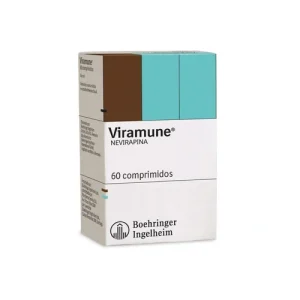
TM Owner Boehringer Ingelheim
Viramune 200mg Tablet
Global Shipping : Reliable Global Distribution Network
Express Delivery : Priority Shipping for Every Order
Secure Payments : Trusted Payment Protection System
 Disclaimer

Secure Handling
24/7 Worldwide Support

Global Access
Worldwide Access to Health

Cold-Chain Expert
Excellence in Cold-Chain

Trusted Supply
Certified Medical Supply
Indications & Clinical Uses
- Viramune 200mg tablets contain nevirapine, a non-nucleoside reverse transcriptase inhibitor (NNRTI) antiviral.
- Viramune is used, always together with other antiretroviral medicines, to treat HIV-1 infection.
- The US label says it should not be started in adult women with CD4+ counts above 250 cells/mm3 or in adult men above 400 cells/mm3 unless the benefit clearly outweighs the risk, because of the risk of serious liver problems.
- Treatment begins with a mandatory 14-day lead-in of 200 mg once daily, then 200 mg twice daily; children are dosed by body surface area.
- If dosing is interrupted for more than 7 days the lead-in must be restarted.
- A separate once-daily extended-release Viramune XR tablet exists with different dosing, so the two forms must not be confused.
- Viramune also comes as a 50 mg/5 mL oral suspension.
- Viramune is made by Boehringer Ingelheim.
Side Effects
- Rash is the most common side effect and can be severe, and liver-related events (hepatitis, abnormal liver tests) also occur; nausea, headache, fatigue, diarrhoea and stomach pain also occur.
- BOXED WARNING: Viramune can cause life-threatening, including fatal, liver toxicity (hepatotoxicity) and serious skin reactions.
- The greatest risk is in the first 18 weeks of treatment, especially weeks 1 to 6, and women and people with higher CD4+ counts are at greater risk.
- Stop the tablets and seek urgent medical help if you develop a rash (especially with fever, blisters, mouth sores, eye inflammation or swelling of the face), yellow skin or eyes, dark urine, pale stools, stomach pain, nausea or loss of appetite, or flu-like symptoms.
- Do not simply wait for these to settle, and keep all scheduled blood test appointments.
Precautions & Warnings
- Viramune carries a boxed warning for life-threatening liver toxicity and skin reactions, and you need intensive clinical and laboratory monitoring, particularly during the first 18 weeks.
- Never skip or shorten the mandatory 14-day lead-in.
- Viramune must not be used in moderate or severe liver impairment (Child-Pugh class B or C).
- Severe liver events have been reported in pregnant women with CD4+ counts above 250 cells/mm3.
- Hormonal contraceptives should not be your only contraception while you take Viramune, because it can lower their levels; an additional or alternative method is recommended.
- In the US, HIV-positive mothers are advised not to breastfeed, and nevirapine passes into breast milk.
Avoid Interactions
- Medicines that reduce efficacy or are reduced by Viramune: nevirapine induces CYP3A and CYP2B6 enzymes, lowering levels of hormonal contraceptives (pills and other hormonal methods), methadone (a dose increase is often needed), and ketoconazole (avoid the combination).
- Rifampin (rifampicin) should not be combined with Viramune.
- The herbal product St John's wort (hypericum) must not be used with Viramune.
- Medicines that increase levels or risk: fluconazole raises nevirapine exposure, which may increase the risk of side effects, so extra monitoring is needed.
- Do not start any new medicine or supplement without asking your healthcare provider or pharmacist, and tell them about everything you take, including herbal products.
References
Frequently Asked Questions
Viramune (nevirapine) is an HIV-1 antiviral used together with other HIV medicines. It is not taken alone. The US label advises against starting it in women with CD4 counts above 250 or men above 400 cells/mm3 unless the benefit outweighs the risk.
Viramune (nevirapine) starts with one 200 mg tablet daily for 14 days, then one 200 mg tablet twice daily, always with other HIV medicines. Do not skip the 14-day lead-in. If you stop for more than 7 days, you must restart with the lead-in.
Viramune (nevirapine) most often causes rash, with nausea, headache, fatigue and liver problems also reported. The boxed warning covers life-threatening liver toxicity and severe skin reactions, mostly in the first 18 weeks. Stop and get urgent help for rash with fever or blisters, yellow eyes or skin, or dark urine.
Avoid St John's wort, ketoconazole and rifampin while taking Viramune (nevirapine). Do not rely on hormonal contraceptives alone, because Viramune lowers their levels; use an additional or alternative method. Methadone doses often need increasing, so tell your prescriber about every medicine you use.
The 14-day Viramune (nevirapine) lead-in, at 200 mg once daily, is mandatory before the twice-daily dose. Restart it if dosing stops for more than 7 days. Liver and skin monitoring is especially close in weeks 1 to 18, so attend every blood test.
Viramune (nevirapine) passes into breast milk, and US guidance advises HIV-positive mothers not to breastfeed. Severe liver events have occurred in pregnant women with CD4 counts above 250. Use extra contraception, since Viramune lowers hormonal contraceptive levels, and tell your prescriber if you plan pregnancy.

Trusted & Reliable – Your Partner in Global Distribution.
We provide comprehensive lines of pharmaceutical products to support all your healthcare distribution needs.


