

TM Owner Amgen
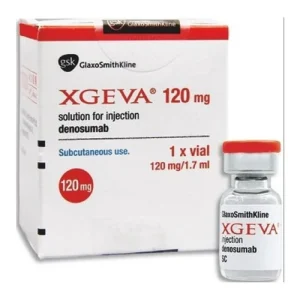
Xgeva 120mg Injection
Global Shipping : Reliable Global Distribution Network
Express Delivery : Priority Shipping for Every Order
Secure Payments : Trusted Payment Protection System
 Disclaimer

Secure Handling
24/7 Worldwide Support

Global Access
Worldwide Access to Health

Cold-Chain Expert
Excellence in Cold-Chain

Trusted Supply
Certified Medical Supply
Indications & Clinical Uses
- Xgeva 120 mg is a subcutaneous injection of denosumab, a RANK ligand inhibitor that protects bone in people with cancer.
- In the US it is used to prevent skeletal-related events in adults with multiple myeloma and in adults with bone metastases from solid tumours, to treat giant cell tumour of bone in adults and skeletally mature adolescents when it cannot be removed or surgery would cause severe harm, and to treat hypercalcaemia of malignancy that no longer responds to bisphosphonates.
- The EU approval covers prevention of skeletal-related events in adults with advanced cancers involving bone, and giant cell tumour of bone.
- The usual dose is 120 mg every 4 weeks, with extra doses on days 8 and 15 for giant cell tumour and hypercalcaemia.
- Xgeva 120 mg is a different product from lower-dose denosumab for osteoporosis (Prolia 60 mg), and patients on Xgeva should not receive other denosumab products at the same time.
Side Effects
- Xgeva has no boxed warning.
- In the US label, the most common side effects in people with bone metastases (25% or more) were fatigue or weakness (45%), low phosphate (32%) and nausea (31%); hypocalcaemia occurred in 18% and dyspnoea in 21%, and in multiple myeloma diarrhoea (34%), nausea (32%) and anaemia (22%) were most common.
- Serious effects include severe symptomatic hypocalcaemia, including fatal cases, osteonecrosis of the jaw (1.8% in bone metastasis trials and 4.1% in myeloma trials) and atypical thigh bone fractures.
- Report thigh, hip or groin pain, jaw pain, swelling or loose teeth, and muscle cramps, numbness or tingling.
- Regular calcium checks are needed, especially at the start of treatment.
Precautions & Warnings
- Existing low calcium (hypocalcaemia) must be corrected before Xgeva is started, and calcium should be monitored closely; the EU label requires daily calcium (at least 500 mg) and vitamin D (at least 400 IU) unless calcium is high.
- Xgeva is contraindicated with significant hypersensitivity to denosumab, and in the EU also with unhealed lesions from dental or oral surgery.
- A dental examination and preventive dentistry are advised before starting, and invasive dental procedures should be avoided during treatment.
- Xgeva can harm an unborn baby: check pregnancy status first and use effective contraception during treatment and for 5 months after the last dose.
- It is not recommended in children other than skeletally mature adolescents (12 to 16) with giant cell tumour; hypercalcaemia can occur after stopping in growing children.
- Store vials at 2°C to 8°C in the original carton; they may be kept at room temperature (up to 25°C) for up to 30 days.
Avoid Interactions
- No formal drug interaction studies have been done with Xgeva, and the US label reports that denosumab levels were not altered by chemotherapy or hormone therapy.
- Avoid receiving any other denosumab product (such as lower-dose Prolia) at the same time as Xgeva, as the US label says patients on Xgeva should not receive other denosumab products.
- No medicines are named that reduce its efficacy.
- Tell your healthcare provider about all medicines and supplements, including calcium and vitamin D and any bisphosphonates, and tell your dentist that you are taking Xgeva.
References
Frequently Asked Questions
Xgeva (denosumab) 120 mg helps prevent bone complications such as fractures in adults with multiple myeloma or bone metastases from solid tumours. It also treats giant cell tumour of bone and, in the US, hypercalcaemia of malignancy that no longer responds to bisphosphonates.
Xgeva (denosumab) is a 120 mg subcutaneous injection given every 4 weeks for bone metastases and multiple myeloma. For giant cell tumour of bone and hypercalcaemia of malignancy, extra 120 mg doses are given on days 8 and 15 of the first month.
Common Xgeva side effects include fatigue, weakness, low phosphate, nausea, breathlessness and low calcium. Serious ones are severe low calcium, osteonecrosis of the jaw and unusual thigh bone fractures. Report jaw pain, loose teeth, thigh or groin pain, or muscle cramps and tingling.
Avoid other denosumab products, such as Prolia, while on Xgeva (denosumab), because they contain the same medicine. Avoid invasive dental procedures during treatment, and do not start Xgeva while you have uncorrected low calcium. Tell your healthcare provider about all medicines, including bisphosphonates.
Xgeva (denosumab) can cause severe low calcium, including fatal cases, so calcium is monitored closely, especially early on. It can also cause osteonecrosis of the jaw, so a dental examination is advised before starting. The EU label requires daily calcium and vitamin D unless calcium is high.
Xgeva (denosumab) can harm an unborn baby. Pregnancy status must be checked before starting, and effective contraception is needed during treatment and for 5 months after your last dose. The US label found denosumab in monkey milk, with no human breastfeeding data.

Trusted & Reliable – Your Partner in Global Distribution.
We provide comprehensive lines of pharmaceutical products to support all your healthcare distribution needs.


