

TM Owner Ascendis Pharma
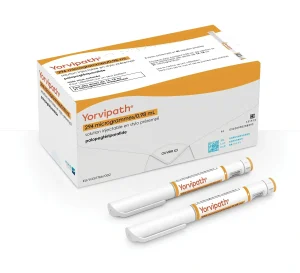
Yorvipath 294mcg/0.98ml Injection
Global Shipping : Reliable Global Distribution Network
Express Delivery : Priority Shipping for Every Order
Secure Payments : Trusted Payment Protection System
 Disclaimer

Secure Handling
24/7 Worldwide Support

Global Access
Worldwide Access to Health

Cold-Chain Expert
Excellence in Cold-Chain

Trusted Supply
Certified Medical Supply
Indications & Clinical Uses
- Yorvipath 294 mcg (palopegteriparatide) is a parathyroid hormone replacement medicine given by injection under the skin once a day with a prefilled pen.
- In the US it is approved for the treatment of hypoparathyroidism (too little parathyroid hormone, which leads to low blood calcium) in adults.
- The US label states it has not been studied in acute post-surgical hypoparathyroidism or in children.
- The 294 mcg figure is the total content of one pen (294 mcg in 0.98 mL), which delivers doses of 15, 18 or 21 mcg; Yorvipath is also made as 168 mcg and 420 mcg pens that deliver different dose ranges, so the pen strength must match the dose your healthcare provider prescribes.
- The usual starting dose is 18 mcg daily, adjusted in 3 mcg steps up to a maximum of 30 mcg.
Side Effects
- In clinical studies the most common side effects were injection site reactions (about 39%), vasodilatory symptoms including low blood pressure on standing (28%), headache (21%), diarrhoea (10%), back pain (8%), high blood calcium (8%) and sore throat (7%).
- Serious problems to recognise and report include allergic reactions such as hives, swelling of the face or throat or difficulty breathing (anaphylaxis and angioedema have been reported), high blood calcium (nausea, vomiting, constipation, lethargy, muscle weakness) and low blood calcium (tingling in the fingertips, toes, lips or tongue, muscle cramps or spasms, seizures, abnormal heart rhythm).
- Serious high calcium requiring hospital care has occurred.
- The label has no boxed warning, but it carries a warning about a possible risk of bone cancer (osteosarcoma).
- Rotate injection sites and report symptoms promptly.
Precautions & Warnings
- Blood calcium must be measured 7 to 10 days after starting Yorvipath or changing the dose, and then at least every 4 to 6 weeks once stable, with calcium and active vitamin D doses adjusted by your provider.
- Do not stop suddenly, because low blood calcium can follow.
- Use only one injection per day.
- Yorvipath is contraindicated in severe hypersensitivity to palopegteriparatide or its ingredients.
- Because of a potential osteosarcoma risk, it is not recommended if you have open growth plates, Paget's disease of bone, bone metastases or a history of skeletal radiation.
- Sit or lie down for your first injections because of low blood pressure on standing.
- Human pregnancy data are insufficient; if you are breastfeeding, the infant should be watched for signs of high or low calcium.
- Store unopened pens at 2°C to 8°C and discard a pen 14 days after first use.
Avoid Interactions
- Increased effect or toxicity: digoxin.
- High calcium caused by Yorvipath can lead to digoxin (digitalis) toxicity, so calcium and digoxin levels should be monitored if you take both.
- Medicines that change blood calcium, including calcium supplements and active vitamin D, are part of your treatment plan and are adjusted around Yorvipath, so serum calcium should be measured more often whenever these are started, stopped or changed.
- Reduced efficacy: the label does not list specific medicines that reduce the effect of Yorvipath.
- Always tell your healthcare provider about every prescription medicine, over-the-counter product, calcium or vitamin D supplement and herbal product you take, and do not change your calcium or vitamin D doses unless your provider tells you to.
References
Frequently Asked Questions
Yorvipath (palopegteriparatide) is a once-daily injection that treats hypoparathyroidism, a shortage of parathyroid hormone that lowers blood calcium, in adults. You inject it yourself under the skin with a prefilled pen. The US label says it has not been studied in acute post-surgical hypoparathyroidism or in children.
Yorvipath (palopegteriparatide) is injected under the skin once a day with a prefilled pen. The usual starting dose is 18 mcg, adjusted by your provider in 3 mcg steps to a maximum of 30 mcg. Use only one injection a day. The 294 mcg pen delivers 15, 18 or 21 mcg doses.
Yorvipath most often causes injection site reactions (39%), flushing-type vasodilatory symptoms and low blood pressure on standing (28%), and headache (21%). Get urgent help for hives, facial swelling or trouble breathing, or for signs of high or low calcium such as muscle cramps, tingling, vomiting or seizures.
Tell your provider if you take digoxin, because high calcium from Yorvipath (palopegteriparatide) can trigger digoxin toxicity and both levels need monitoring. Do not inject more than once a day. Avoid Yorvipath if you have had a severe allergic reaction to it, or are at higher risk of bone cancer, such as Paget's disease or prior bone radiation.
If you miss a Yorvipath dose by less than 12 hours, take it as soon as you remember. If more than 12 hours have passed, skip the missed dose and inject your next dose at the usual time. Never use more than one injection to make up for a missed dose.
Yes. Your provider checks blood calcium 7 to 10 days after you start Yorvipath or change the dose, then at least every 4 to 6 weeks once stable. Results guide adjustment of your calcium and active vitamin D. Do not stop Yorvipath suddenly, because low calcium can follow.

Trusted & Reliable – Your Partner in Global Distribution.
We provide comprehensive lines of pharmaceutical products to support all your healthcare distribution needs.


