

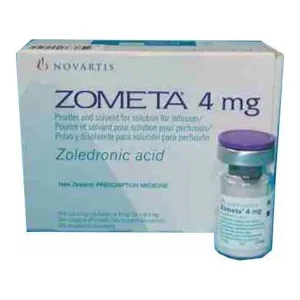
TM Owner Novartis
Zometa 4mg Injection
Global Shipping : Reliable Global Distribution Network
Express Delivery : Priority Shipping for Every Order
Secure Payments : Trusted Payment Protection System
 Disclaimer

Secure Handling
24/7 Worldwide Support

Global Access
Worldwide Access to Health

Cold-Chain Expert
Excellence in Cold-Chain

Trusted Supply
Certified Medical Supply
Indications & Clinical Uses
- Zometa 4mg (zoledronic acid injection) is a bisphosphonate given by intravenous infusion only, prepared and given by trained healthcare professionals in a hospital or clinic.
- It is approved to treat hypercalcaemia of malignancy (high blood calcium caused by cancer), and, with standard cancer treatment, for multiple myeloma and for bone metastases from solid tumours in adults.
- In the EU it is authorised to prevent skeletal-related events in advanced cancers involving bone and to treat tumour-induced hypercalcaemia.
- Zometa is the oncology strength (4 mg) and must not be confused with Reclast (zoledronic acid 5 mg/100 mL, for osteoporosis and Paget disease): patients treated with Zometa should not receive Reclast or other bisphosphonates.
- It is supplied as a 4 mg/5 mL concentrate that must be diluted, and as a 4 mg/100 mL ready-to-use solution.
Side Effects
- Very common reactions (more than 1 in 4 people in the US label) include nausea, tiredness, bone pain, anaemia, constipation, fever, vomiting and shortness of breath.
- Serious effects to report: kidney problems (reduced urine, swelling), low blood calcium (numbness, tingling, muscle cramps), osteonecrosis of the jaw (jaw pain, swelling, loose teeth or non-healing sores), unusual thigh, hip or groin pain (atypical femur fracture), and severe allergic reactions including swelling of the face or throat.
- The US label has no boxed warning.
- Tell your healthcare team about any of these symptoms promptly.
- Fever, bone pain and flu-like symptoms may follow the infusion; report anything severe or lasting.
Precautions & Warnings
- Zometa is contraindicated in anyone allergic to zoledronic acid or any component.
- Serum creatinine is checked before each dose, and calcium, phosphate and magnesium are monitored after treatment.
- The US label reduces the dose when creatinine clearance is 60 mL/min or below (for example 3.5 mg at 50 to 60 mL/min), and use is not recommended in severe renal impairment for bone metastases.
- Low calcium must be corrected first, with daily calcium (500 mg) and vitamin D (400 IU) supplements.
- A dental examination is advised before starting, and invasive dental work should be avoided during treatment.
- Zometa can cause fetal harm, so avoid pregnancy.
- The infusion must last no less than 15 minutes, and the dose must not exceed 4 mg.
- After dilution it must be used within 24 hours in total, kept at 2 to 8 degrees C.
Avoid Interactions
- Tell your healthcare provider about every medicine, herbal product and supplement you use.
- Substances that increase the risk: aminoglycoside antibiotics (additive lowering of blood calcium), loop diuretics (greater risk of low calcium) and other nephrotoxic (kidney-damaging) medicines, which need caution.
- Do not receive Zometa together with Reclast or other bisphosphonates, because they contain the same active substance or similar medicines.
- Chemotherapy and corticosteroids raise the risk of osteonecrosis of the jaw.
- The label lists no medicines that reduce the effect of Zometa.
- Pharmacy point: the concentrate must be diluted in 100 mL of sodium chloride or dextrose solution before infusion and must not be given as a bolus or mixed with other drugs.
References
Frequently Asked Questions
Zometa (zoledronic acid 4 mg) is given by infusion to treat high blood calcium caused by cancer, and to help treat multiple myeloma and bone metastases from solid tumours alongside standard cancer treatment. It is not the same as Reclast, which is used for osteoporosis.
Zometa (zoledronic acid) is given by a healthcare professional as an infusion into a vein over no less than 15 minutes. For bone metastases and myeloma the dose is usually 4 mg every 3 to 4 weeks. It is never given as a quick injection or at home.
Common Zometa side effects include nausea, tiredness, bone pain, anaemia, constipation, fever, vomiting and breathlessness. Tell your team quickly about reduced urine, muscle cramps or tingling, jaw pain or non-healing mouth sores, or new thigh or groin pain, as these can be serious.
Avoid receiving Reclast or other bisphosphonates while being treated with Zometa (zoledronic acid). Tell your team if you take aminoglycoside antibiotics, loop diuretics or other kidney-harming medicines, as they can affect calcium or kidneys. Avoid invasive dental work during treatment and avoid pregnancy.
Your kidney function (serum creatinine) is checked before every Zometa infusion, and calcium, phosphate and magnesium levels are monitored afterwards. A dental examination is advised before you start. You should also take daily calcium (500 mg) and vitamin D (400 IU) supplements unless told otherwise.
No. Zometa (zoledronic acid) can cause fetal harm, and it should not be used in pregnancy. Tell your healthcare team if you are pregnant or could become pregnant before treatment, so they can discuss suitable contraception and alternative options. Zometa is given only in a clinic or hospital, so this is best raised at your planning appointment.

Trusted & Reliable – Your Partner in Global Distribution.
We provide comprehensive lines of pharmaceutical products to support all your healthcare distribution needs.


