

TM Owner USWM LLC
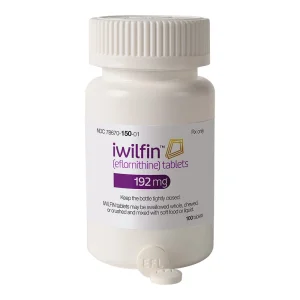
Iwilfin 192mg Tablet
Global Shipping : Reliable Global Distribution Network
Express Delivery : Priority Shipping for Every Order
Secure Payments : Trusted Payment Protection System
 Disclaimer

Secure Handling
24/7 Worldwide Support

Global Access
Worldwide Access to Health

Cold-Chain Expert
Excellence in Cold-Chain

Trusted Supply
Certified Medical Supply
Indications & Clinical Uses
- Iwilfin 192 mg tablets contain eflornithine hydrochloride, an irreversible inhibitor of the enzyme ornithine decarboxylase, and are taken by mouth at home.
- Iwilfin is approved to reduce the risk of relapse in adult and paediatric patients with high-risk neuroblastoma who have achieved at least a partial response to prior multi-agent, multi-modality therapy that included anti-GD2 immunotherapy.
- This catalogue also carries an Eflornithine Oral entry from the same company, US WorldMeds, which is the same product under its generic name.
- The dose is taken twice daily and is based on body surface area: one 192 mg tablet for 0.25 to under 0.5 m2, 384 mg for 0.5 to under 0.75 m2, 576 mg for 0.75 to 1.5 m2 and 768 mg for more than 1.5 m2.
- Treatment continues for up to two years unless the disease progresses or side effects become unacceptable.
Side Effects
- The most common reactions, each reported in 5% or more of patients, are hearing loss, middle ear infection, fever, pneumonia and diarrhoea.
- Hearing loss needs the closest attention: new or worsening hearing loss occurred in 13% of patients, so hearing must be tested before treatment and at roughly 6-month intervals.
- Iwilfin suppresses the bone marrow, with grade 3 or 4 neutropenia in 4.2% of patients, so low blood counts, fever and infection can occur.
- Raised liver enzymes are common, with grade 3 or 4 ALT elevation in 11%.
- Iwilfin has no boxed warning.
- Contact the care team promptly about fever, sore throat or other signs of infection, unusual bruising or bleeding, yellowing of the eyes or skin, dark urine, or any change in hearing, ear pain or discharge.
Precautions & Warnings
- Blood counts, liver function and hearing must be monitored throughout treatment with Iwilfin.
- A full blood count and liver enzymes are checked before starting, liver enzymes monthly for the first 6 months and then periodically, and an audiogram at baseline and about every 6 months.
- The dose is reduced by half if the estimated glomerular filtration rate falls below 30 mL/min, and closer monitoring is needed between 30 and 60 mL/min.
- Eflornithine can harm an unborn baby, so pregnancy must be avoided; females able to become pregnant must use effective contraception during treatment and for one week after the last dose, and breastfeeding is not advised during treatment or for one week afterwards.
- Tablets are taken twice daily with or without food and may be swallowed whole or crushed into soft food or liquid, which must then be taken within one hour.
Avoid Interactions
- Tell the care team about every medicine, herbal product and supplement before Iwilfin is started and before any new medicine is added.
- Because eflornithine suppresses the bone marrow, other medicines that lower blood counts, including chemotherapy and some antivirals and antibiotics, may add to the risk of neutropenia, anaemia and infection.
- Medicines known to damage hearing, such as aminoglycoside antibiotics, cisplatin and high-dose loop diuretics, may add to the risk of hearing loss, so their use should be reviewed against the audiogram results.
- Medicines that can injure the liver, and alcohol, may add to the risk of raised liver enzymes.
- Live vaccines are generally avoided while blood counts are low.
- No food restriction applies, but if a tablet is crushed into food or liquid the whole mixture must be swallowed within one hour of preparation.
References
Frequently Asked Questions
Iwilfin 192 mg (eflornithine) tablets reduce the risk of neuroblastoma coming back in adults and children with high-risk disease who responded at least partly to earlier treatment that included anti-GD2 immunotherapy. It is taken by mouth at home, usually for up to two years.
Iwilfin (eflornithine) is taken twice daily, with or without food. The number of tablets depends on body surface area, from one 192 mg tablet to four tablets per dose. Tablets can be swallowed whole or crushed into soft food or liquid, which must be taken within one hour.
The most common Iwilfin (eflornithine) side effects are hearing loss, middle ear infection, fever, pneumonia and diarrhoea. New or worsening hearing loss occurred in 13% of patients. Report fever, sore throat, unusual bruising, yellowing of the eyes, or any change in hearing without delay.
Avoid pregnancy while taking Iwilfin (eflornithine), because it can harm an unborn baby; use effective contraception during treatment and for one week after. Avoid alcohol and unnecessary liver-stressing medicines, and have any hearing-damaging drugs reviewed. Tell your team about every medicine and supplement.
Iwilfin (eflornithine) needs a hearing test before treatment and about every 6 months, because hearing loss is common. Blood counts are checked for bone marrow suppression, and liver enzymes are tested monthly for the first 6 months and then periodically. Kidney function guides dose reduction.
Yes. Iwilfin (eflornithine) is approved for both children and adults with high-risk neuroblastoma. The dose is worked out from body surface area rather than age, starting at one 192 mg tablet twice daily for the smallest children. Tablets can be crushed for those who cannot swallow them.

Trusted & Reliable – Your Partner in Global Distribution.
We provide comprehensive lines of pharmaceutical products to support all your healthcare distribution needs.


