

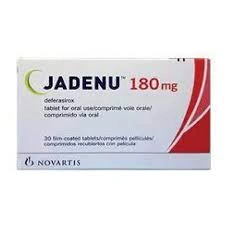
TM Owner Novartis
Jadenu 180mg Tablet
Global Shipping : Reliable Global Distribution Network
Express Delivery : Priority Shipping for Every Order
Secure Payments : Trusted Payment Protection System
 Disclaimer

Secure Handling
24/7 Worldwide Support

Global Access
Worldwide Access to Health

Cold-Chain Expert
Excellence in Cold-Chain

Trusted Supply
Certified Medical Supply
Indications & Clinical Uses
- Jadenu 180 mg film-coated tablets contain deferasirox, an iron chelator taken by mouth that binds excess iron so it can be removed from the body in the stool.
- It is approved to treat chronic iron overload caused by repeated blood transfusions in patients aged 2 years and older, and chronic iron overload in non-transfusion-dependent thalassaemia syndromes in patients aged 10 years and older who have a liver iron concentration of at least 5 mg of iron per gram of dry weight and a serum ferritin above 300 micrograms/L.
- Jadenu is the film-coated tablet and is NOT interchangeable milligram for milligram with Exjade dispersible tablets: when switching from Exjade, the Jadenu dose is about 30% lower, rounded to the nearest whole tablet.
- Jadenu tablets come as 90 mg, 180 mg and 360 mg.
Side Effects
- Jadenu carries a BOXED WARNING: deferasirox can cause acute kidney injury, including renal failure needing dialysis and renal tubular damage (Fanconi syndrome), liver injury including liver failure, and gastrointestinal haemorrhage, and these have been fatal.
- Risk is highest in older patients and in those with advanced blood cancers, low platelet counts or poor performance status.
- The commonest everyday side effects, each in more than 5% of patients, are diarrhoea, nausea, vomiting, abdominal pain, skin rash and a rise in blood creatinine.
- Blood counts can fall, and severe skin reactions such as Stevens-Johnson syndrome, toxic epidermal necrolysis and DRESS, and allergic reactions including anaphylaxis, have occurred.
- Get urgent help for black or bloody stools, vomiting blood, severe stomach pain, passing much less urine, yellow eyes or skin, or a spreading blistering rash.
Precautions & Warnings
- Because of the boxed warning, Jadenu needs close laboratory monitoring.
- Serum creatinine and eGFR are measured twice before starting, then weekly for the first month and monthly afterwards; liver enzymes and bilirubin before starting, every two weeks for the first month, then monthly; and blood counts and serum ferritin monthly.
- Hearing and eye tests are done before treatment and then yearly, because high-frequency hearing loss, lens opacities and raised eye pressure have been reported.
- Jadenu must not be used if your eGFR is below 40 mL/min/1.73 m2, if you have high-risk myelodysplastic syndrome, advanced cancer, poor performance status, platelets below 50 x 10^9/L, or a known allergy to deferasirox; avoid it in severe liver impairment.
- Take the tablet once daily on an empty stomach or with a light meal at the same time each day.
- Women should use non-hormonal contraception, as Jadenu can make hormonal contraceptives ineffective.
Avoid Interactions
- Increase the risk from Jadenu: medicines that irritate or bleed the gut, including NSAIDs such as ibuprofen, corticosteroids, oral bisphosphonates and anticoagulants, raise the risk of gastrointestinal haemorrhage, and other iron chelators have not been shown to be safe alongside it.
- Deferasirox raises repaglinide levels about 2.3-fold, so that dose may need lowering with closer glucose monitoring, and roughly doubles theophylline levels.
- Reduce the effect of Jadenu: aluminium-containing antacids should not be taken with it, and bile acid sequestrants such as colestyramine or glucuronidation inducers including rifampicin, phenytoin, phenobarbital and ritonavir lower deferasirox levels, sometimes needing a 50% dose increase.
- Jadenu can also lower levels of CYP3A4 substrates such as midazolam, ciclosporin and simvastatin.
- Tell your provider about every medicine, vitamin and iron supplement.
References
Frequently Asked Questions
Jadenu (deferasirox) removes excess iron that builds up from repeated blood transfusions, in patients aged 2 and over. It also treats iron overload in non-transfusion-dependent thalassaemia from age 10. The tablet binds iron so it leaves the body in the stool, protecting the heart and liver.
Take Jadenu (deferasirox) film-coated tablets once a day at the same time, on an empty stomach or with a light meal containing little fat. Swallow them whole with water. The usual starting dose is 14 mg/kg daily for transfusional iron overload and 7 mg/kg for non-transfusion-dependent thalassaemia.
Jadenu (deferasirox) has a boxed warning for kidney failure, liver failure and gastrointestinal bleeding, which have been fatal. Get urgent help for black or bloody stools, vomiting blood, severe stomach pain, passing much less urine, or yellowing of the eyes or skin.
More than 5% of people taking Jadenu (deferasirox) get diarrhoea, nausea, vomiting, abdominal pain, skin rash or a rise in blood creatinine. Severe skin reactions such as Stevens-Johnson syndrome and falls in blood counts also occur. Report any spreading blistering rash immediately.
No. Jadenu film-coated tablets and Exjade dispersible tablets are not interchangeable milligram for milligram. When switching from Exjade to Jadenu, the deferasirox dose is about 30% lower, rounded to the nearest whole tablet, so 20 mg/kg of Exjade becomes roughly 14 mg/kg of Jadenu.
Jadenu (deferasirox) requires creatinine and eGFR weekly for the first month then monthly, liver enzymes every two weeks for the first month then monthly, and monthly blood counts and ferritin. Hearing and eye tests are done before treatment and yearly, as hearing loss and cataracts can occur.

Trusted & Reliable – Your Partner in Global Distribution.
We provide comprehensive lines of pharmaceutical products to support all your healthcare distribution needs.


