

TM Owner Novartis
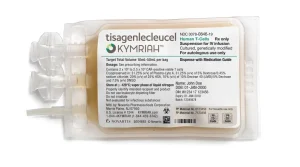
Kymriah Patient-specific CAR+ T-cell dose; bag volume 10mL to 50mL Cell suspension for intravenous infusion (patient-specific bag)
Global Shipping : Reliable Global Distribution Network
Express Delivery : Priority Shipping for Every Order
Secure Payments : Trusted Payment Protection System
 Disclaimer

Secure Handling
24/7 Worldwide Support

Global Access
Worldwide Access to Health

Cold-Chain Expert
Excellence in Cold-Chain

Trusted Supply
Certified Medical Supply
Indications & Clinical Uses
- Kymriah is tisagenlecleucel, a CD19-directed genetically modified autologous CAR-T cell immunotherapy supplied as a cell suspension for intravenous infusion rather than as a conventional injection.
- It is approved for patients up to 25 years of age with B-cell precursor acute lymphoblastic leukaemia that is refractory or in second or later relapse, for adults with relapsed or refractory diffuse large B-cell lymphoma after two or more lines of systemic therapy, and, under accelerated approval in the United States, for adults with relapsed or refractory follicular lymphoma after two or more lines.
- It is not indicated for primary central nervous system lymphoma.
- Kymriah is autologous and patient-specific: each dose is made from that patient's own collected T cells, shipped cryopreserved in patient-labelled infusion bags held in the vapour phase of liquid nitrogen, and may only be given to the named patient at a qualified treatment centre.
Side Effects
- Very common reactions include cytokine release syndrome, infections, low blood counts, fever, low blood pressure, headache, tiredness, nausea, diarrhoea, bleeding, swelling and breathlessness; low antibody levels and prolonged cytopenias are frequent.
- KYMRIAH CARRIES A BOXED WARNING covering three risks: cytokine release syndrome, including fatal or life-threatening reactions, treated with tocilizumab with or without corticosteroids; serious neurological toxicities, which may occur with or after cytokine release syndrome and can include confusion, tremor, difficulty speaking, seizures and reduced consciousness; and secondary T-cell malignancies, which have occurred after treatment with CD19- and BCMA-directed genetically modified autologous T-cell immunotherapies including Kymriah.
- Report fever, chills, dizziness, breathlessness, severe confusion or fits immediately, and stay close to the treatment centre for at least two weeks after the infusion.
Precautions & Warnings
- Kymriah is given only at qualified treatment centres with immediate access to tocilizumab; the US REMS programme that previously restricted distribution was removed in June 2025, but centre qualification and monitoring requirements remain.
- Staff must match the patient's identity against the identifiers on every infusion bag before thawing, because the product is autologous and must never be given to another person.
- Bags are inspected for cracks, a leukocyte-depleting filter must not be used, and prophylactic systemic corticosteroids are avoided before infusion because they may interfere with the cells.
- Patients are screened for hepatitis B, hepatitis C and HIV before cells are collected.
- Monitor daily at the centre for at least the first week, watch for prolonged low blood counts and serious infections, and monitor lifelong for new cancers.
- Myeloid growth factors are not recommended in the first three weeks.
- Do not donate blood, organs, tissues or cells.
Avoid Interactions
- No formal drug interaction studies have been performed with Kymriah.
- The most important pharmacy-level rules are that nothing may be added to the infusion bag and that a leukocyte-depleting filter must never be used, because it would strip out the CAR-T cells.
- Systemic corticosteroids given before the infusion may interfere with the activity of tisagenlecleucel, so preventive steroids are avoided; steroids are still used when needed to treat severe cytokine release syndrome or neurological toxicity.
- Live vaccines are not recommended before, during or after treatment until the immune system has recovered.
- Medicines that suppress the immune system or lower blood counts may add to the risk of infection and prolonged cytopenias.
- Tell the treatment team about every medicine, including lymphodepleting chemotherapy, antivirals, antibiotics and any supplements.
References
Frequently Asked Questions
Kymriah (tisagenlecleucel) is a CAR-T cell therapy for B-cell acute lymphoblastic leukaemia in patients up to 25 years of age, and for relapsed or refractory diffuse large B-cell lymphoma and follicular lymphoma in adults who have already had at least two lines of treatment. It is not used for primary central nervous system lymphoma.
Kymriah is given once, as a single intravenous infusion at a qualified treatment centre. Your own T cells are collected, genetically modified, frozen and returned in patient-labelled bags, then thawed and infused after a short course of lymphodepleting chemotherapy. Tisagenlecleucel is a one-time treatment, not a repeated dose.
The commonest Kymriah side effects are cytokine release syndrome, infections, fever, low blood counts, low blood pressure, tiredness, headache, nausea and diarrhoea. Tisagenlecleucel carries a boxed warning for cytokine release syndrome, serious neurological toxicities and secondary T-cell cancers. Report fever, chills, breathlessness, confusion or fits straight away.
Avoid live vaccines before, during and after Kymriah until your immune system recovers, and never donate blood, organs, tissues or cells. Preventive steroids are avoided before the infusion because they can interfere with the CAR-T cells. Tell your team about every medicine, including antivirals and immune-suppressing drugs.
On infusion day staff match your name and identifiers against each Kymriah bag, check it for cracks, thaw it and infuse the cells without any filter. You are then watched closely for cytokine release syndrome and nerve problems, daily for at least the first week, and must stay near the centre for two weeks.
Yes. Kymriah is approved for children and young adults up to 25 years of age with B-cell precursor acute lymphoblastic leukaemia that is refractory or has relapsed twice or more. The lymphoma uses of tisagenlecleucel are for adults only. Lifelong monitoring for secondary cancers is required after treatment.

Trusted & Reliable – Your Partner in Global Distribution.
We provide comprehensive lines of pharmaceutical products to support all your healthcare distribution needs.


