

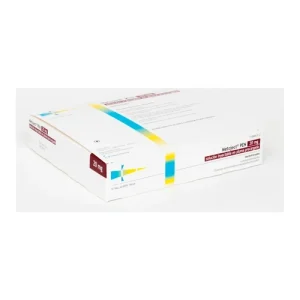
TM Owner Orchard Therapeutics
Lenmeldy Single dose preparation IV Infusion
Global Shipping : Reliable Global Distribution Network
Express Delivery : Priority Shipping for Every Order
Secure Payments : Trusted Payment Protection System
 Disclaimer

Secure Handling
24/7 Worldwide Support

Global Access
Worldwide Access to Health

Cold-Chain Expert
Excellence in Cold-Chain

Trusted Supply
Certified Medical Supply
Indications & Clinical Uses
- Lenmeldy is a one-time gene therapy given as a single intravenous infusion, supplied as a cell suspension made individually for each child.
- It contains atidarsagene autotemcel - the child's own CD34+ blood stem cells, modified outside the body with a lentiviral vector so they carry a working ARSA gene.
- The US Food and Drug Administration approved it on 18 March 2024 for children with pre-symptomatic late infantile, pre-symptomatic early juvenile, or early symptomatic early juvenile metachromatic leukodystrophy, a rare inherited disease in which missing arylsulfatase A lets sulfatides build up and destroy the myelin that protects nerves.
- The same therapy is authorised in the European Union under the brand name LIBMELDY, so the two names describe one product in different markets.
- The dose is 4.2 to 30 million CD34+ cells per kilogram depending on disease subtype, supplied in one to eight infusion bags.
- Lenmeldy is given only at a qualified treatment centre experienced in stem cell transplantation, after myeloablative busulfan conditioning.
Side Effects
- In the first year the commonest reactions come mainly from the busulfan conditioning and the transplant itself rather than from the gene-modified cells: fever with a low neutrophil count in 85% of children, mouth and throat inflammation in 77%, respiratory tract infections in 54%, rash in 33%, infections related to the central line in 31%, other viral infections in 28%, fever in 21%, gastroenteritis in 21% and an enlarged liver in 18%.
- Lenmeldy has NO boxed warning on its US label - that is stated so its absence is not mistaken for an omission.
- The serious risks the transplant team watches for are blood clots, inflammation of the brain, serious infection, liver veno-occlusive disease, delayed recovery of platelets with a risk of bleeding, failure of the new cells to engraft, hypersensitivity reactions, and the theoretical risk of blood cancer from insertional oncogenesis.
- Report fever, unusual bruising, breathlessness, seizures or new confusion at once.
Precautions & Warnings
- Lenmeldy is a hospital-only treatment.
- The child's stem cells are collected, the modified cells are made, and myeloablative busulfan conditioning is given to empty the bone marrow before the cells are returned through a central venous catheter over about 30 minutes.
- Because the conditioning wipes out blood production, the child stays in a transplant unit until neutrophils and platelets recover, with infection precautions, transfusion support and close monitoring for veno-occlusive liver disease.
- Busulfan can cause permanent infertility, so fertility preservation must be discussed with the family before conditioning.
- Because a lentiviral vector inserts genes into the cells, lifelong follow-up is required, including blood counts and integration testing at least annually for 15 years.
- Lenmeldy is made from that one child's own cells and must never be given to anyone else, and the infusion must not be irradiated or filtered with a leukodepleting filter.
- Treatment is a single dose and is not repeated.
Avoid Interactions
- Lenmeldy is given once and has no conventional tablet-style interaction list, so what matters is the medicines used around the transplant; tell the team about every medicine, herbal product, supplement and recent vaccination.
- Things that add to risk: other medicines that suppress the bone marrow or damage the liver, given with or soon after busulfan conditioning, can deepen low blood counts and raise the risk of veno-occlusive disease; anticoagulants, aspirin and other drugs that impair platelets add to bleeding risk while platelet recovery is delayed; live vaccines must not be given while the immune system is rebuilding.
- Things that can reduce the benefit or interfere with the product: any medicine that could affect the gene-modified cells, including antiretroviral medicines, must be reviewed by the team before the cells are collected, and granulocyte growth factors or transfusions given outside the protocol can confuse engraftment monitoring.
- Nothing may be added to the infusion bag.
References
Frequently Asked Questions
Lenmeldy (atidarsagene autotemcel) is a one-time gene therapy for children with metachromatic leukodystrophy, in the pre-symptomatic late infantile, pre-symptomatic early juvenile or early symptomatic early juvenile forms. It replaces the missing ARSA gene in the child's own blood stem cells. The European brand name is Libmeldy.
Lenmeldy is given once, as a single intravenous infusion through a central line over about 30 minutes, at a qualified treatment centre with stem cell transplant expertise. Before it, the child receives myeloablative busulfan conditioning to clear the bone marrow. The dose is made from the child's own cells.
Most side effects of Lenmeldy come from the busulfan conditioning: fever with low neutrophils in 85% of children, mouth inflammation in 77%, chest infections in 54% and rash in 33%. Serious risks include blood clots, brain inflammation, liver veno-occlusive disease and delayed platelet recovery.
No. The US label for Lenmeldy (atidarsagene autotemcel) carries no boxed warning, which is stated here so its absence is not mistaken for an omission. It does carry warnings for thrombosis, encephalitis, serious infection, veno-occlusive disease, engraftment failure and the theoretical risk of insertional cancer.
The modified cells are thawed and infused through a central venous catheter within 30 minutes while the team watches for hypersensitivity. The child then stays in the transplant unit until neutrophils and platelets recover, with infection precautions, transfusion support and liver monitoring for veno-occlusive disease.
Follow-up after Lenmeldy is lifelong. Because a lentiviral vector inserts genes into the cells, blood counts and testing for insertional cancer are done at least yearly for 15 years. Busulfan conditioning usually causes permanent infertility, so fertility preservation is discussed before treatment.

Trusted & Reliable – Your Partner in Global Distribution.
We provide comprehensive lines of pharmaceutical products to support all your healthcare distribution needs.


