

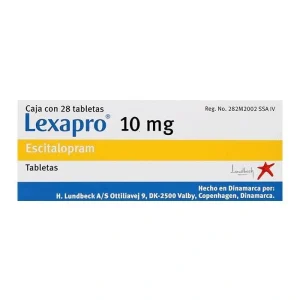
TM Owner Allergan / AbbVie
Lexapro 10mg Tablet
Global Shipping : Reliable Global Distribution Network
Express Delivery : Priority Shipping for Every Order
Secure Payments : Trusted Payment Protection System
 Disclaimer

Secure Handling
24/7 Worldwide Support

Global Access
Worldwide Access to Health

Cold-Chain Expert
Excellence in Cold-Chain

Trusted Supply
Certified Medical Supply
Indications & Clinical Uses
- Lexapro 10mg film-coated tablets contain escitalopram, a selective serotonin reuptake inhibitor (SSRI) antidepressant and the active S-enantiomer of citalopram.
- Lexapro is approved for major depressive disorder in adults and in children aged 12 years and older, and for generalised anxiety disorder in adults and in children aged 7 years and older.
- Lexapro carries a BOXED WARNING: antidepressants increased the risk of suicidal thoughts and behaviours in children, adolescents and young adults in short-term studies, so everyone starting treatment must be monitored closely for worsening mood, agitation or suicidal thinking, especially in the first weeks and after any dose change.
- The usual dose is 10 mg once daily, taken in the morning or the evening, with or without food, increased to a maximum of 20 mg daily.
- Tablets are also supplied as 5 mg and 20 mg.
Side Effects
- The most common side effects of Lexapro (escitalopram) are difficulty sleeping, delayed ejaculation and other sexual problems, nausea, increased sweating, tiredness, sleepiness, reduced sex drive and difficulty reaching orgasm.
- Many of these ease after the first couple of weeks.
- Lexapro carries a BOXED WARNING about increased suicidal thoughts and behaviours in children, adolescents and young adults; family and carers should watch for worsening depression, agitation, panic, irritability or talk of self-harm and report it at once.
- Get urgent medical help for signs of serotonin syndrome: agitation, hallucinations, fast heartbeat, fever, muscle stiffness or twitching, sweating and diarrhoea.
- Also report unusual bruising or bleeding, severe headache with confusion or weakness that may indicate low blood sodium, eye pain with blurred vision, seizures, or a swing into unusually elevated mood.
Precautions & Warnings
- Lexapro must not be taken with a monoamine oxidase inhibitor, or within 14 days of stopping one, and must not be combined with linezolid, intravenous methylene blue or pimozide.
- Treatment is monitored for suicidal thoughts, particularly in the first weeks and after dose changes.
- Before starting, tell your healthcare provider if you have bipolar disorder, seizures, liver problems, glaucoma, low blood sodium or a bleeding disorder.
- Older adults are more prone to low sodium and usually stay on 10 mg daily, as do people with liver impairment.
- The QT interval can lengthen at higher exposures, so caution is needed with heart rhythm disorders.
- Do not stop Lexapro suddenly: the dose is tapered to avoid dizziness, electric-shock sensations, irritability and flu-like symptoms.
- Use late in pregnancy has been linked with poor neonatal adaptation, persistent pulmonary hypertension of the newborn and a small increase in postpartum haemorrhage.
Avoid Interactions
- Combining Lexapro (escitalopram) with other serotonergic medicines increases the risk of serotonin syndrome.
- Monoamine oxidase inhibitors, linezolid and intravenous methylene blue are contraindicated, and caution is needed with triptans, tramadol, fentanyl, lithium, buspirone, St John's wort, tryptophan and other antidepressants.
- Aspirin, NSAIDs, warfarin and other anticoagulants raise the risk of bleeding.
- Pimozide is contraindicated, and other QT-prolonging drugs should be used cautiously.
- Escitalopram can raise blood levels of CYP2D6 substrates such as desipramine.
- Cimetidine and CYP2C19 inhibitors such as omeprazole can raise escitalopram levels, while carbamazepine may increase escitalopram clearance and reduce its effect.
- Diuretics add to the risk of low blood sodium.
- Alcohol is not recommended, as it worsens drowsiness and can deepen depression.
- Tell your healthcare provider about every prescription, over-the-counter and herbal product you use.
References
Frequently Asked Questions
Lexapro 10mg (escitalopram) is an SSRI antidepressant used for major depressive disorder in adults and children from 12 years, and for generalised anxiety disorder in adults and children from 7 years. It is taken once daily and usually takes a few weeks to work fully.
Take Lexapro (escitalopram) as one 10 mg tablet once daily, in the morning or the evening, with or without food. The dose may be raised to 20 mg after at least one week. Older adults and people with liver problems usually stay on 10 mg daily.
Common Lexapro (escitalopram) side effects include insomnia, nausea, sweating, tiredness, sleepiness, reduced sex drive and delayed ejaculation or orgasm. Its boxed warning covers increased suicidal thoughts and behaviours in children and young adults. Get urgent help for agitation with fever, fast heartbeat and muscle twitching.
Never take Lexapro (escitalopram) with a monoamine oxidase inhibitor, within 14 days of stopping one, or with linezolid, intravenous methylene blue or pimozide. Avoid alcohol, and take care with triptans, tramadol, St John's wort, aspirin, NSAIDs and warfarin, which raise bleeding or serotonin syndrome risk.
Take the missed Lexapro (escitalopram) dose as soon as you remember, unless the next one is nearly due, in which case skip it. Never double up. Do not stop Lexapro suddenly: the dose must be tapered to avoid dizziness, electric-shock sensations, irritability and flu-like withdrawal symptoms.
Lexapro (escitalopram) is used in pregnancy only when the benefit outweighs the risk. Use late in pregnancy has been linked with poor newborn adaptation, persistent pulmonary hypertension of the newborn and a small rise in postpartum bleeding. Escitalopram passes into breast milk, so nursing infants are monitored.

Trusted & Reliable – Your Partner in Global Distribution.
We provide comprehensive lines of pharmaceutical products to support all your healthcare distribution needs.


