

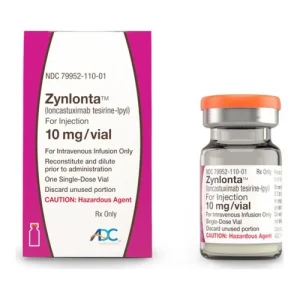
TM Owner ADC Therapeutics
Loncastuximab IV 10mg Lyophilised powder for solution for infusion (10mg single-dose vial)
Global Shipping : Reliable Global Distribution Network
Express Delivery : Priority Shipping for Every Order
Secure Payments : Trusted Payment Protection System
 Disclaimer

Secure Handling
24/7 Worldwide Support

Global Access
Worldwide Access to Health

Cold-Chain Expert
Excellence in Cold-Chain

Trusted Supply
Certified Medical Supply
Indications & Clinical Uses
- No medicine is marketed under the name "Loncastuximab IV" - that is the molecule name, and the approved brand is ZYNLONTA (loncastuximab tesirine-lpyl), whose label is the source of the information here.
- ZYNLONTA 10 mg is a CD19-directed antibody-drug conjugate given by intravenous infusion in hospital or a specialist clinic; it is never self-administered.
- In the United States it holds accelerated approval for adults with relapsed or refractory large B-cell lymphoma, including diffuse large B-cell lymphoma arising from indolent lymphoma and high-grade B-cell lymphoma, after two or more lines of systemic therapy.
- In the European Union it holds a conditional marketing authorisation granted on 20 December 2022 for relapsed or refractory DLBCL and high-grade B-cell lymphoma after two or more prior therapies, with Swedish Orphan Biovitrum AB as authorisation holder.
Side Effects
- ZYNLONTA has no boxed warning.
- Reactions affecting at least 20 percent of people include low platelets, raised gamma-glutamyltransferase, low neutrophils, anaemia, high blood sugar, raised liver transaminases, tiredness, low albumin, rash, swelling, nausea and musculoskeletal pain.
- Grade 3 to 4 neutropenia occurred in 32 percent, thrombocytopenia in 20 percent and anaemia in 12 percent.
- Fluid build-up matters most: effusions and oedema, including fluid around the lungs or heart and capillary leak syndrome, reached grade 3 or worse in 3 to 4 percent.
- Serious infections occurred in 10 percent and were fatal in 2 percent.
- Skin reactions with photosensitivity reached grade 3 in 4 percent.
- Report fever, breathlessness, chest pain, new swelling, bruising or a spreading rash urgently.
Precautions & Warnings
- Blood counts are checked before every ZYNLONTA dose and treatment is delayed or the dose reduced for low neutrophils or platelets; growth factor support may be used.
- Patients are watched for new or worsening swelling, breathlessness and chest pain, which may indicate pleural or pericardial effusion or capillary leak syndrome, and dosing is withheld for grade 2 or greater oedema or effusion until it resolves.
- Dexamethasone 4 mg by mouth or by vein twice daily for three days, starting the day before each infusion, reduces these effects.
- Because ZYNLONTA causes photosensitivity, cover exposed skin, use broad-spectrum sun protection and avoid direct and artificial sunlight and sunbeds during and after treatment.
- It can harm an unborn baby: women should use effective contraception during treatment and for 10 months after the last dose, and men for 7 months.
- Vials are stored at 2 to 8 degrees Celsius in the original carton.
Avoid Interactions
- No formal interaction studies define a list of medicines that must be avoided with ZYNLONTA, so tell the treating team about every prescription medicine, over-the-counter product, herbal remedy and supplement before each cycle.
- The most important overlaps are with other medicines that lower blood counts or suppress immunity, such as chemotherapy, other antibody-drug conjugates and long-term corticosteroids, because they add to the risk of neutropenia, thrombocytopenia, anaemia and serious infection.
- Medicines that increase sensitivity to sunlight, including tetracyclines, some diuretics and certain antibiotics, can worsen the photosensitivity ZYNLONTA causes.
- Live vaccines are generally avoided during immunosuppressive treatment.
- The dexamethasone premedication can raise blood sugar, which matters if you have diabetes.
- ZYNLONTA is prepared by a pharmacy, diluted only as the label directs, and must never be mixed with other medicines in the same infusion line.
References
Frequently Asked Questions
Zynlonta (loncastuximab tesirine) treats adults with relapsed or refractory large B-cell lymphoma after two or more previous treatments. It is a CD19-targeted antibody-drug conjugate given by drip into a vein. No product is sold as "Loncastuximab IV"; loncastuximab tesirine is the ingredient in Zynlonta.
Zynlonta (loncastuximab tesirine) is given as a 30-minute infusion into a vein once every 3 weeks in hospital or a specialist clinic. The dose is 0.15 mg/kg for the first two cycles, then 0.075 mg/kg. Dexamethasone 4 mg is taken twice daily for three days around each infusion.
The most common Zynlonta (loncastuximab tesirine) side effects are low platelets, low neutrophils, anaemia, raised liver enzymes, tiredness, rash, swelling and nausea. Serious problems include fluid around the lungs or heart, capillary leak and infections that were fatal in 2 percent. Report fever or breathlessness urgently.
Avoid direct and artificial sunlight and sunbeds during Zynlonta (loncastuximab tesirine) treatment, because it causes photosensitivity; cover up and use broad-spectrum sun protection. Avoid live vaccines, and tell the team about every medicine, especially others that lower blood counts or increase sun sensitivity.
You take dexamethasone from the day before, then Zynlonta (loncastuximab tesirine) runs into a vein over 30 minutes. Blood counts are checked beforehand, and the dose is delayed or reduced if neutrophils or platelets are low. Staff watch for swelling, breathlessness and chest pain.
Yes. Zynlonta (loncastuximab tesirine) can harm an unborn baby. Women who can become pregnant should use effective contraception during treatment and for 10 months after the last dose, and men should use it for 7 months. Pregnancy must be excluded before treatment starts.

Trusted & Reliable – Your Partner in Global Distribution.
We provide comprehensive lines of pharmaceutical products to support all your healthcare distribution needs.


