

TM Owner Novartis
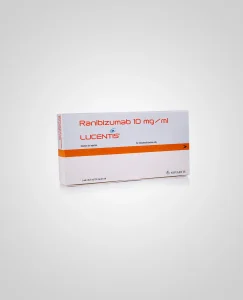
Lucentis 10mg/ml Intravitreal Injection (solution/prefilled syringe)
Global Shipping : Reliable Global Distribution Network
Express Delivery : Priority Shipping for Every Order
Secure Payments : Trusted Payment Protection System
 Disclaimer

Secure Handling
24/7 Worldwide Support

Global Access
Worldwide Access to Health

Cold-Chain Expert
Excellence in Cold-Chain

Trusted Supply
Certified Medical Supply
Indications & Clinical Uses
- Lucentis 10 mg/mL contains ranibizumab, an anti-VEGF antibody fragment, and is given ONLY as an injection into the eye (intravitreal injection) by a qualified ophthalmologist under sterile conditions - it is never self-injected.
- The 10 mg/mL presentation delivers the 0.5 mg dose used in adults for neovascular (wet) age-related macular degeneration, for macular oedema following retinal vein occlusion, and for visual impairment due to myopic or other choroidal neovascularisation.
- In the United States a separate 6 mg/mL presentation delivers a 0.3 mg dose for diabetic macular oedema and diabetic retinopathy, while the European label uses 0.5 mg for those conditions; in the European Union Lucentis is also approved for retinopathy of prematurity in preterm infants at a 0.2 mg dose.
- Injections are usually monthly at first, with at least four weeks between doses.
- Novartis holds the European authorisation and Genentech markets it in the United States.
Side Effects
- Lucentis has NO boxed warning.
- Most side effects come from the injection procedure and affect the treated eye.
- Very common reactions include bleeding on the white of the eye (conjunctival haemorrhage, reported in 48 to 74 percent of patients), eye pain (17 to 35 percent), floaters (7 to 27 percent) and a rise in eye pressure (7 to 24 percent), along with watering, irritation and blurred vision for a day or two.
- Seek urgent ophthalmic help - the same day - for increasing eye pain, worsening redness, new or much worse blurring, sensitivity to light or discharge, because these can signal endophthalmitis, a serious intraocular infection, or retinal detachment.
- Arterial thromboembolic events such as stroke and heart attack have been reported after intravitreal anti-VEGF use.
- Do not drive until your vision has settled after each injection.
Precautions & Warnings
- Lucentis is for intravitreal injection only and must be given by an ophthalmologist experienced in the technique, using aseptic technique, anaesthesia and a broad-spectrum microbicide.
- It is contraindicated in anyone hypersensitive to ranibizumab or the excipients, in active or suspected ocular or periocular infection, and in active severe intraocular inflammation.
- Eye pressure and optic-nerve perfusion are checked before and within 60 minutes after each injection, and treatment is withheld if pressure is high or the retina is torn.
- Tell your team about any stroke, mini-stroke or heart attack, since anti-VEGF treatment may add to that risk.
- Do not use two anti-VEGF medicines in the same eye at the same time.
- Women who could become pregnant should use effective contraception during treatment.
- Vials and syringes are stored in a refrigerator at 2°C to 8°C and must not be frozen; storage and preparation are handled by the clinic.
Avoid Interactions
- No formal drug interaction studies have been performed with Lucentis, and because the dose reaching the bloodstream is tiny, interactions with tablets and other systemic medicines are not expected.
- The important cautions are local.
- Do NOT give Lucentis in the same eye alongside another vascular endothelial growth factor inhibitor such as aflibercept, bevacizumab or brolucizumab, because combining them increases eye inflammation and pressure without adding benefit.
- When verteporfin photodynamic therapy is combined with ranibizumab, the two are given on separate visits as directed by the ophthalmologist.
- Nothing is known to REDUCE the effect of Lucentis, but missing scheduled injections allows the disease to progress and vision already lost may not return.
- Tell the ophthalmologist about all your medicines, including blood thinners, and about every supplement, since these affect bleeding at the injection site.
References
Frequently Asked Questions
Lucentis (ranibizumab) treats sight-threatening retinal conditions in adults, including wet age-related macular degeneration, macular oedema after retinal vein occlusion, diabetic macular oedema, diabetic retinopathy and myopic choroidal neovascularisation. In the European Union it is also approved for retinopathy of prematurity in preterm babies.
Lucentis (ranibizumab) is injected directly into the eye by a qualified ophthalmologist, never by you at home. The adult dose from the 10 mg/mL strength is 0.5 mg in 0.05 mL, usually monthly to begin with, with at least four weeks between injections in the same eye.
Most Lucentis (ranibizumab) side effects affect the injected eye: bleeding on the white of the eye in roughly half to three quarters of patients, eye pain, floaters and raised eye pressure. Get same-day eye care for increasing pain, worsening redness, new blurring or light sensitivity.
Your eye is numbed and cleaned with an antiseptic, a small speculum holds the lids open, and the ophthalmologist injects Lucentis (ranibizumab) through the white of the eye in seconds. Eye pressure and vision are checked afterwards, usually within 60 minutes, before you go home.
Do not have Lucentis (ranibizumab) if you have an eye or eyelid infection or severe inflammation inside the eye. Two anti-VEGF medicines must not be used in the same eye together. Avoid driving until vision settles after each injection, and use effective contraception during treatment.
No. Lucentis (ranibizumab) has no boxed warning. Its most important risks are endophthalmitis, a serious infection inside the eye, retinal detachment and a temporary rise in eye pressure after injection. Stroke and heart attack have also been reported after intravitreal anti-VEGF treatment.

Trusted & Reliable – Your Partner in Global Distribution.
We provide comprehensive lines of pharmaceutical products to support all your healthcare distribution needs.


