

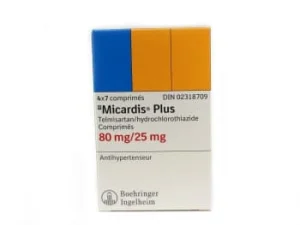
TM Owner Boehringer Ingelheim
Micardis HCT 80mg/12.5mg Tablet
Global Shipping : Reliable Global Distribution Network
Express Delivery : Priority Shipping for Every Order
Secure Payments : Trusted Payment Protection System
 Disclaimer

Secure Handling
24/7 Worldwide Support

Global Access
Worldwide Access to Health

Cold-Chain Expert
Excellence in Cold-Chain

Trusted Supply
Certified Medical Supply
Indications & Clinical Uses
- Micardis HCT 80 mg/12.5 mg combines telmisartan, an angiotensin II receptor blocker (ARB), with hydrochlorothiazide, a thiazide diuretic, in a single tablet approved for adults with hypertension whose blood pressure is not adequately controlled on either medicine alone, or as replacement therapy in patients already controlled on the two components taken separately.
- It is not indicated for initial (first-line) treatment of high blood pressure.
- The combination lowers blood pressure through two complementary mechanisms and reduces cardiovascular risk from uncontrolled hypertension, including stroke and heart attack.
- The same telmisartan/hydrochlorothiazide combination, in the same strengths, is marketed in the European Union and other international markets as MicardisPlus rather than Micardis HCT; both are made by Boehringer Ingelheim and are not interchangeable with Micardis (telmisartan alone), which contains no diuretic.
Side Effects
- Micardis HCT carries the same boxed warning as telmisartan alone: it must be discontinued as soon as pregnancy is detected, because drugs acting on the renin-angiotensin system can cause serious fetal injury or death.
- The most common side effects, each affecting up to 8% of patients, are upper respiratory tract infection, dizziness, sinusitis, fatigue, diarrhea, and nausea.
- The hydrochlorothiazide component can also cause low potassium, low sodium, increased blood sugar, and increased uric acid levels.
- Seek urgent medical attention for facial, lip, tongue, or throat swelling, difficulty breathing, severe dizziness or fainting, or signs of an allergic skin reaction, as these can indicate angioedema or a serious hypersensitivity reaction.
Precautions & Warnings
- Tell your healthcare provider immediately if you are or could become pregnant; Micardis HCT must be stopped as soon as pregnancy is confirmed and should not be used during breastfeeding.
- Blood pressure, kidney function, and electrolytes (especially potassium and sodium) should be monitored regularly, particularly in older adults, people with kidney or liver disease, heart failure, or those on a salt-restricted diet.
- It is contraindicated in people who produce no urine (anuria) and should not be combined with aliskiren in patients with diabetes or moderate-to-severe kidney impairment.
- Hydrochlorothiazide can worsen gout, diabetes control, and pre-existing electrolyte imbalances, and may increase sensitivity to sunlight.
- It may cause dizziness, so take care when driving or using machinery until you know how it affects you.
- Correct any fluid or salt depletion before starting treatment.
Avoid Interactions
- Tell your healthcare provider about every medicine and supplement you take.
- NSAIDs, including selective COX-2 inhibitors, can reduce the blood-pressure-lowering effect and increase kidney risk, especially in older or dehydrated patients.
- Lithium levels can rise to toxic levels with this combination, so lithium is generally not recommended alongside Micardis HCT.
- Potassium supplements, salt substitutes, and potassium-sparing diuretics can cause dangerously high potassium; combining with ACE inhibitors or aliskiren raises the risk of low blood pressure, high potassium, and kidney injury.
- Hydrochlorothiazide can interact with other blood-sugar or gout medicines and with other drugs that prolong the QT interval, so mention these specifically.
- Alcohol, barbiturates, and sedatives can add to low-blood-pressure effects.
References
Frequently Asked Questions
Micardis HCT combines telmisartan and hydrochlorothiazide to treat high blood pressure in adults not fully controlled on either medicine alone. It is not used to start treatment. The same combination is sold in Europe as MicardisPlus, made by the same manufacturer, Boehringer Ingelheim.
Take one Micardis HCT tablet by mouth once daily, with or without food, at the same time each day. Keep tablets in the blister pack until just before you take them, since the tablets are sensitive to moisture and can absorb it quickly once exposed to air.
Common side effects include upper respiratory infection, dizziness, sinusitis, fatigue, diarrhea, and nausea. Micardis HCT carries a boxed warning: stop it as soon as pregnancy is detected, since it can seriously harm an unborn baby. Get emergency help for facial or throat swelling or breathing difficulty.
Avoid NSAIDs, potassium supplements, and salt substitutes, which can raise potassium too high or reduce the medicine's effect. Lithium is not usually recommended with Micardis HCT because levels can become toxic. Limit alcohol, and tell your provider about every other medicine you use.
Expect regular checks of blood pressure, kidney function, and blood levels of potassium and sodium, especially soon after starting or changing the dose. This matters more if you have kidney disease, heart failure, gout, or diabetes, since the diuretic component can affect these conditions.
Yes. Micardis HCT is the US brand name for the telmisartan/hydrochlorothiazide combination sold as MicardisPlus in the European Union and other markets, in the same strengths, made by the same manufacturer, Boehringer Ingelheim. They are the same medicine under different regional names.

Trusted & Reliable – Your Partner in Global Distribution.
We provide comprehensive lines of pharmaceutical products to support all your healthcare distribution needs.


