

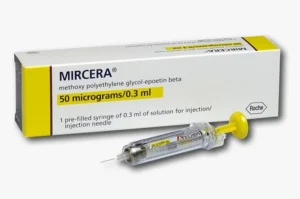
TM Owner Vifor (International) Inc.
Mircera 100mcg/0.3mL Injection
Global Shipping : Reliable Global Distribution Network
Express Delivery : Priority Shipping for Every Order
Secure Payments : Trusted Payment Protection System
 Disclaimer

Secure Handling
24/7 Worldwide Support

Global Access
Worldwide Access to Health

Cold-Chain Expert
Excellence in Cold-Chain

Trusted Supply
Certified Medical Supply
Indications & Clinical Uses
- Mircera 100 mcg/0.3 mL is a brand of methoxy polyethylene glycol-epoetin beta, a long-acting erythropoiesis-stimulating agent (ESA) related to erythropoietin.
- It is approved for the treatment of anaemia associated with chronic kidney disease (CKD) in adults, whether or not they are on dialysis, and in children aged 3 months to 17 years who are converting from another ESA with an already stable haemoglobin level on dialysis.
- Mircera is given by intravenous or subcutaneous injection, usually once monthly once a stable haemoglobin is reached, by a healthcare provider or, after training, by the patient or caregiver.
- It is not approved, and must not be used, to treat anaemia caused by cancer chemotherapy.
- Roche originally developed Mircera; in the United States it is currently licensed and supplied by Vifor (International) Inc.
Side Effects
- Mircera carries a boxed warning: erythropoiesis-stimulating agents increase the risk of death, heart attack, stroke, blood clots (venous thromboembolism), clotting of the vascular access used for dialysis, and, in some cancers, tumour progression or recurrence; the lowest dose that avoids the need for a blood transfusion should be used.
- The most commonly reported side effects, each in about 1 in 10 patients, are high blood pressure, diarrhoea and nasopharyngitis (common-cold-type symptoms).
- Report chest pain, sudden weakness or numbness, leg swelling or pain, and shortness of breath immediately, as these can signal a heart attack, stroke or blood clot.
- Seizures have also been reported, mainly in the first few months of treatment, so report any unusual jerking movements or loss of awareness.
Precautions & Warnings
- Blood pressure must be well controlled before starting Mircera and checked regularly during treatment, since uncontrolled high blood pressure is a contraindication.
- Haemoglobin should be monitored and the dose adjusted to use the lowest amount that avoids a blood transfusion, because higher haemoglobin targets raise cardiovascular risk.
- If a patient loses response suddenly, or develops severe anaemia with a low reticulocyte count, tests should be done for pure red cell aplasia (PRCA), and Mircera should be stopped permanently if antibody-mediated PRCA is confirmed; it must never be restarted or switched to another ESA in this situation.
- Mircera is contraindicated in uncontrolled hypertension and in known pure red cell aplasia after any ESA.
- Watch for neurological symptoms such as confusion or seizures, particularly in the first few months.
- Discuss pregnancy and breastfeeding with the healthcare provider before use.
Avoid Interactions
- There are no major drug-drug interactions specifically established for Mircera, but its effect can be reduced by anything that limits the bone marrow's ability to respond, such as iron, vitamin B12 or folate deficiency, ongoing bleeding, infection, inflammation or aluminium toxicity, so these should be assessed and corrected before and during treatment.
- Because Mircera raises red blood cell counts, it should not be given together with other erythropoiesis-stimulating agents.
- Do not mix Mircera with other medicines in the same syringe.
- Tell the healthcare provider about all other medicines, including those for high blood pressure or blood-thinning, since blood pressure and clotting risk need close monitoring during Mircera treatment.
References
Frequently Asked Questions
Mircera (methoxy polyethylene glycol-epoetin beta) treats anaemia caused by chronic kidney disease in adults on or off dialysis, and in children aged 3 months to 17 years switching from another ESA. It stimulates red blood cell production. Mircera is not approved for cancer-related anaemia.
Mircera is injected into a vein or under the skin, usually once a month once your haemoglobin is stable, by a healthcare provider or by you or a caregiver after training. Your dose is based on your haemoglobin level and adjusted to use the lowest effective amount.
Mircera carries a boxed warning: erythropoiesis-stimulating agents increase the risk of death, heart attack, stroke, blood clots and, in some cancers, tumour growth. Your care team uses the lowest dose that avoids a blood transfusion and monitors your blood pressure and haemoglobin closely.
The most common effects, each in about 1 in 10 patients, are high blood pressure, diarrhoea and cold-like symptoms (nasopharyngitis). Get urgent help for chest pain, sudden weakness, leg swelling or shortness of breath, since these can signal a heart attack, stroke or blood clot.
You will have regular haemoglobin checks so your dose can be adjusted to the lowest amount that avoids transfusion. Blood pressure is monitored too, since it must be controlled before starting and throughout treatment. Iron, vitamin B12 or folate levels may also be checked if Mircera stops working well.
Yes, but only in children aged 3 months to 17 years with chronic kidney disease who are already on dialysis and switching from another ESA with a stable haemoglobin level. It is not used to start anaemia treatment in children who have never had an ESA.

Trusted & Reliable – Your Partner in Global Distribution.
We provide comprehensive lines of pharmaceutical products to support all your healthcare distribution needs.


