

TM Owner Covidien / Medtronic
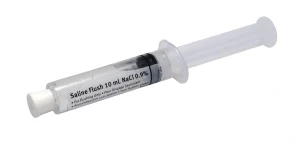
Monoject Flush 10 USP/mL Injection
Global Shipping : Reliable Global Distribution Network
Express Delivery : Priority Shipping for Every Order
Secure Payments : Trusted Payment Protection System
 Disclaimer

Secure Handling
24/7 Worldwide Support

Global Access
Worldwide Access to Health

Cold-Chain Expert
Excellence in Cold-Chain

Trusted Supply
Certified Medical Supply
Indications & Clinical Uses
- Monoject Flush is a prefilled syringe containing a very low, non-therapeutic concentration of heparin sodium, 10 USP units/mL, in saline.
- It is not used to treat any disease and makes no anticoagulant treatment claim: its sole purpose is to maintain patency (keep clear of clots) of intravenous catheters, central lines and other vascular access devices between uses, such as between medication doses or blood draws.
- It should be thought of as a device-drug combination used for line care rather than a medicine that treats a condition.
- Heparin lock flush solution is given only by a healthcare provider or a trained caregiver following the catheter manufacturer's and clinician's instructions, and is injected directly into the indwelling access device, never given as a systemic treatment dose or by any other route.
Side Effects
- At the very low concentration used for lock flushing, heparin lock flush solution rarely causes side effects, and no adverse effects have been established at this dose beyond a remote chance of a hypersensitivity reaction.
- However, the low-dose lock flush must never be confused with concentrated, therapeutic-strength heparin sodium injection, which is used for full anticoagulation: this confusion has led to fatal haemorrhages, particularly in infants and children, when a therapeutic vial was mistakenly used for a lock flush or vice versa.
- Report any unexpected bleeding, bruising around the catheter site, or signs of an allergic reaction such as rash or swelling.
- If used repeatedly at higher-than-intended volumes, systemic effects of heparin, including bleeding, thrombocytopenia or so-called white clot syndrome, are possible and should be reported urgently.
Precautions & Warnings
- Heparin lock flush solution carries a labelled warning that it must not be used in neonates, because the benzyl alcohol preservative in some formulations has been linked to a fatal 'gasping syndrome' in premature infants; a preservative-free product should be used in this age group.
- It must never be substituted for, or confused with, full-strength therapeutic heparin sodium injection - always check the vial or syringe label and concentration carefully before use.
- It should not be used in people with uncontrolled active bleeding, a history of heparin-induced thrombocytopenia, or known hypersensitivity to heparin or pork-derived products, and is for flushing the intravenous access device only, never given by intramuscular or other systemic injection.
- Platelet counts should be monitored if lock flushing is used repeatedly over a prolonged period, and caution is advised in people over 60, who have a higher bleeding risk.
Avoid Interactions
- Because heparin lock flush solution is used in tiny, localised amounts to maintain catheter patency rather than to achieve systemic anticoagulation, clinically significant drug interactions are unlikely at this dose, but the same interaction principles as therapeutic heparin apply if larger or more frequent exposure occurs.
- Medicines that increase bleeding risk, such as aspirin, other NSAIDs, dipyridamole and oral anticoagulants like warfarin, can add to any heparin effect.
- Digitalis, tetracyclines, nicotine and antihistamines may partially counteract heparin's anticoagulant action.
- Do not draw up or administer heparin lock flush solution and therapeutic-strength heparin from unlabelled or look-alike containers together, and always have a second person verify the concentration in settings where confusion has previously caused harm.
- Tell the care team about all medicines the patient is receiving, including other anticoagulants and antiplatelet drugs.
References
Frequently Asked Questions
Monoject Flush is a prefilled syringe of very dilute heparin (10 USP units/mL) in saline. It is not a treatment for any illness - it is used only to keep intravenous catheters and central lines clear of clots between uses, such as between medication doses.
A nurse or trained caregiver injects the solution directly into the indwelling catheter or IV access device, following the catheter and clinical instructions exactly. It is never given as a general injection or used to treat blood clots; it only maintains line patency.
At this very low dose, side effects are rare, with only a remote chance of an allergic reaction. The main danger is mixing it up with full-strength therapeutic heparin, which has caused fatal bleeding, especially in infants. Report unexpected bleeding or a rash.
Never substitute Monoject Flush for concentrated therapeutic heparin, or vice versa - always check the label and concentration before use. It should not be given to anyone with uncontrolled active bleeding or a known heparin allergy, and is for catheter flushing only.
No. Heparin lock flush solution containing benzyl alcohol must not be used in neonates, because benzyl alcohol has been linked to a fatal 'gasping syndrome' in premature infants. A preservative-free formulation is used for flushing lines in this age group instead.
Routine coagulation testing is not usually needed at the low lock-flush dose, but if it is used repeatedly over a long time, platelet counts may be checked, since heparin can occasionally cause a drop in platelets. Ask the care team about monitoring for long-term catheter use.

Trusted & Reliable – Your Partner in Global Distribution.
We provide comprehensive lines of pharmaceutical products to support all your healthcare distribution needs.


