

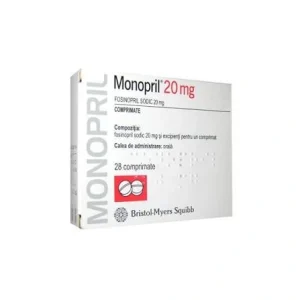
TM Owner Bristol Myers Squibb
Monopril 20mg Tablet
Global Shipping : Reliable Global Distribution Network
Express Delivery : Priority Shipping for Every Order
Secure Payments : Trusted Payment Protection System
 Disclaimer

Secure Handling
24/7 Worldwide Support

Global Access
Worldwide Access to Health

Cold-Chain Expert
Excellence in Cold-Chain

Trusted Supply
Certified Medical Supply
Indications & Clinical Uses
- Monopril 20 mg tablets, when the branded product is available, contain fosinopril sodium, an ACE (angiotensin-converting enzyme) inhibitor.
- No current DailyMed listing for the Monopril brand name was found in the US; the content below is based on the generic fosinopril sodium prescribing information, which carries the same approved uses.
- Fosinopril is used to treat high blood pressure in adults, alone or with a thiazide diuretic, and as add-on therapy with diuretics, with or without digoxin, to manage heart failure.
- Dosing has also been studied in children over 50 kg for blood pressure lowering.
- It is taken by mouth once daily and is not a hospital-only medicine, though initial doses in heart failure or renal impairment are usually supervised closely by a healthcare provider.
Side Effects
- Fosinopril carries a boxed warning for fetal toxicity: it must be stopped as soon as pregnancy is detected, because ACE inhibitors can cause injury or death to the developing baby, especially in the second and third trimester.
- In hypertension trials, the most common effects were cough (about 2%), dizziness (about 2%) and nausea or vomiting (about 1%); in heart failure, dizziness (about 12%), cough (about 10%) and low blood pressure (about 4%) were more frequent.
- A persistent, dry, non-productive cough can occur with any ACE inhibitor.
- Seek urgent medical help for swelling of the face, lips, tongue or throat (angioedema), difficulty breathing, or signs of very low blood pressure such as fainting, as these require immediate treatment and discontinuation of the drug.
Precautions & Warnings
- Fosinopril must be stopped immediately if pregnancy is detected because of the risk of fetal harm, and effective contraception should be used by anyone who could become pregnant.
- It is contraindicated with aliskiren in people with diabetes, and should not be combined with a neprilysin inhibitor like sacubitril.
- Angioedema of the face, lips, tongue or airway can occur at any time during treatment and is a medical emergency; it is more common in Black patients and those with a prior history of angioedema.
- Monitor for symptomatic low blood pressure, especially in volume-depleted patients or those also taking diuretics, and for hyperkalaemia (raised potassium), particularly with renal impairment, diabetes or potassium supplements.
- Kidney and liver function and white blood cell counts should be monitored periodically, especially in people with collagen-vascular disease.
- Fosinopril can be taken with or without food.
Avoid Interactions
- Fosinopril increases the risk of high potassium levels when combined with potassium supplements, potassium-sparing diuretics such as spironolactone, or salt substitutes containing potassium, so these combinations require monitoring.
- NSAIDs, including selective COX-2 inhibitors, can reduce the blood-pressure-lowering effect of fosinopril and increase the risk of kidney problems, particularly in older adults or those who are dehydrated.
- Lithium levels can rise when taken with fosinopril, increasing the risk of lithium toxicity.
- Fosinopril must not be combined with aliskiren in people with diabetes, and caution is needed with other blood-pressure-lowering drugs, including diuretics, because of an additive drop in blood pressure.
- Antacids can reduce fosinopril absorption, so doses should be separated by about two hours.
- Tell your healthcare provider about all medicines and supplements you take.
References
Frequently Asked Questions
Monopril (fosinopril), an ACE inhibitor, treats high blood pressure and is used with diuretics to manage heart failure. No current US DailyMed listing was found under the Monopril brand name; this information is based on the equivalent generic fosinopril sodium label.
Fosinopril tablets are taken by mouth once daily, with or without food, usually starting at 10 mg and adjusted by your healthcare provider up to a maximum of 80 mg for blood pressure or 40 mg for heart failure, based on your response and blood pressure readings.
The most common effects are a dry, persistent cough, dizziness, nausea and low blood pressure. Fosinopril carries a boxed warning for fetal harm. Seek urgent help for facial, lip or throat swelling (angioedema) or breathing difficulty, which need immediate treatment.
Avoid potassium supplements and salt substitutes unless your provider approves, since fosinopril can raise potassium levels. NSAIDs can reduce its effect and stress the kidneys. It must not be combined with aliskiren if you have diabetes, and pregnancy must be avoided.
Yes. Your healthcare provider checks kidney function, blood potassium and white blood cell counts periodically, particularly at the start of treatment or after a dose change, and more closely if you have kidney disease, diabetes or collagen-vascular disease.
No. Fosinopril carries a boxed warning because ACE inhibitors can seriously harm or cause death to a developing baby, especially in the second and third trimester. Stop the medicine and contact your healthcare provider immediately if pregnancy is detected or suspected.

Trusted & Reliable – Your Partner in Global Distribution.
We provide comprehensive lines of pharmaceutical products to support all your healthcare distribution needs.


