

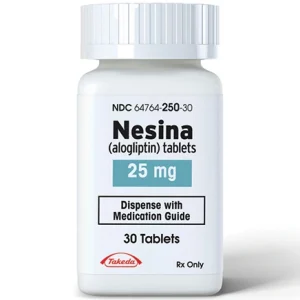
TM Owner Takeda
Nesina 25mg Tablet
Global Shipping : Reliable Global Distribution Network
Express Delivery : Priority Shipping for Every Order
Secure Payments : Trusted Payment Protection System
 Disclaimer

Secure Handling
24/7 Worldwide Support

Global Access
Worldwide Access to Health

Cold-Chain Expert
Excellence in Cold-Chain

Trusted Supply
Certified Medical Supply
Indications & Clinical Uses
- Nesina 25 mg tablets contain alogliptin, a dipeptidyl peptidase-4 (DPP-4) inhibitor used, as an adjunct to diet and exercise, to improve blood sugar control in adults with type 2 diabetes mellitus.
- It works by increasing incretin hormone levels that help the pancreas release insulin appropriately and reduce sugar production by the liver after meals.
- Nesina is not approved for type 1 diabetes or diabetic ketoacidosis.
- It may be used alone or added to metformin, a sulfonylurea, a thiazolidinedione or insulin, with the dose lowered in reduced kidney function (12.5 mg for moderate impairment, 6.25 mg for severe impairment or dialysis).
- In the European Union, alogliptin is marketed as Vipidia and used similarly for type 2 diabetes, typically in combination with other glucose-lowering medicines.
- Nesina is a tablet taken by mouth, once daily, and is not hospital-administered.
Side Effects
- The most common side effects of Nesina, each occurring in roughly 4% or more of patients, are nasopharyngitis (a cold-like illness), headache and upper respiratory tract infection.
- Low blood sugar (hypoglycaemia) can occur, especially when Nesina is combined with insulin or a sulfonylurea, causing shakiness, sweating, confusion or dizziness that needs prompt treatment with fast-acting sugar.
- Nesina carries no boxed warning, but the label describes serious postmarketing reactions needing urgent attention: acute pancreatitis, with severe, persistent abdominal pain sometimes spreading to the back; serious allergic reactions including facial or throat swelling, breathing difficulty, and severe skin reactions such as Stevens-Johnson syndrome or blistering (bullous pemphigoid); and rare cases of liver failure, sometimes fatal.
- New or worsening joint pain has also been reported.
- Stop Nesina and seek urgent medical help for severe abdominal pain, breathing difficulty, widespread rash, blistering, or yellowing of the skin or eyes.
Precautions & Warnings
- Nesina should not be used by anyone with a history of serious hypersensitivity to alogliptin, including previous anaphylaxis, angioedema or severe skin reactions.
- Because DPP-4 inhibitors have been linked to acute pancreatitis, avoid Nesina if you have a history of pancreatitis unless your healthcare provider advises otherwise, and stop it promptly if pancreatitis is suspected.
- Nesina has been associated with heart failure in some patients, particularly those with existing heart or kidney disease, so report new or worsening breathlessness, leg swelling, or rapid weight gain.
- Liver function should be assessed if unexplained fatigue, jaundice, dark urine or abdominal pain occurs, since rare hepatic failure has been reported.
- Dose reduction is required in moderate-to-severe kidney impairment and dialysis.
- Data on use in pregnancy and breastfeeding are limited, so alternative treatments are generally preferred; discuss diabetes management with your healthcare provider if pregnant, planning pregnancy, or breastfeeding.
Avoid Interactions
- Tell your healthcare provider about every medicine and supplement you take before starting Nesina.
- Combining Nesina with insulin or an insulin-releasing sulfonylurea increases the risk of low blood sugar, and a lower dose of the other medicine may be needed.
- No major cytochrome P450 metabolism interactions are established for alogliptin, and it needs no dose adjustment with common medicines such as metformin, pioglitazone, warfarin or oral contraceptives, but any new medicine, particularly other diabetes treatments, corticosteroids or diuretics that raise blood sugar, should be discussed with your care team.
- Alcohol can increase low blood sugar risk and should be used cautiously.
- Because Nesina is cleared by the kidneys, medicines affecting kidney function should be used carefully, with monitoring of blood sugar and kidney tests.
- Always disclose all prescription, over-the-counter and herbal products before starting or stopping any diabetes medicine.
References
Frequently Asked Questions
Nesina (alogliptin) is a DPP-4 inhibitor tablet that lowers blood sugar in adults with type 2 diabetes. It's used alongside diet and exercise, alone or combined with other diabetes medicines. In the EU, the same medicine is sold as Vipidia.
Take one 25 mg Nesina tablet by mouth once daily, with or without food. Swallow it whole; don't split it. If you have reduced kidney function, your provider may prescribe a lower 12.5 mg or 6.25 mg dose instead.
The most common side effects are cold-like symptoms, headache and upper respiratory infections. Low blood sugar can happen, especially with insulin or a sulfonylurea. Seek urgent care for severe stomach pain, breathing trouble, facial swelling, or a blistering skin rash.
Avoid Nesina if you're allergic to alogliptin. Be cautious combining it with insulin or sulfonylureas, which raise low-blood-sugar risk, and with alcohol for the same reason. Tell your provider about all medicines before starting, especially other diabetes treatments.
Take the missed Nesina dose as soon as you remember that day. If it's almost time for your next dose, skip the missed one — don't double up. Take your next tablet at the usual time the following day.
Nesina is typically used long-term to control type 2 diabetes as part of ongoing treatment. Data in pregnancy and breastfeeding are limited, so it's generally avoided; tell your healthcare provider if you're pregnant or planning pregnancy so treatment can be reviewed.

Trusted & Reliable – Your Partner in Global Distribution.
We provide comprehensive lines of pharmaceutical products to support all your healthcare distribution needs.


