

TM Owner Organon
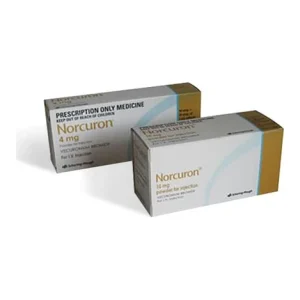
Norcuron 10mg Injection
Global Shipping : Reliable Global Distribution Network
Express Delivery : Priority Shipping for Every Order
Secure Payments : Trusted Payment Protection System
 Disclaimer

Secure Handling
24/7 Worldwide Support

Global Access
Worldwide Access to Health

Cold-Chain Expert
Excellence in Cold-Chain

Trusted Supply
Certified Medical Supply
Indications & Clinical Uses
- Norcuron 10 mg (vecuronium bromide), a non-depolarizing neuromuscular blocking agent, is used as an adjunct to general anesthesia to facilitate endotracheal intubation and to provide skeletal muscle relaxation during surgery or mechanical ventilation.
- It is a hospital- and operating-room-only medicine given exclusively to intubated or about-to-be-intubated patients under the direct supervision of an anesthesiologist or other clinician trained in neuromuscular blockade and airway management, since it paralyzes the muscles needed to breathe.
- No currently active US DailyMed listing was found specifically under the brand name Norcuron; this content is based on the current generic vecuronium bromide for injection label, which covers the same active substance, strength range and indication.
- It is used across the age range from infants to adults undergoing surgical or intensive-care procedures requiring muscle relaxation.
Side Effects
- The most common effect of Norcuron is its intended action lasting longer than needed: paralysis ranging from mild residual weakness to profound, prolonged paralysis with slow return of breathing or swallowing, particularly with kidney or liver impairment, obesity, or prolonged intensive-care infusion.
- Rare but serious reactions include anaphylactic and anaphylactoid reactions, which can cause bronchospasm, a sudden drop in blood pressure, fast heart rate, hives and skin flushing, and can be life-threatening.
- Prolonged intensive-care use has been linked to persistent muscle weakness and wasting that can continue after the drug is stopped.
- Because Norcuron is only given in a monitored hospital setting with continuous cardiorespiratory monitoring, any breathing difficulty or allergic reaction is managed immediately by the treating team; there is no patient self-monitoring role.
Precautions & Warnings
- This medicine must only be given by personnel trained in its use, with equipment for endotracheal intubation, artificial ventilation and reversal drugs immediately available, since it can paralyze the muscles needed to breathe.
- It should be used cautiously, with reduced dosing, in myasthenia gravis and other neuromuscular disorders, severe obesity, and hepatic or renal impairment, all of which can prolong its effect.
- In the intensive care unit, a peripheral nerve stimulator is recommended to monitor the depth and recovery of block and avoid prolonged paralysis.
- It should be used in pregnancy only if clearly needed, and it is not known to pass into breast milk in clinically significant amounts.
- It is for intravenous use only and must never be given by any other route.
Avoid Interactions
- Certain inhaled anesthetics (isoflurane, enflurane, halothane) and other drugs including aminoglycoside and other antibiotics, some diuretics, magnesium salts, calcium-channel blockers and lithium can intensify and prolong the neuromuscular blockade produced by vecuronium, increasing the risk of extended paralysis and slow recovery.
- Prior administration of succinylcholine can also enhance and prolong its effect.
- Anticholinesterase drugs such as neostigmine and pyridostigmine are used deliberately to reverse the block at the end of surgery.
- Vecuronium solutions are chemically incompatible with alkaline drug solutions such as barbiturates (e.g., thiopental) and must never be mixed with them in the same syringe or infusion line.
- The anesthesia team reviews all other medicines a patient is taking, including herbal or recreational substances, before dosing, since this drug is only given under continuous monitoring.
References
Frequently Asked Questions
Norcuron (vecuronium bromide) is a muscle relaxant given during general anesthesia to help place a breathing tube and to keep muscles still during surgery or on a ventilator. It is used only in hospital operating rooms and intensive care units, never at home or self-administered.
Norcuron is given by intravenous injection or continuous IV infusion by an anesthesiologist or trained clinician, with breathing equipment ready at the bedside. It works within minutes and paralyzes the muscles needed to breathe, so a ventilator supports breathing until it wears off or is reversed.
The main effect of Norcuron is paralysis lasting longer than intended, causing slow return of breathing or movement, especially with kidney or liver problems. Rarely, it can cause a serious allergic reaction with wheezing, a sharp drop in blood pressure, or hives, which the surgical team treats immediately.
Tell your anesthesia team about every medicine you take, including antibiotics, diuretics, magnesium or calcium-channel blockers, since these can prolong Norcuron's paralyzing effect. It must never be mixed with alkaline drugs such as thiopental in the same syringe or line.
At the end of surgery, the anesthesia team gives a reversal drug such as neostigmine or pyridostigmine to restore normal muscle function once it is no longer needed. A nerve stimulator device is often used to confirm recovery is complete, especially after prolonged use in intensive care.
Yes. Kidney or liver impairment can slow how quickly the body clears vecuronium, so its paralyzing effect lasts longer. The anesthesia team adjusts the dose and monitors recovery more closely with a nerve stimulator in these patients to avoid prolonged weakness.

Trusted & Reliable – Your Partner in Global Distribution.
We provide comprehensive lines of pharmaceutical products to support all your healthcare distribution needs.


