

TM Owner Novo Nordisk
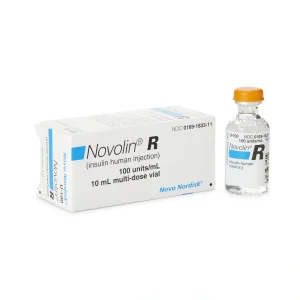
Novolin R 100 units/mL Injection
Global Shipping : Reliable Global Distribution Network
Express Delivery : Priority Shipping for Every Order
Secure Payments : Trusted Payment Protection System
 Disclaimer

Secure Handling
24/7 Worldwide Support

Global Access
Worldwide Access to Health

Cold-Chain Expert
Excellence in Cold-Chain

Trusted Supply
Certified Medical Supply
Indications & Clinical Uses
- Novolin R 100 units/mL is short-acting human regular insulin, made by recombinant DNA technology, used to improve glycaemic control in adults and children with diabetes mellitus, including type 1 and type 2 diabetes.
- It is usually injected under the skin about 30 minutes before a meal to cover the rise in blood sugar from eating, and is often combined with an intermediate- or long-acting basal insulin such as Novolin N.
- Unlike rapid-acting analogue insulins (for example NovoLog), Novolin R has a slower onset of roughly 30 minutes and a longer duration of up to 12 hours, so timing before meals is important.
- In a hospital setting it may also be given intravenously, under close medical supervision, for example to treat severe hyperglycaemia or diabetic ketoacidosis.
- Novolin R must not be confused with intermediate- or long-acting insulins, which cannot be substituted dose-for-dose.
Side Effects
- Hypoglycaemia is the most common side effect of Novolin R and has been reported in a large proportion of treated patients in clinical use; symptoms include sweating, tremor, palpitations, hunger and confusion, and severe, untreated hypoglycaemia can cause seizures, coma or death.
- Other effects include injection-site reactions (pain, redness, swelling), lipodystrophy with repeated injections at the same site, weight gain, and peripheral oedema (swelling of the hands, ankles or feet).
- Rare but serious whole-body allergic reactions, with rash, difficulty breathing or a fast heartbeat, require emergency treatment.
- There is no boxed warning on the current Novolin R label.
- Rotate injection sites regularly, always eat within about 30 minutes of an injection, and seek urgent help for severe hypoglycaemia or a serious allergic reaction.
Precautions & Warnings
- Do not use Novolin R during a hypoglycaemic episode or if you are hypersensitive to regular human insulin or any excipient.
- Blood glucose and, when used intravenously, blood potassium levels must be monitored closely, since insulin drives potassium into cells and can cause dangerous hypokalaemia if untreated.
- Dose needs commonly change with illness, exercise, diet, kidney or liver impairment, and pregnancy or breastfeeding.
- Novolin R may be given subcutaneously or, under medical supervision, intravenously, but it must never be given intramuscularly and must not be used in an insulin pump.
- Thiazolidinedione medicines combined with insulin can cause or worsen fluid retention and heart failure.
- As with any insulin, hypoglycaemia can reduce concentration and reaction time, so take care when driving or operating machinery, and never share a pen or syringe between patients.
Avoid Interactions
- Medicines that increase the glucose-lowering effect of Novolin R and raise hypoglycaemia risk include other antidiabetic agents, ACE inhibitors, monoamine oxidase inhibitors, salicylates, sulfonamide antibiotics and alcohol.
- Medicines that reduce its effect and can raise blood sugar include corticosteroids, thiazide diuretics, thyroid hormones, oral contraceptives, and sympathomimetic drugs such as epinephrine or albuterol.
- Beta-blockers can mask warning signs of hypoglycaemia, such as a racing heart and tremor, so closer glucose monitoring is needed if one is prescribed.
- Do not mix Novolin R with other insulins for intravenous use, and do not add it to an infusion bag unless specifically directed, since compatibility with intravenous fluids and other drugs must be confirmed by a pharmacist.
- Tell your healthcare provider and pharmacist about every prescription medicine, over-the-counter product, herbal remedy and supplement you take.
References
Frequently Asked Questions
Novolin R (regular human insulin) improves blood sugar control in adults and children with type 1 or type 2 diabetes. It is short-acting and covers the rise in glucose after meals. In hospital it can also be given into a vein for severe high blood sugar.
Novolin R is usually injected under the skin about 30 minutes before a meal, into the abdomen, thigh, upper arm or buttock. It is clear, so no mixing is needed. In hospital, a healthcare provider may give it directly into a vein under close monitoring.
The main side effect of Novolin R is hypoglycaemia (low blood sugar), with sweating, shakiness, confusion or a fast heartbeat. Other effects include injection-site reactions, lipodystrophy and weight gain. Severe low blood sugar or a whole-body allergic reaction needs emergency care.
Avoid delaying or skipping a meal after injecting Novolin R, and avoid alcohol on an empty stomach, since both increase hypoglycaemia risk. Never mix it with insulin glargine, and tell your healthcare provider about beta-blockers or steroids, which change how it works.
Yes, but only by a healthcare provider in hospital, with close monitoring of blood sugar and potassium. At home, Novolin R is for subcutaneous injection only; it must never be given into a muscle or used in an insulin pump.
Keep unopened Novolin R refrigerated at 2°C to 8°C until the expiry date; never freeze it. Once opened, a vial can stay at room temperature, below 25°C, for up to 42 days, then must be discarded, even if some insulin remains.

Trusted & Reliable – Your Partner in Global Distribution.
We provide comprehensive lines of pharmaceutical products to support all your healthcare distribution needs.


