

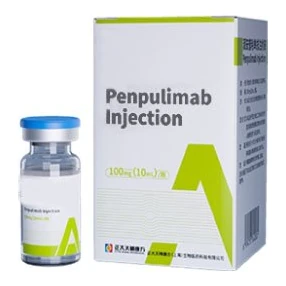
TM Owner Akeso
Penpulimab 100mg/10mL (10 mg/mL) single-dose vial Vial
Global Shipping : Reliable Global Distribution Network
Express Delivery : Priority Shipping for Every Order
Secure Payments : Trusted Payment Protection System
 Disclaimer

Secure Handling
24/7 Worldwide Support

Global Access
Worldwide Access to Health

Cold-Chain Expert
Excellence in Cold-Chain

Trusted Supply
Certified Medical Supply
Indications & Clinical Uses
- Penpulimab-kcqx (marketed in the US without a separate trade name; the same antibody is sold in China as Anniko) is a PD-1 immune checkpoint inhibitor made by Akeso.
- It was approved by the FDA in April 2025, in combination with cisplatin or carboplatin plus gemcitabine, as a first-line treatment for adults with recurrent or metastatic non-keratinizing nasopharyngeal carcinoma (NPC), a cancer of the upper throat behind the nose.
- It is also approved as a single agent for adults with metastatic non-keratinizing NPC whose disease has progressed on or after platinum-based chemotherapy and at least one other prior line of therapy.
- Penpulimab is given as an intravenous infusion by a cancer specialist in a hospital or clinic setting; it is not a treatment patients give themselves.
Side Effects
- Penpulimab has no boxed warning, but as a PD-1 inhibitor it can cause severe or fatal immune-mediated reactions in almost any organ, including inflammation of the lungs (pneumonitis), bowel (colitis), liver (hepatitis), hormone glands (thyroid, adrenal or pituitary problems, type 1 diabetes), kidneys (nephritis), heart (myocarditis), skin (including serious blistering reactions), and nervous system.
- When combined with chemotherapy, the most common side effects (affecting over 1 in 5 people) are nausea, vomiting, underactive thyroid, constipation, reduced appetite, weight loss, cough, fatigue and rash.
- Report any new or worsening cough, breathlessness, diarrhoea, yellowing skin, unusual tiredness, rash or vision changes to your care team promptly, as immune-related reactions can appear weeks after the last dose and may need urgent steroid treatment.
Precautions & Warnings
- Before starting Penpulimab, tell your care team about any autoimmune disease, organ transplant (including corneal transplant), or previous immune-mediated reaction to another checkpoint inhibitor, as these increase the risk of severe reactions and may need specialist input.
- Liver, thyroid and kidney function, along with blood counts, are checked regularly during treatment to catch immune-related problems early; corticosteroids or other immune-suppressing treatment, or permanent stopping of Penpulimab, may be needed if a severe reaction occurs.
- Solid organ transplant recipients are at increased risk of transplant rejection.
- Penpulimab can cause fetal harm, so effective contraception is recommended during treatment and for a period after the last dose, and it should not be used during pregnancy unless clearly necessary; breastfeeding is not recommended during treatment.
- Penpulimab is given only by intravenous infusion under medical supervision - it is never self-injected at home.
Avoid Interactions
- There are no formal drug interaction studies for Penpulimab, but because it works through the immune system, using corticosteroids or other immunosuppressive medicines before starting treatment can blunt its anti-cancer effect, so these are generally avoided except to manage a side effect once treatment has begun.
- Tell your care team about all prescription and over-the-counter medicines, herbal products and supplements you take, and about any recent or planned vaccinations, since live vaccines are generally avoided during treatment with immune checkpoint inhibitors.
- When given with cisplatin or carboplatin and gemcitabine, the combined toxicities of the chemotherapy (such as low blood counts and nausea) add to Penpulimab's own effects, so blood tests are monitored closely throughout treatment.
- Penpulimab must be diluted and administered exactly as directed by the treating hospital and must not be mixed with other medicines in the same infusion line.
References
Frequently Asked Questions
Penpulimab-kcqx is a PD-1 immunotherapy from Akeso, approved in April 2025 for adults with advanced nasopharyngeal carcinoma. It is used with chemotherapy as a first treatment, or alone if the cancer has progressed after platinum-based chemotherapy and one other prior therapy.
Penpulimab is given by intravenous infusion in a hospital or cancer clinic, either every three weeks (200 mg, with chemotherapy) or every two weeks (200 mg, alone), for up to 24 months of treatment in total. You cannot inject it yourself at home.
Common side effects with chemotherapy include nausea, vomiting, underactive thyroid, tiredness and cough. Penpulimab can also cause serious immune-related inflammation of the lungs, gut, liver, hormone glands or other organs - report new symptoms to your care team right away.
Avoid live vaccines and unnecessary corticosteroids or other immune-suppressing medicines during Penpulimab treatment, as they can reduce how well it works. Tell your oncology team about all medicines, herbal products and supplements you take before and during your infusion appointments.
Your care team will check thyroid, liver and kidney function and blood counts regularly, since Penpulimab can trigger immune-related organ inflammation, sometimes weeks after a dose. Report new cough, diarrhoea, rash, fatigue or yellowing skin promptly so it can be treated early.
Yes. Penpulimab-kcqx is the US-approved name for the same antibody sold in China under the brand name Anniko. There is no separate US trade name; Penpulimab has no boxed warning, but carries standard immune checkpoint inhibitor warnings for organ inflammation.

Trusted & Reliable – Your Partner in Global Distribution.
We provide comprehensive lines of pharmaceutical products to support all your healthcare distribution needs.


