

TM Owner Celgene
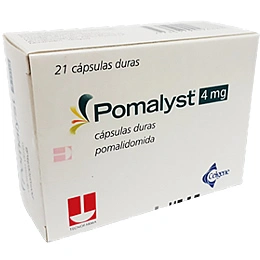
Pomalyst 4mg Capsule
Global Shipping : Reliable Global Distribution Network
Express Delivery : Priority Shipping for Every Order
Secure Payments : Trusted Payment Protection System
 Disclaimer

Secure Handling
24/7 Worldwide Support

Global Access
Worldwide Access to Health

Cold-Chain Expert
Excellence in Cold-Chain

Trusted Supply
Certified Medical Supply
Indications & Clinical Uses
- Pomalyst 4 mg capsules contain pomalidomide, a thalidomide-analogue immunomodulatory agent, and are approved in the United States for two uses in adults: for multiple myeloma, in combination with dexamethasone, in patients who have received at least two prior therapies including lenalidomide and a proteasome inhibitor and have progressed on or within 60 days of completing the last treatment; and, under accelerated approval, for AIDS-related Kaposi sarcoma after failure of highly active antiretroviral therapy (HAART), or for HIV-negative Kaposi sarcoma.
- In the European Union the same molecule is marketed as Imnovid, where it is also approved in combination with bortezomib and dexamethasone earlier in treatment; check locally which combinations are approved.
- Pomalyst is prescribed only by an oncology specialist and dispensed solely through the manufacturer's REMS programme.
Side Effects
- The most common side effects, each affecting 30% or more of patients, are fatigue and weakness, low white blood cell counts (neutropenia), anaemia, constipation, nausea, diarrhoea, shortness of breath, upper respiratory infections, back pain and fever.
- Pomalyst carries a boxed warning: it is contraindicated in pregnancy because of a high risk of severe, life-threatening birth defects, and it increases the risk of venous and arterial blood clots, including deep vein thrombosis, pulmonary embolism, heart attack and stroke.
- Tell your healthcare provider immediately about fever, signs of infection, or unusual bleeding or bruising, and seek emergency care for leg swelling, chest pain, sudden breathlessness or sudden weakness on one side.
Precautions & Warnings
- Pomalyst must never be used in pregnancy; females of reproductive potential need two negative pregnancy tests before starting, must use two effective forms of contraception (or commit to abstinence) from four weeks before treatment through four weeks after stopping, and must have pregnancy tests repeated at least every four weeks.
- Males must use a condom during any sexual contact, even after a vasectomy, and must not donate sperm while on treatment or for a period afterward.
- Pomalyst is available only through the Pomalyst REMS program, which requires prescribers, patients and pharmacies to be certified.
- It is contraindicated in patients with a severe hypersensitivity reaction, including anaphylaxis, to pomalidomide.
- Antithrombotic prophylaxis is recommended because of the clotting risk.
- Avoid breastfeeding, use caution in hepatic or renal impairment, and swallow capsules whole without breaking, chewing or opening them.
Avoid Interactions
- Avoid strong CYP1A2 inhibitors such as ciprofloxacin, enoxacin and fluvoxamine where possible; if one must be used, the Pomalyst dose is reduced to 2 mg.
- Cigarette smoking can lower pomalidomide levels through CYP1A2 induction, so tell your healthcare provider if you smoke.
- Combining Pomalyst with dexamethasone, as used in multiple myeloma, adds to the risk of infection and blood clots, so extra monitoring applies.
- Live vaccines are generally avoided during treatment because of reduced immune function.
- Give your healthcare provider and pharmacist a complete list of every prescription medicine, over-the-counter product, herbal remedy and supplement you use.
- Unused capsules must be returned to the pharmacy under REMS rules rather than disposed of at home, because of the drug's teratogenic potential.
References
Frequently Asked Questions
Pomalyst (pomalidomide) treats multiple myeloma in adults who have already tried at least two other treatments, including lenalidomide and a proteasome inhibitor. It's given with dexamethasone. It is also used, under accelerated approval, for AIDS-related or HIV-negative Kaposi sarcoma after other treatments have failed.
You swallow one capsule whole, once daily at about the same time, on days 1 through 21 of each 28-day cycle, with or without food. Do not break, chew or open the capsule. Your oncologist sets your exact dose.
Fatigue, low white blood cell counts, anaemia, constipation, nausea, diarrhoea and back pain affect 30% or more of patients. Pomalyst has a boxed warning for severe birth defects in pregnancy and for blood clots, heart attack and stroke — get emergency help for leg swelling, chest pain or breathlessness.
Avoid pregnancy completely and follow the required two-method contraception plan. Avoid strong CYP1A2 inhibitors like ciprofloxacin and fluvoxamine unless your dose is adjusted, avoid live vaccines, and tell your prescriber about every other medicine, supplement and whether you smoke.
Because of the risk of severe birth defects and blood clots, Pomalyst is dispensed only through the Pomalyst REMS program. Your prescriber, pharmacy and you must all be certified, and women who can become pregnant need monthly pregnancy tests throughout treatment.
No — Pomalyst is contraindicated in pregnancy because it can cause severe, life-threatening birth defects. Women of reproductive potential must use two forms of contraception, and men must use condoms and avoid donating sperm during and after treatment.

Trusted & Reliable – Your Partner in Global Distribution.
We provide comprehensive lines of pharmaceutical products to support all your healthcare distribution needs.


