

TM Owner Generic
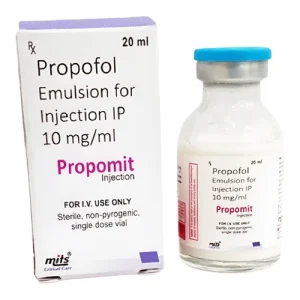
Propofol TCI 10mg/mL Injection
Global Shipping : Reliable Global Distribution Network
Express Delivery : Priority Shipping for Every Order
Secure Payments : Trusted Payment Protection System
 Disclaimer

Secure Handling
24/7 Worldwide Support

Global Access
Worldwide Access to Health

Cold-Chain Expert
Excellence in Cold-Chain

Trusted Supply
Certified Medical Supply
Indications & Clinical Uses
- "Propofol TCI" describes a 10 mg/mL (1%) propofol emulsion for injection given through a target-controlled infusion (TCI) pump, a device programmed with a pharmacokinetic model (such as the Marsh or Schnider model used by 'Diprifusor'-type systems) that calculates and delivers the rate needed to reach and hold a clinician-set target blood or effect-site concentration of propofol, rather than a fixed millilitres-per-hour rate.
- Propofol itself is a short-acting general anaesthetic and sedative-hypnotic.
- Used in TCI mode, it is indicated for induction and maintenance of general anaesthesia in adults undergoing surgical or diagnostic procedures; TCI mode is not recommended for intensive care sedation or for use in children.
- TCI pump systems are established in UK, European and some Asian anaesthesia practice, but have not been cleared or approved by the FDA for routine clinical anaesthesia in the United States, so no equivalent product is currently marketed for TCI-mode use there.
- It is given only by an anaesthesiologist in a hospital or surgical setting and is never self-administered.
Side Effects
- The most common effects are pain or stinging at the injection site during induction, low blood pressure (hypotension), a slowed heart rate (bradycardia), and brief pauses in breathing (apnoea) around the time of induction.
- Involuntary muscle movements and nausea or vomiting on emergence can occur.
- Serious but rare reactions include severe allergic (anaphylactic) reactions, seizures, marked bradycardia progressing to cardiac arrest, and, mainly with prolonged high-dose infusion in critically ill patients, propofol infusion syndrome - a rare but life-threatening combination of severe metabolic acidosis, high blood potassium, muscle breakdown (rhabdomyolysis), heart failure and kidney failure.
- Because propofol is given only in a monitored hospital setting, staff continuously observe breathing, heart rate and blood pressure throughout the infusion and into recovery.
Precautions & Warnings
- For intravenous use only, given by trained anaesthesia personnel with airway-management equipment and continuous cardiorespiratory monitoring available.
- The emulsion is formulated with soybean oil and egg lecithin, so it is contraindicated in anyone with a known allergy to propofol, eggs, soya or peanuts.
- TCI pharmacokinetic models are validated mainly in adults of average build; extremes of age or body weight, hepatic or renal impairment, and cardiac disease can all alter response and may require dose adjustment or extra caution.
- Rapid changes outside the TCI algorithm should be avoided in patients with cardiovascular compromise, because of the risk of profound hypotension.
- Use in pregnancy only when clearly necessary, since propofol crosses the placenta; discuss breastfeeding with the care team.
- Strict aseptic technique is required when handling the emulsion, which supports bacterial growth, and any unused emulsion must be discarded rather than reused for another patient or infusion.
Avoid Interactions
- Effects are increased by other central-nervous-system depressants given at the same time, including benzodiazepines, opioids, inhaled anaesthetics and alcohol, which reduce the propofol target concentration needed and raise the risk of excessive sedation, low blood pressure or slowed breathing.
- Concurrent valproate can raise propofol blood levels and may require a lower propofol dose; rifampicin (rifampin) has been linked to pronounced drops in blood pressure after propofol induction.
- Combining propofol with other sedatives or opioids increases the risk of profound respiratory depression, so each agent's dose is reduced accordingly.
- The anaesthesia team reviews all current medicines and supplements beforehand, since drugs that also lower blood pressure or heart rate can add to propofol's effects.
- The emulsion must never be mixed or co-infused with other drugs in the same line unless compatibility has been specifically confirmed.
References
Frequently Asked Questions
Propofol TCI is a 10 mg/mL propofol emulsion given through a target-controlled infusion pump to induce and maintain general anaesthesia in adults having surgery. The pump automatically calculates the infusion rate needed to reach and hold the blood level of propofol your anaesthesiologist sets.
Propofol TCI is given only by an anaesthesiologist through an intravenous line, using a pump programmed with a pharmacokinetic model to reach a target propofol concentration automatically. It is not a fixed drip rate, and it is never self-administered or taken by mouth.
Common effects include stinging at the injection site, low blood pressure, a slower heart rate and brief pauses in breathing during induction. Rarely, prolonged high-dose use can cause propofol infusion syndrome, a serious condition with muscle breakdown and heart or kidney failure - your care team monitors closely for this.
Tell your anaesthesia team about any allergy to eggs, soya, peanuts or propofol, since the emulsion contains egg lecithin and soybean oil. Also mention any other sedatives, opioids or alcohol use, as these increase propofol's effects on breathing and blood pressure.
Throughout a Propofol TCI infusion, staff continuously track your oxygen level, heart rate, blood pressure and breathing, since propofol can lower blood pressure and slow breathing. Monitoring continues into recovery until these values return to your normal baseline.
Target-controlled infusion (TCI) pump systems for propofol are used in the UK, Europe and parts of Asia but have not been approved by the FDA for routine anaesthesia practice in the United States. US anesthesiologists typically use manually programmed, weight-based propofol infusions instead.

Trusted & Reliable – Your Partner in Global Distribution.
We provide comprehensive lines of pharmaceutical products to support all your healthcare distribution needs.


