

TM Owner Eli Lilly
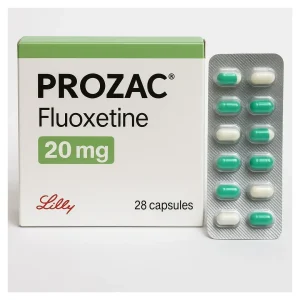
Prozac 20mg Capsule
Global Shipping : Reliable Global Distribution Network
Express Delivery : Priority Shipping for Every Order
Secure Payments : Trusted Payment Protection System
 Disclaimer

Secure Handling
24/7 Worldwide Support

Global Access
Worldwide Access to Health

Cold-Chain Expert
Excellence in Cold-Chain

Trusted Supply
Certified Medical Supply
Indications & Clinical Uses
- Prozac 20 mg capsules contain fluoxetine, a selective serotonin reuptake inhibitor (SSRI) antidepressant.
- Prozac is approved in adults for major depressive disorder, obsessive-compulsive disorder (OCD), bulimia nervosa, panic disorder, and, combined with olanzapine, for depressive episodes of bipolar I disorder and for treatment-resistant depression.
- In children and adolescents, it is approved for major depressive disorder from age 8 and for OCD from age 7; the bipolar I combination with olanzapine is approved from age 10.
- A weekly delayed-release 90 mg capsule, Prozac Weekly, is a different formulation from the daily 20 mg capsule described here and is not interchangeable dose-for-dose.
- Prozac is taken by mouth and is normally self-administered at home following a healthcare provider's prescription.
Side Effects
- Prozac carries a boxed warning: antidepressants, including Prozac, increased the risk of suicidal thoughts and behavior compared with placebo in short-term studies in children, adolescents and young adults up to age 24, so anyone starting Prozac should be watched closely for worsening depression, agitation or suicidal thoughts, especially in the first weeks of treatment or after a dose change.
- Common side effects, each affecting 5% or more of patients, include nausea, insomnia, anxiety, tremor, sweating, dry mouth, reduced appetite, diarrhea, indigestion, and sexual side effects such as reduced libido.
- Get urgent medical help for serotonin syndrome symptoms such as agitation, racing heartbeat, high fever and muscle rigidity, for unusual bleeding or bruising, for a manic episode, or for a seizure.
- Do not stop Prozac abruptly without medical advice.
Precautions & Warnings
- Prozac should not be started within 5 weeks of stopping a monoamine oxidase inhibitor (MAOI), and an MAOI should not be started within 5 weeks of stopping Prozac, because of the risk of serotonin syndrome.
- Tell your healthcare provider about any personal or family history of bipolar disorder, seizures, glaucoma, or bleeding problems, since fluoxetine can unmask mania, lower the seizure threshold, and increase bleeding risk, especially with aspirin, NSAIDs or blood thinners.
- Fluoxetine and its active metabolite have a long half-life and stay in the body for weeks after stopping, which matters when switching to another serotonergic medicine or an MAOI.
- Prozac may affect fertility in some patients and can be used in pregnancy or while breastfeeding only after discussing risks and benefits with your healthcare provider, since untreated depression itself carries risk.
- Prozac may impair judgment or reaction time in some people, so be cautious with driving until you know how it affects you.
- Store capsules at controlled room temperature, 20°C to 25°C.
Avoid Interactions
- Prozac must not be combined with MAOIs, including linezolid and intravenous methylene blue, because of a risk of serotonin syndrome; leave a 5-week gap after stopping Prozac before starting an MAOI.
- Avoid or use with caution other serotonergic drugs, including other SSRIs, SNRIs, triptans, tramadol, St. John's Wort and lithium, since combining them raises serotonin syndrome risk.
- Fluoxetine inhibits the CYP2D6 liver enzyme, increasing blood levels of drugs such as tricyclic antidepressants, flecainide, and certain antipsychotics, and can increase levels of pimozide and thioridazine, which is contraindicated because of QT-prolongation and irregular heartbeat risk.
- It can also raise the bleeding risk when combined with aspirin, NSAIDs or warfarin, and may increase phenytoin levels.
- Alcohol is best avoided or limited, since Prozac can add to sedation and impaired coordination.
- Tell your healthcare provider and pharmacist about every prescription, over-the-counter medicine, and supplement you take.
References
Frequently Asked Questions
Prozac (fluoxetine) is an SSRI antidepressant approved for major depressive disorder, obsessive-compulsive disorder, bulimia nervosa and panic disorder in adults, and for depression and OCD in children from ages 7 or 8. It also treats bipolar I depression combined with olanzapine.
Prozac 20 mg capsules are taken by mouth once daily, usually in the morning, with or without food. It can take several weeks to feel the full antidepressant effect. Do not stop Prozac suddenly without talking to your healthcare provider first.
Common Prozac side effects include nausea, insomnia, anxiety, tremor and sexual side effects. Prozac carries a boxed warning: antidepressants increase suicidal thoughts and behavior in children, adolescents and young adults up to 24, so close monitoring is needed, especially early in treatment.
Never combine Prozac with an MAOI, or start one within 5 weeks of stopping Prozac, due to serotonin syndrome risk. Be cautious with other serotonergic drugs like triptans, tramadol or St. John's Wort, with alcohol, and with aspirin, NSAIDs or warfarin, which raise bleeding risk.
Take a missed Prozac dose as soon as you remember, unless it is close to your next dose, in which case skip the missed one; do not double up. Because fluoxetine stays in the body for weeks, missing a single dose rarely causes a noticeable change.
Yes, Prozac is approved for depression from age 8 and OCD from age 7, with close monitoring for mood or behavior changes due to its boxed suicidality warning. In pregnancy or breastfeeding, it is used only if your healthcare provider judges the benefit outweighs the risk.

Trusted & Reliable – Your Partner in Global Distribution.
We provide comprehensive lines of pharmaceutical products to support all your healthcare distribution needs.


