

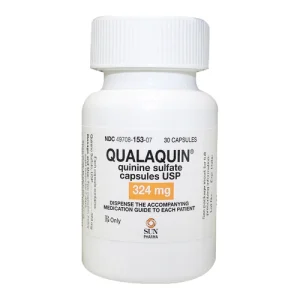
TM Owner Sun Pharmaceutical Industries, Inc.
Qualaquin 324 mg Capsule
Global Shipping : Reliable Global Distribution Network
Express Delivery : Priority Shipping for Every Order
Secure Payments : Trusted Payment Protection System
 Disclaimer

Secure Handling
24/7 Worldwide Support

Global Access
Worldwide Access to Health

Cold-Chain Expert
Excellence in Cold-Chain

Trusted Supply
Certified Medical Supply
Indications & Clinical Uses
- Qualaquin 324 mg capsules (quinine sulfate) are, as of 2026, listed as commercially discontinued in the United States, along with generic quinine sulfate equivalents -- this reflects a manufacturer/marketing discontinuation tracked by Drugs.com rather than a confirmed formal FDA withdrawal of approval, which was not found in this task.
- Where available, Qualaquin was approved only for the treatment of uncomplicated Plasmodium falciparum malaria in adults and children, taken by mouth.
- It is not approved, and its boxed warning specifically advises against its use, for the prevention of malaria, treatment of severe or complicated malaria, or for the common off-label use of treating or preventing nocturnal leg cramps.
- Quinine sulfate is also marketed under the same molecule as a generic product by other manufacturers where quinine remains available.
Side Effects
- Cinchonism -- a cluster of effects from quinine itself -- is very common and includes headache, flushing and sweating, nausea, ringing in the ears (tinnitus), reduced hearing, dizziness or vertigo, blurred vision or altered colour vision, vomiting, diarrhoea and stomach pain; these usually ease when the dose is reduced or stopped.
- Qualaquin carries a boxed warning: using it for nocturnal leg cramps can cause serious, life-threatening blood disorders, including thrombocytopenia (low platelets) and haemolytic uraemic syndrome/thrombotic thrombocytopenic purpura (HUS/TTP), sometimes leading to permanent kidney damage; this is why leg cramps are not an approved use.
- Seek emergency care immediately for unusual bruising or bleeding, reduced urination, confusion, severe tiredness, chest pain, palpitations, or a rash with fever, as these can signal these serious reactions or a dangerous heart rhythm change.
Precautions & Warnings
- Qualaquin must not be used by anyone with prolonged QT interval, known hypersensitivity to quinine, quinidine or mefloquine, myasthenia gravis, or optic neuritis.
- Baseline and periodic ECG and blood tests, including platelet counts, are recommended, particularly with repeated courses, because of the risk of HUS/TTP described in the boxed warning; stop Qualaquin immediately and seek care if symptoms of a serious blood disorder develop.
- Use caution in G6PD deficiency, which can increase the risk of red blood cell breakdown (haemolysis), and in liver or kidney impairment, which may require dose adjustment.
- Quinine can cause dangerously low blood sugar, especially in pregnancy and severe infection, so blood sugar should be monitored.
- Qualaquin should only be used in pregnancy to treat malaria when the benefit clearly outweighs the risk, under specialist guidance.
Avoid Interactions
- Avoid combining Qualaquin with other medicines that prolong the QT interval, including certain antiarrhythmics, some antipsychotics and macrolide antibiotics, because of an increased risk of dangerous heart rhythm disturbances; also avoid mefloquine and halofantrine, which add to cardiotoxicity risk.
- Strong CYP3A4 inhibitors, such as erythromycin, azole antifungals and ritonavir, raise quinine levels and increase toxicity risk, while rifampicin and other strong inducers can reduce quinine's effectiveness against malaria.
- Quinine raises digoxin levels and can increase the effect of warfarin and other anticoagulants, so closer monitoring is needed with these combinations, and it can prolong the action of neuromuscular-blocking drugs used in anaesthesia.
- Tell your healthcare provider and pharmacist about every medicine and supplement you take before starting Qualaquin.
References
Frequently Asked Questions
Qualaquin (quinine sulfate) 324 mg capsules were approved only to treat uncomplicated Plasmodium falciparum malaria, taken by mouth alongside another antimalarial. It was never approved for preventing malaria, treating severe malaria, or for the common off-label use of leg cramps, which its boxed warning specifically advises against.
Qualaquin capsules were taken by mouth, usually every 8 hours for about 3 to 7 days as part of combination malaria treatment, with water and food if stomach upset occurred. The exact course length and partner medicine depended on the region and the prescriber's malaria treatment plan.
Qualaquin's boxed warning states that using it for nocturnal leg cramps can cause serious, sometimes life-threatening blood disorders, including thrombocytopenia and haemolytic uraemic syndrome/thrombotic thrombocytopenic purpura (HUS/TTP), which can permanently damage the kidneys. This is why Qualaquin is not approved for leg cramps.
Avoid other medicines that prolong the QT interval, such as certain antiarrhythmics and some antibiotics, since combining them with Qualaquin raises the risk of dangerous heart rhythm problems. Also avoid mefloquine, and tell your prescriber about warfarin, digoxin or any heart medicine you take.
As of 2026, Qualaquin and generic quinine sulfate are listed as commercially discontinued in the United States by Drugs.com's availability tracker. This appears to be a manufacturer/marketing decision rather than a confirmed formal FDA withdrawal, so availability may vary and should be confirmed with a pharmacy.
Yes. Because of the risk of serious blood disorders described in its boxed warning, Qualaquin treatment is monitored with platelet counts and, often, an ECG to check for QT prolongation, especially if repeated courses are needed. Report bruising, reduced urination or confusion immediately.

Trusted & Reliable – Your Partner in Global Distribution.
We provide comprehensive lines of pharmaceutical products to support all your healthcare distribution needs.


