

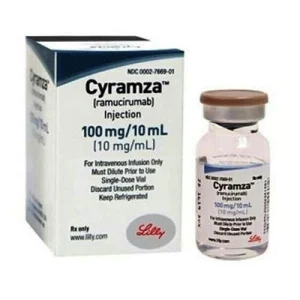
TM Owner Eli Lilly
Ramucirumab IV 500mg/50ml Vial
Global Shipping : Reliable Global Distribution Network
Express Delivery : Priority Shipping for Every Order
Secure Payments : Trusted Payment Protection System
 Disclaimer

Secure Handling
24/7 Worldwide Support

Global Access
Worldwide Access to Health

Cold-Chain Expert
Excellence in Cold-Chain

Trusted Supply
Certified Medical Supply
Indications & Clinical Uses
- This listing, 'Ramucirumab IV', is a generic molecule-name entry rather than a specific proprietary brand; ramucirumab is marketed under the approved brand name Cyramza (Eli Lilly and Company), and the information below is based on the Cyramza US prescribing information.
- Cyramza 500 mg/50 mL (10 mg/mL) single-dose vials contain ramucirumab, a vascular endothelial growth factor receptor 2 (VEGFR2) antagonist given by intravenous infusion in a hospital or infusion-clinic setting.
- It is approved, alone or combined with other chemotherapy, for advanced gastric or gastro-oesophageal junction adenocarcinoma after prior chemotherapy, for metastatic non-small cell lung cancer with docetaxel or with erlotinib for EGFR-mutated first-line disease, for metastatic colorectal cancer after prior therapy with FOLFIRI, and for hepatocellular carcinoma with elevated alpha-fetoprotein after prior sorafenib.
- It is not self-administered and is always given by a healthcare professional.
Side Effects
- CYRAMZA carries a boxed warning: it increases the risk of hemorrhage, including severe and sometimes fatal bleeding events, and treatment must be permanently stopped if severe bleeding occurs.
- Beyond this, common side effects vary by combination but frequently include fatigue, diarrhoea, high blood pressure, headache, low white blood cell counts (neutropenia), nosebleeds and mouth sores, some occurring in more than half of patients depending on the regimen used.
- Serious reactions requiring urgent medical attention include signs of bleeding such as unusual bruising or blood in stool or vomit, sudden severe abdominal pain suggesting gastrointestinal perforation, chest pain or weakness or slurred speech suggesting a clot or stroke, and infusion reactions during the drip such as fever, chills, flushing or breathing difficulty.
- Blood pressure, urine protein and wound healing are monitored throughout treatment; report any of these warning signs to the treatment team straight away.
Precautions & Warnings
- CYRAMZA is for intravenous infusion only, given by a healthcare professional in a hospital or specialist infusion unit; it must not be self-injected.
- Treatment should be withheld or permanently stopped for severe bleeding, gastrointestinal perforation, arterial blood clots such as heart attack or stroke, uncontrolled high blood pressure, or a severe infusion reaction.
- Cyramza should be stopped at least 28 days before planned surgery because of the risk of poor wound healing, and not restarted until the surgical wound has fully healed.
- Liver function and blood pressure are checked regularly, and urine protein is monitored for kidney-related side effects.
- Cyramza can cause serious harm to an unborn baby; effective contraception is required during treatment and for at least 3 months after the last dose for women, and men with partners who could become pregnant should also use contraception.
- It should not be used in patients with Child-Pugh B or C liver cirrhosis with hepatic encephalopathy or significant ascites.
Avoid Interactions
- There are no formal drug-drug interaction studies described in the Cyramza label, but caution is needed when combining it with other medicines that affect bleeding or blood pressure.
- Anticoagulants such as warfarin or heparin, and regular high-dose NSAIDs or aspirin, can add to Cyramza's bleeding risk and should be discussed with the treatment team.
- Other blood-pressure-lowering medicines may need dose adjustment because Cyramza itself commonly raises blood pressure.
- Because Cyramza is usually given alongside other chemotherapy agents, such as paclitaxel, docetaxel, FOLFIRI or erlotinib, the combined side-effect profile, including low blood counts and infection risk, must be monitored closely by the care team.
- Live vaccines should be avoided during treatment given the effects on wound healing and immune function.
- Always tell the treatment team about every prescription medicine, over-the-counter product and supplement being used, including aspirin and herbal products that can affect bleeding.
References
Frequently Asked Questions
This entry lists the active ingredient ramucirumab, sold under the brand name Cyramza. Cyramza is a targeted cancer therapy given by IV infusion for advanced stomach, lung, colorectal or liver cancer, usually alongside chemotherapy, after other treatments have been tried. It blocks a receptor tumours use to grow new blood vessels.
Cyramza (ramucirumab) is given only as an intravenous infusion in a hospital or cancer clinic, usually every 2 to 3 weeks depending on the cancer type and combination regimen. A nurse monitors you during and after each infusion. It is never taken as a tablet or self-injected at home.
Cyramza carries a boxed warning for hemorrhage, including rare fatal bleeding, so treatment stops permanently after severe bleeding. Common effects include fatigue, diarrhoea, high blood pressure and headache. Seek urgent help for unusual bruising, blood in stool or vomit, sudden severe stomach pain, chest pain or signs of stroke.
Avoid blood thinners and regular high-dose aspirin or NSAIDs unless your oncologist approves, since these increase bleeding risk alongside Cyramza. Elective surgery should be avoided for 28 days after a dose because of poor wound healing risk. Tell your care team about every medicine and supplement you take.
Each Cyramza infusion is given over about 60 minutes through a vein, with premedication sometimes used to reduce infusion reactions such as fever, chills or flushing. Your blood pressure, and periodically your liver function and urine protein, are checked before and during treatment to catch side effects early.
No. Cyramza can seriously harm an unborn baby, so effective contraception is required during treatment and for at least 3 months after the last dose, for both women and men with partners who could become pregnant. Tell your oncologist immediately if you are or might be pregnant.

Trusted & Reliable – Your Partner in Global Distribution.
We provide comprehensive lines of pharmaceutical products to support all your healthcare distribution needs.


