

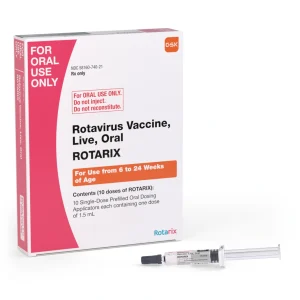
TM Owner GSK
Rotarix ≥10^6.0 CCID50 per 1 mL dose (live attenuated virus, not measured in mg) Oral suspension (prefilled oral applicator); for oral use only, do not inject
Global Shipping : Reliable Global Distribution Network
Express Delivery : Priority Shipping for Every Order
Secure Payments : Trusted Payment Protection System
 Disclaimer

Secure Handling
24/7 Worldwide Support

Global Access
Worldwide Access to Health

Cold-Chain Expert
Excellence in Cold-Chain

Trusted Supply
Certified Medical Supply
Indications & Clinical Uses
- Rotarix (human rotavirus vaccine, live attenuated), from GSK, is given by mouth, not by injection, to prevent rotavirus gastroenteritis (severe diarrhoea and vomiting) caused by G1 and common non-G1 rotavirus types (G3, G4, G9) in infants.
- It is given as a two-dose oral series, the first dose from 6 weeks of age and the second at least 4 weeks later, with the full series completed by 24 weeks of age.
- Rotarix contains at least 10^6.0 CCID50 of live attenuated virus per dose, supplied as a ready-to-use oral suspension in a prefilled applicator (or as a vial with diluent, depending on presentation); it is administered by a healthcare provider, squeezed directly into the infant's mouth, and must never be injected.
Side Effects
- In clinical trials, Rotarix was commonly followed by fussiness or irritability, cough or runny nose, fever, reduced appetite, and vomiting, each occurring in 5% or more of vaccinated infants; mild diarrhoea can also occur after dosing since the vaccine contains a live weakened virus.
- There is no boxed warning on the current label.
- The most important serious reaction to watch for is intussusception, a type of bowel blockage, with the highest risk in the first 7 days after a dose, particularly the first one; symptoms include severe stomach pain, persistent vomiting, blood in the stool, or a swollen abdomen, and need immediate emergency medical attention.
Precautions & Warnings
- Rotarix must not be given by injection; it is for oral use only.
- It should not be given to infants with a history of intussusception, uncorrected gastrointestinal malformations that could predispose to intussusception, Severe Combined Immunodeficiency Disease (SCID), or known allergy to any vaccine component.
- Vaccination should be postponed in infants with acute moderate-to-severe diarrhoea, vomiting, or fever until they recover.
- The oral applicator tip cap contains natural rubber latex, which is relevant for infants or household contacts with latex allergy.
- Because Rotarix contains live virus, vaccinated infants can shed virus in their stool for around 1-2 weeks; caregivers should practise careful hand hygiene, especially around anyone with a weakened immune system.
Avoid Interactions
- Rotarix can generally be given at the same visit as other routine childhood vaccines, including DTaP, inactivated polio, Hib, hepatitis B, and pneumococcal conjugate vaccines, using separate sites as appropriate; discuss the full immunisation schedule with your infant's healthcare provider.
- Rotarix should not be mixed in the same syringe or applicator with any other vaccine or product.
- Infants who are receiving or have recently received blood products, immunoglobulins, or medicines that suppress the immune system may have a reduced immune response to Rotarix, and their healthcare provider will advise on timing.
- Tell the vaccinating provider about any immune-suppressing conditions, medicines, or recent blood transfusions before the dose is given.
References
Frequently Asked Questions
Rotarix is an oral vaccine that protects infants against rotavirus gastroenteritis, a common cause of severe diarrhoea and vomiting in young children. It contains live, weakened rotavirus and is given as two doses by mouth, starting from 6 weeks of age.
Rotarix is given by mouth only, never by injection. A healthcare provider squeezes the liquid dose directly into your baby's mouth from a prefilled applicator. The two-dose series starts at 6 weeks and finishes by 24 weeks of age, at least 4 weeks apart.
Common Rotarix side effects include fussiness, cough or runny nose, mild fever, reduced appetite, and vomiting. There is no boxed warning. The main serious risk to watch for is intussusception (bowel blockage) within 7 days of a dose - seek emergency care for severe belly pain or bloody stool.
Watch for signs of intussusception in the week after each Rotarix dose: severe abdominal pain, persistent vomiting, blood in the stool, or a swollen belly need immediate emergency care. Your baby may also pass live vaccine virus in stool for 1-2 weeks, so practise careful hand hygiene.
If a scheduled Rotarix dose is postponed, for example due to illness, your healthcare provider will reschedule it as soon as your baby recovers, provided the full two-dose series can still be completed by 24 weeks of age. Do not give a missed dose yourself; only a provider gives Rotarix.
Yes, Rotarix is usually given at the same visit as other routine infant vaccines, such as DTaP, polio, Hib, hepatitis B, and pneumococcal vaccines, using separate products and sites. It is never mixed with another vaccine in the same applicator or syringe.

Trusted & Reliable – Your Partner in Global Distribution.
We provide comprehensive lines of pharmaceutical products to support all your healthcare distribution needs.


