

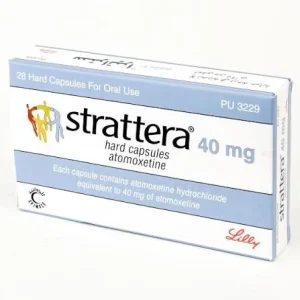
TM Owner Eli Lilly
Strattera 40mg Capsule
Global Shipping : Reliable Global Distribution Network
Express Delivery : Priority Shipping for Every Order
Secure Payments : Trusted Payment Protection System
 Disclaimer

Secure Handling
24/7 Worldwide Support

Global Access
Worldwide Access to Health

Cold-Chain Expert
Excellence in Cold-Chain

Trusted Supply
Certified Medical Supply
Indications & Clinical Uses
- Strattera 40 mg is a capsule form of atomoxetine, a selective norepinephrine reuptake inhibitor and the first non-stimulant medicine approved for attention-deficit/hyperactivity disorder (ADHD).
- It is approved in the US and EU for ADHD in children aged 6 years and older, adolescents, and adults, either alone or as part of a broader treatment plan that may include behavioural therapy.
- Unlike stimulant ADHD medicines, Strattera is not a controlled substance and its effect builds gradually over several weeks rather than within hours.
- It is taken by mouth, self-administered by the patient or given by a caregiver to a child, and is not approved for narcolepsy, weight loss, or depression.
- Dosing is individualised by body weight in children and lighter adolescents (under 70 kg) and by fixed dose in adults and heavier adolescents, manufactured by Eli Lilly and Company.
Side Effects
- The most common side effects of Strattera, affecting more than 1 in 10 people, are decreased appetite, nausea, vomiting, fatigue and abdominal pain in children and adolescents, and dry mouth, constipation, nausea, decreased appetite and dizziness in adults; erectile dysfunction and urinary hesitation are also common in men.
- Strattera carries a boxed warning: it increased the risk of suicidal ideation in short-term studies of children and adolescents with ADHD, so patients must be monitored closely for new or worsening suicidal thoughts, agitation, or unusual behaviour changes, especially in the first few months of treatment and after any dose change.
- Strattera can also raise blood pressure and heart rate and, rarely, cause severe liver injury; seek urgent medical attention for yellowing skin or eyes, dark urine, right upper abdominal pain, unexplained nausea or itching, or for chest pain, fainting, or breathlessness on exertion.
Precautions & Warnings
- Before starting Strattera, healthcare providers check for pre-existing heart conditions, high blood pressure, and structural cardiac abnormalities, because sudden death has been reported in patients with underlying heart problems; Strattera is contraindicated in narrow-angle glaucoma, phaeochromocytoma, and severe cardiovascular disorders.
- It must not be used within two weeks of a monoamine oxidase inhibitor (MAOI) because of the risk of a serious, potentially fatal interaction.
- Growth (height and weight) should be monitored in children on long-term treatment, and Strattera should be used cautiously in anyone with a history of mania, psychosis, or seizures.
- Its safety in pregnancy and breastfeeding has not been fully established, so use should be discussed individually with a healthcare provider; dizziness and somnolence can occur, so caution is advised before driving or operating machinery until the effect on the individual is known.
Avoid Interactions
- Strattera must not be combined with monoamine oxidase inhibitors (MAOIs), including within two weeks of stopping either drug, because of the risk of a severe, potentially fatal reaction.
- Strong CYP2D6 inhibitors such as paroxetine, fluoxetine, and quinidine can raise atomoxetine blood levels up to six- to eightfold, so lower starting doses and closer monitoring are needed when these are prescribed together.
- Other medicines that raise blood pressure or heart rate, including decongestants, other stimulants, and noradrenergic drugs, should be used cautiously alongside Strattera.
- Albuterol and other beta-agonists may add to cardiovascular effects when combined with Strattera.
- Patients should tell their healthcare provider about all prescription and over-the-counter medicines, supplements, and herbal products before starting Strattera, and should be cautious with alcohol until they know how the medicine affects them.
References
Frequently Asked Questions
Strattera (atomoxetine) treats attention-deficit/hyperactivity disorder (ADHD) in children aged 6 and over, adolescents, and adults. Unlike stimulant ADHD medicines, it is not a controlled substance and its full effect builds over several weeks rather than hours, so it is not a quick-acting treatment.
Strattera capsules are taken by mouth, once daily or split into a morning and evening dose, with or without food. Children take a weight-based dose; adults and heavier adolescents take a fixed dose. Swallow capsules whole; do not open or chew them.
Common effects include decreased appetite, nausea, fatigue, and dizziness or dry mouth in adults. Strattera carries a boxed warning for increased suicidal thoughts in children and teenagers, so watch for new agitation, mood changes, or self-harm thoughts, especially in the first months.
Do not take Strattera with, or within two weeks of, a monoamine oxidase inhibitor (MAOI); the combination can be fatal. Tell your provider about paroxetine, fluoxetine, or quinidine, which raise Strattera levels sharply, and about any heart condition before starting.
Strattera does not require routine blood tests, but your provider will check blood pressure, heart rate, and growth (height and weight) regularly, especially in children on long-term treatment. Report any signs of liver problems, such as yellowing skin or dark urine, right away.
Yes, Strattera is approved for long-term ADHD treatment from age 6 upward, but children need ongoing growth monitoring since it can slow weight and height gain. Your provider will review the benefit against these effects periodically and adjust the dose as the child grows.

Trusted & Reliable – Your Partner in Global Distribution.
We provide comprehensive lines of pharmaceutical products to support all your healthcare distribution needs.


