

TM Owner Novartis
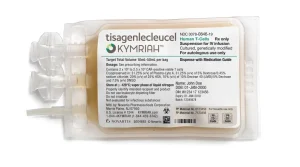
Tisagenlecleucel CAR-T 0.2-5×10^8 cells Infusion Bag
Global Shipping : Reliable Global Distribution Network
Express Delivery : Priority Shipping for Every Order
Secure Payments : Trusted Payment Protection System
 Disclaimer

Secure Handling
24/7 Worldwide Support

Global Access
Worldwide Access to Health

Cold-Chain Expert
Excellence in Cold-Chain

Trusted Supply
Certified Medical Supply
Indications & Clinical Uses
- "Tisagenlecleucel CAR-T" is not an approved trade name; it is a generic molecule descriptor plus its cell-therapy class.
- The actual FDA- and EMA-approved brand is KYMRIAH (tisagenlecleucel), made by Novartis, and the content here is sourced from Kymriah's US prescribing information.
- Kymriah is a CD19-directed genetically modified autologous chimeric antigen receptor (CAR) T-cell immunotherapy, individually manufactured from each patient's own T-cells.
- It is approved for patients up to 25 years old with B-cell precursor acute lymphoblastic leukaemia that is refractory or in second or later relapse, for adults with relapsed or refractory diffuse large B-cell lymphoma after two or more prior lines of therapy, and for adults with relapsed or refractory follicular lymphoma after two or more prior lines.
- It is given as a single one-time intravenous infusion, only at a certified hospital treatment centre - never self-administered.
Side Effects
- Kymriah carries a boxed warning for cytokine release syndrome (CRS), including reactions that can be fatal or life-threatening; for neurological toxicities that can be severe or life-threatening, sometimes occurring together with CRS; and for the occurrence of secondary T-cell malignancies after treatment with CAR-T therapies including Kymriah.
- The most common reactions across approved uses include CRS, infections, fever, fatigue, diarrhoea, nausea, low blood pressure and headache, along with prolonged low blood counts.
- Report fever, chills, difficulty breathing, confusion, tremor, or seizures immediately, since these can signal CRS or neurotoxicity requiring urgent hospital treatment with tocilizumab or steroids.
Precautions & Warnings
- Kymriah must not be given to patients with an active infection or an active inflammatory disorder, and it is contraindicated in primary central nervous system lymphoma.
- It is only administered at a certified healthcare facility with immediate access to tocilizumab and to staff trained in managing CRS and neurotoxicity; patients must remain within reach of that facility for at least 2 weeks after infusion and avoid driving or operating machinery for at least 8 weeks, since neurological events can occur with delay.
- Blood counts and neurological status are monitored closely after infusion.
- Kymriah is stored frozen at or below minus 120°C in a temperature-monitored system, such as the vapor phase of liquid nitrogen, and is thawed only immediately before infusion.
Avoid Interactions
- Because Kymriah is a one-time cell infusion rather than a drug taken regularly, it has no classic drug-drug interaction profile, but timing around other treatments matters greatly.
- Live vaccines should be avoided for several weeks before collecting cells and for at least 6 weeks after infusion, since Kymriah affects the immune system.
- Corticosteroids and other immunosuppressants can interfere with the CAR-T cells' activity and are generally avoided except to treat CRS or neurotoxicity when medically necessary.
- Tell every member of your care team, including your oncologist and any other prescriber, that you have received Kymriah, since it changes how future infections, vaccinations and immune-related symptoms are managed.
References
Frequently Asked Questions
"Tisagenlecleucel CAR-T" is not a real brand name - the approved product is Kymriah, a CAR-T cell therapy. It treats certain relapsed or refractory B-cell leukaemia in patients up to 25, and relapsed or refractory large B-cell or follicular lymphoma in adults, after other treatments have failed.
Kymriah is made from your own T-cells, then given back as a single one-time intravenous infusion at a certified hospital treatment centre. It is never taken at home or self-administered. You are monitored closely in hospital for at least several days after the infusion.
Cytokine release syndrome, infections, fever, fatigue, low blood pressure and low blood counts are common after Kymriah. Its boxed warning covers cytokine release syndrome, severe neurological toxicity, and rare secondary T-cell cancers. Report fever, confusion or breathing trouble to your care team right away.
Avoid live vaccines for at least 6 weeks after Kymriah, and avoid driving or operating machinery for at least 8 weeks, since neurological side effects can appear with delay. Tell every doctor you see afterward that you have received Kymriah, as it affects future care.
You must remain within reach of the certified treatment centre for at least 2 weeks after your Kymriah infusion, because cytokine release syndrome and neurological reactions usually appear during this window. The centre keeps tocilizumab on hand to treat severe reactions quickly if they occur.
Kymriah's boxed warning covers cytokine release syndrome, which can be fatal or life-threatening, severe neurological toxicity, and secondary T-cell malignancies reported after CAR-T therapies. Because of these risks, Kymriah is only given at specially certified hospital centres equipped to manage them.

Trusted & Reliable – Your Partner in Global Distribution.
We provide comprehensive lines of pharmaceutical products to support all your healthcare distribution needs.


