

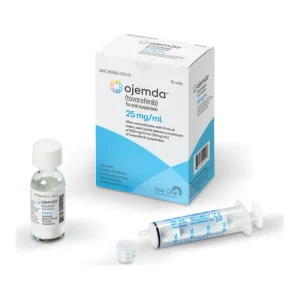
TM Owner Day One Biopharmaceuticals
Tovorafenib Oral Suspension 10mg/mL Oral Suspension
Global Shipping : Reliable Global Distribution Network
Express Delivery : Priority Shipping for Every Order
Secure Payments : Trusted Payment Protection System
 Disclaimer

Secure Handling
24/7 Worldwide Support

Global Access
Worldwide Access to Health

Cold-Chain Expert
Excellence in Cold-Chain

Trusted Supply
Certified Medical Supply
Indications & Clinical Uses
- 'Tovorafenib Oral Suspension' is not itself an approved trade name - no brand called 'Tovorafenib' exists on DailyMed or the FDA's Drugs@FDA database.
- Tovorafenib is the active-ingredient (molecule) name; the actual FDA-approved brand is OJEMDA, made by Day One Biopharmaceuticals, and the content below is based on OJEMDA's approved information.
- OJEMDA oral suspension is a kinase inhibitor approved in the United States (accelerated approval, April 2024) to treat patients 6 months of age and older with relapsed or refractory pediatric low-grade glioma (pLGG), the most common childhood brain tumour, when the tumour carries a BRAF fusion or rearrangement, or a BRAF V600 mutation.
- Continued approval for this use depends on confirmatory trials verifying clinical benefit.
- OJEMDA is also available as tablets; the oral suspension is intended mainly for younger children or those unable to swallow tablets, and both forms are taken by mouth at home once weekly.
Side Effects
- No boxed warning for OJEMDA (tovorafenib) was identified from the sources fetched in this task, but the label carries several important warnings.
- Hair colour changes, rash and other skin reactions, fatigue, and gastrointestinal upset such as nausea, vomiting or diarrhoea are commonly reported.
- OJEMDA can cause photosensitivity (increased sunburn risk), so protective clothing and sunscreen are needed during treatment.
- Bleeding problems (haemorrhage), which can be serious, and liver problems requiring blood-test monitoring have also been reported.
- In growing children, OJEMDA can slow growth velocity, so height and growth are checked regularly.
- Report any unusual bleeding or bruising, yellowing of the skin or eyes, severe rash, or a child not growing as expected to the treating specialist promptly.
Precautions & Warnings
- OJEMDA is prescribed and monitored by a paediatric oncology specialist; blood counts, liver function and growth are checked regularly throughout treatment.
- It can cause harm to an unborn baby, so effective non-hormonal contraception is recommended during treatment and for a period afterwards for patients who can become pregnant or father a child; it should be avoided in pregnancy and breastfeeding.
- Sun protection (protective clothing and broad-spectrum sunscreen) is needed because of the photosensitivity risk.
- In patients with neurofibromatosis type 1, BRAF/MEK-pathway inhibitors such as tovorafenib have been associated with the development of new skin tumours, so skin checks are advised.
- Because this row's exact storage condition and pack size could not be confirmed against the full label in this task, they are flagged as UNCONFIRMED rather than corrected - verify against the current USPI before use.
Avoid Interactions
- Tell the treating specialist about every medicine, herbal product and supplement the patient is taking.
- Tovorafenib is metabolised mainly by the CYP2C8 and CYP3A4 liver enzymes, so strong inhibitors or inducers of these enzymes (such as certain antifungal, antibiotic, anti-seizure and HIV medicines) can raise or lower tovorafenib levels and may require dose adjustment or avoidance - this should always be checked with the prescribing team before starting a new medicine.
- Live vaccines are generally avoided during treatment.
- Sun-sensitising medicines taken together with OJEMDA may increase the risk of sunburn-type skin reactions.
- Do not start or stop any other medicine, including over-the-counter products, without checking with the oncology team first.
References
Frequently Asked Questions
No. 'Tovorafenib' is the active ingredient, not a trade name; there is no FDA-approved brand called 'Tovorafenib'. The actual approved medicine is OJEMDA, made by Day One Biopharmaceuticals, available as an oral suspension or tablets. Ask your pharmacist to confirm you have OJEMDA before starting treatment.
OJEMDA (tovorafenib) treats pediatric low-grade glioma, the most common childhood brain tumour, in children 6 months and older when it has come back or not responded to earlier treatment and carries a BRAF gene change. It was FDA-approved in April 2024 under the accelerated approval pathway.
OJEMDA oral suspension is given by mouth once weekly, usually measured and given by a caregiver at home once the oncology team has shown you how. The oral suspension is often used for younger children or those who cannot swallow tablets. Always use the dosing tools supplied, not a household spoon.
OJEMDA (tovorafenib) commonly causes hair colour changes, rash, fatigue, nausea and increased sun sensitivity. It can also cause serious bleeding, liver problems and slowed growth in children, so blood tests and growth checks are done regularly. Report unusual bleeding, yellowing skin, severe rash or sunburn straight away.
Protect skin from the sun with clothing and sunscreen, since OJEMDA increases sunburn risk. Tell the oncology team about every other medicine, since strong CYP3A4 or CYP2C8 inhibitors or inducers can change tovorafenib levels. Avoid live vaccines during treatment, and never start a new medicine without checking first.
Yes. OJEMDA (tovorafenib) can slow growth velocity in children, so height is checked regularly during treatment. It may also affect fertility and can harm a developing baby, so effective non-hormonal contraception is advised for patients who can become pregnant or father a child, both during and after treatment.

Trusted & Reliable – Your Partner in Global Distribution.
We provide comprehensive lines of pharmaceutical products to support all your healthcare distribution needs.


