

TM Owner United Therapeutics
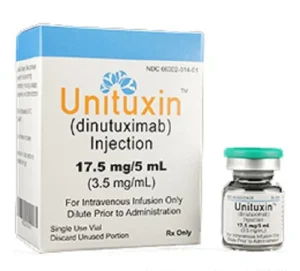
Unituxin 17.5mg/5mL IV Infusion
Global Shipping : Reliable Global Distribution Network
Express Delivery : Priority Shipping for Every Order
Secure Payments : Trusted Payment Protection System
 Disclaimer

Secure Handling
24/7 Worldwide Support

Global Access
Worldwide Access to Health

Cold-Chain Expert
Excellence in Cold-Chain

Trusted Supply
Certified Medical Supply
Indications & Clinical Uses
- Unituxin (dinutuximab, 17.5 mg in 5 mL vial) is a chimeric monoclonal antibody (anti-GD2) indicated for high-risk neuroblastoma in paediatric patients.
- It is used as part of a multimodal treatment regimen in children with newly diagnosed high-risk neuroblastoma, in combination with granulocyte-macrophage colony-stimulating factor (GM-CSF), interleukin-2 (IL-2), and isotretinoin (13-cis-retinoic acid) following induction chemotherapy and surgery or radiation therapy.
- Unituxin targets the disialoganglioside GD2 on neuroblastoma cell surfaces.
- It is approved by the FDA and EMA.
- Unituxin is administered intravenously only; infusions are conducted in a hospital or specialised oncology centre.
- Treatment consists of five consecutive treatment cycles.
Side Effects
- Unituxin carries a boxed warning for severe allergic reactions (anaphylaxis) and severe neuropathic pain.
- Pain syndromes are the most common serious adverse effects, occurring in nearly all patients, and may be severe enough to require strong opioid analgesia and sometimes ICU-level care.
- Severe allergic reactions including anaphylaxis occur in up to 10% of infusions; pre-medication with antihistamines and corticosteroids is mandatory.
- Other common effects include fever, chills, diarrhoea, nausea, vomiting, cough, tachycardia, and hypotension during infusion.
- Serious effects include infections (immunosuppression), hypogammaglobulinaemia, tremor, and CNS effects.
- Delayed adverse effects include secondary malignancies (risk still under investigation).
- Infusion reactions typically resolve after stopping the infusion and administering antihistamines and corticosteroids.
Precautions & Warnings
- **BOXED WARNING: Risk of severe allergic reactions and severe neuropathic pain.** Unituxin must be administered only in a hospital setting with full resuscitation equipment available.
- Premedication with diphenhydramine, acetaminophen, ibuprofen, and a corticosteroid is required before each infusion.
- Management of pain is critical—strong opioids including morphine are typically required.
- Patients with a history of serious allergy or anaphylaxis, severe neurological disease, or active infection require careful individualisation.
- Temporary discontinuation or permanent discontinuation may be required if severe allergic reactions, uncontrollable pain, or other serious adverse events occur.
- Neutrophil and platelet counts must be monitored.
- Growth and development require long-term follow-up in these paediatric patients.
Avoid Interactions
- Unituxin is part of a multimodal regimen with GM-CSF, IL-2, and isotretinoin; these must be coordinated carefully per protocol.
- Live vaccines should not be given during Unituxin treatment or for months afterward due to immunosuppression; discuss vaccination status with the oncology team before starting treatment.
- Opioid medications are used concurrently for pain management and must be carefully monitored.
- Avoid additional immunosuppressive therapies unless clinically essential.
- Drug interactions are minimal because Unituxin is a monoclonal antibody not metabolised by the liver, but specific drug interactions with the multimodal regimen partners (GM-CSF, IL-2, isotretinoin) must be carefully managed by the oncology team.
References
Frequently Asked Questions
Unituxin (dinutuximab) is a monoclonal antibody used to treat high-risk neuroblastoma, a serious childhood cancer. It targets cancer cells and is given as part of a multimodal treatment protocol combining chemotherapy, surgery, and other medicines. Unituxin is administered only in a hospital setting by oncology specialists as five treatment cycles following initial chemotherapy and surgery.
Unituxin is given as an intravenous infusion in a hospital oncology centre. Your child will receive pre-medication (antihistamines, corticosteroids, fever medicine) before each infusion to prevent allergic reactions. The infusion is administered slowly over several hours. Five treatment cycles are completed over several months, coordinated with GM-CSF, IL-2, and isotretinoin therapy per protocol.
Unituxin has a boxed warning for severe allergic reactions (anaphylaxis, which occurs in ~10% of infusions) and severe neuropathic pain (occurring in nearly all patients). Pain may be severe enough to require strong morphine-based opioids and intensive care. Allergic reactions and pain are managed with medications and may require temporary or permanent discontinuation in severe cases. Fever, infection risk, and nausea are common.
Unituxin must be given only in a hospital with full resuscitation equipment available. Pre-medication before each infusion is mandatory. Your child cannot receive live vaccines during treatment or for months afterward. Blood counts require frequent monitoring. Pain management is essential and ongoing. Inform your oncology team of all other medicines and any history of severe allergies before starting treatment.
Pain is the most common serious side effect of Unituxin. Strong opioid painkillers (morphine or similar) are typically given starting before infusions and continued throughout treatment cycles. Your child's pain will be monitored continuously during hospital admissions. Non-opioid methods like distraction and relaxation may also help. Work closely with the pain management and oncology teams to keep your child comfortable.
After completing Unituxin cycles, your child requires long-term follow-up with the oncology team to monitor for recurrence, treatment effects, and possible late side effects including second cancers (still under investigation). Blood work, imaging, and physical exams will be scheduled periodically. Live vaccines can be given only after the oncology team confirms immunity recovery. Regular appointments ensure your child's long-term health.

Trusted & Reliable – Your Partner in Global Distribution.
We provide comprehensive lines of pharmaceutical products to support all your healthcare distribution needs.


