

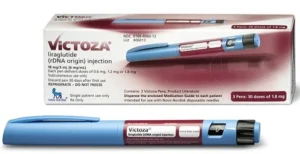
TM Owner Novo Nordisk
Victoza 18mg/3ml (6mg/ml) Injection
Global Shipping : Reliable Global Distribution Network
Express Delivery : Priority Shipping for Every Order
Secure Payments : Trusted Payment Protection System
 Disclaimer

Secure Handling
24/7 Worldwide Support

Global Access
Worldwide Access to Health

Cold-Chain Expert
Excellence in Cold-Chain

Trusted Supply
Certified Medical Supply
Indications & Clinical Uses
- Novo Nordisk has announced that Victoza is being discontinued across the EU/EEA by the end of 2026 (in Italy from 30 June 2026), for commercial reasons and not because of any safety or quality concern; this is a manufacturer discontinuation, not a revoked marketing authorisation, and the US label remains on DailyMed.
- Victoza 18mg is a prefilled pen containing liraglutide 18 mg in 3 mL (6 mg/mL), a glucagon-like peptide-1 (GLP-1) receptor agonist injected subcutaneously once daily.
- In the US it is indicated as an addition to diet and exercise to improve blood sugar control in adults and in children aged 10 years and older with type 2 diabetes, and to reduce the risk of major cardiovascular events in adults with type 2 diabetes and established cardiovascular disease.
- Dosing starts at 0.6 mg daily for one week, then 1.2 mg, and may rise to 1.8 mg daily.
- Other liraglutide products have different strengths and uses and are not interchangeable with it.
Side Effects
- WARNING - RISK OF THYROID C-CELL TUMORS (boxed warning): liraglutide causes thyroid C-cell tumors in rats and mice at clinically relevant exposures, and it is unknown whether it causes them in people including medullary thyroid carcinoma; it is contraindicated in anyone with a personal or family history of medullary thyroid carcinoma or Multiple Endocrine Neoplasia syndrome type 2.
- The most common side effects in adults (5% or more) are nausea (20%), diarrhoea (12%), headache (10%), nasopharyngitis (10%), vomiting (9%), decreased appetite (9%), dyspepsia (7%) and constipation (5%).
- Serious risks include pancreatitis (stop Victoza if suspected), low blood sugar when used with insulin or sulfonylureas, kidney problems from dehydration, and rare pulmonary aspiration during anaesthesia.
- Report a neck lump, hoarseness, trouble swallowing, severe persistent stomach pain or signs of dehydration promptly.
Precautions & Warnings
- Boxed warning: risk of thyroid C-cell tumours, as set out above.
- Victoza is contraindicated with a personal or family history of medullary thyroid carcinoma or MEN 2, and in serious hypersensitivity to liraglutide or its excipients.
- Stop it and seek help if pancreatitis is suspected.
- Monitor kidney function if you become dehydrated with vomiting or diarrhoea.
- Tell your anaesthetist that you use Victoza, as delayed gastric emptying carries a rare risk of pulmonary aspiration.
- In pregnancy, Victoza should be used only if the potential benefit justifies the risk to the fetus.
- Pens must never be shared between patients, even if the needle is changed.
- Storage: before first use keep the pen in a refrigerator at 2°C to 8°C; after first use it can be kept for 30 days at controlled room temperature or refrigerated, with the cap on, away from heat and sunlight.
- Do not freeze it or use a pen that has frozen.
Avoid Interactions
- Medicines that increase the effect or risk: insulin and insulin secretagogues such as sulfonylureas raise the risk of low blood sugar (hypoglycaemia), so dose reductions of these medicines may be needed when Victoza is added.
- Victoza delays gastric emptying, which could affect the absorption of medicines taken by mouth, although clinical pharmacology studies showed no clinically relevant effect overall.
- Medicines that reduce efficacy: no specific medicines are named in the sections reviewed.
- Tell your healthcare provider about all prescription medicines, over-the-counter products and supplements, and check blood sugar as advised.
References
Frequently Asked Questions
Victoza (liraglutide) is a once-daily injection for type 2 diabetes in adults and children aged 10 and over. It improves blood sugar control alongside diet and exercise. In adults with established cardiovascular disease it also lowers the risk of major cardiovascular events. It is being discontinued in the EU/EEA by the end of 2026.
Inject Victoza (liraglutide) under the skin once a day using the prefilled pen. Adults start at 0.6 mg daily for one week, then 1.2 mg, and the dose may rise to 1.8 mg daily. Never share a Victoza pen with anyone, even if the needle is changed.
Common Victoza (liraglutide) side effects are nausea, diarrhoea, headache, nasopharyngitis, vomiting, decreased appetite, indigestion and constipation. Seek urgent help for severe stomach pain, which can signal pancreatitis, or for a neck lump, hoarseness or trouble swallowing. Low blood sugar is more likely with insulin or sulfonylureas.
Do not use Victoza (liraglutide) if you or your family have had medullary thyroid carcinoma or MEN 2, or if you are allergic to it. Watch for low blood sugar if you also take insulin or a sulfonylurea. Never share pens, and tell your anaesthetist that you use Victoza before surgery.
Store an unused Victoza (liraglutide) pen in the refrigerator at 2°C to 8°C. After the first use, keep it for up to 30 days at controlled room temperature or in the fridge, with the cap on and away from heat and sunlight. Never freeze it or use a pen that has frozen.
Victoza (liraglutide) carries a boxed warning: it causes thyroid C-cell tumours in rats and mice at clinically relevant doses, and the human risk is unknown. It must not be used with a personal or family history of medullary thyroid carcinoma or MEN 2. Report a neck lump, hoarseness or trouble swallowing.

Trusted & Reliable – Your Partner in Global Distribution.
We provide comprehensive lines of pharmaceutical products to support all your healthcare distribution needs.


