

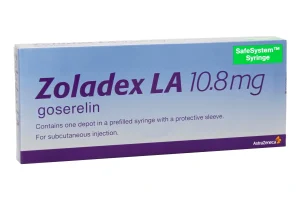
TM Owner TerSera Therapeutics LLC
Zoladex 10.8mg Implant
Global Shipping : Reliable Global Distribution Network
Express Delivery : Priority Shipping for Every Order
Secure Payments : Trusted Payment Protection System
 Disclaimer

Secure Handling
24/7 Worldwide Support

Global Access
Worldwide Access to Health

Cold-Chain Expert
Excellence in Cold-Chain

Trusted Supply
Certified Medical Supply
Indications & Clinical Uses
- Zoladex 10.8 mg is a subcutaneous implant containing goserelin (as goserelin acetate), a gonadotropin-releasing hormone (GnRH) agonist that lowers testosterone.
- In the US it is approved for two prostate cancer uses: in combination with flutamide and radiation therapy for locally confined Stage B2-C prostate cancer, and as palliative treatment of advanced prostate cancer.
- The 10.8 mg implant is given by a healthcare provider as an injection under the skin of the front abdominal wall, below the navel line, once every 12 weeks; it is not a self-administered product.
- Zoladex is also supplied in other strengths with different schedules, so the 10.8 mg strength should always be confirmed before use.
- This information comes from the US prescribing information, where the label holder is TerSera Therapeutics LLC.
Side Effects
- In prostate cancer studies of Zoladex 10.8 mg, the most common reaction was hot flashes, reported by about 64% of men.
- Other reactions include pain (14%), breast enlargement or gynecomastia (8%), pelvic pain (6%), bone pain (6%) and weakness (5%).
- Sexual dysfunction, fewer erections and lower urinary tract symptoms were each reported by more than 1 in 10 patients.
- In the first few weeks prostate cancer symptoms can temporarily worsen (tumor flare), for example bone pain or difficulty passing urine.
- Less common but serious problems include allergic reactions, high blood sugar or diabetes, heart attack, stroke, severe skin reactions such as Stevens-Johnson syndrome, QT interval prolongation and injection-site injury with bleeding.
- Zoladex 10.8 mg has no boxed warning.
- Tell your care team at once about new weakness or numbness, inability to urinate, chest pain, blistering rash or severe pain at the injection site.
Precautions & Warnings
- Zoladex is contraindicated in anyone with hypersensitivity to GnRH, GnRH agonist analogues or any component of the implant, and in pregnancy because it can cause fetal harm.
- Because it lowers testosterone, the label warns of tumor flare, spinal cord compression and urinary obstruction during the first weeks, so your provider will watch for these.
- Blood glucose should be monitored because hyperglycemia and diabetes can occur, and androgen deprivation therapy increases the risk of myocardial infarction, sudden cardiac death and stroke.
- It may also prolong the QT/QTc interval, and bone density loss is a counselling point.
- Serious injection-site injury, including vascular injury and hemorrhagic shock, has been reported, so extra care is taken in people with a low body mass index or who take anticoagulants.
- The implant is supplied in a sealed foil pouch with a desiccant, stored at room temperature not above 25°C, and placed by a clinician using aseptic technique.
Avoid Interactions
- Increase effect or toxicity: the label states that no formal drug interaction studies have been conducted and that no confirmed interactions have been reported between Zoladex and other drugs.
- Because androgen deprivation therapy may prolong the QT/QTc interval, tell your provider about any other medicine that affects heart rhythm.
- In the approved combination regimen, flutamide and radiation therapy are used together with Zoladex and are started about 8 weeks before radiation, so follow your specialist's schedule exactly.
- Reduce efficacy: no medicines have been confirmed to reduce the effect of Zoladex.
- Blood sugar can rise during treatment, so tell your provider if you take diabetes medicines.
- Always tell your prescriber about all prescription, over-the-counter and herbal products you use.
References
Frequently Asked Questions
Zoladex 10.8 mg (goserelin implant) treats prostate cancer. In the US it is used with flutamide and radiation for locally confined Stage B2-C disease, and as palliative treatment of advanced prostate cancer. A healthcare provider gives one implant every 12 weeks.
A healthcare provider places the Zoladex 10.8 mg (goserelin) implant under the skin of your front abdominal wall, below the navel line, using a sterile technique. It comes in a single-use prefilled syringe and is given every 12 weeks. You do not inject it yourself.
The most common Zoladex side effect is hot flashes, affecting about 64% of men in trials. Others include pain, breast enlargement, pelvic or bone pain, weakness, sexual dysfunction and urinary symptoms. Get urgent help for allergic reactions, chest pain, blistering skin rash or severe pain and bleeding at the injection site.
Do not use Zoladex (goserelin) if you are pregnant or allergic to GnRH agonists or any component of the implant. No confirmed drug interactions are reported, but tell your provider about all your medicines, especially any that affect heart rhythm, because Zoladex may prolong the QT interval.
Your provider monitors blood glucose during Zoladex treatment because high blood sugar and diabetes can occur, and watches for heart problems. In the first few weeks prostate cancer symptoms such as bone pain or urinary problems can briefly worsen (tumor flare). Report new weakness, numbness or trouble passing urine.
Zoladex has no boxed warning, but the label warns of tumor flare, allergic reactions, high blood sugar, heart attack, stroke, severe skin reactions and QT prolongation. Injection-site injury with bleeding can occur, especially with low body weight or blood thinners. Report chest pain, weakness or skin blistering immediately.

Trusted & Reliable – Your Partner in Global Distribution.
We provide comprehensive lines of pharmaceutical products to support all your healthcare distribution needs.


